(See English version below.)
งานของเรา
เวทีความเป็นธรรมด้านการเปลี่ยนแปลงสภาพภูมิอากาศ (Climate Justice)


เมื่อวันที่ 1–5 พฤศจิกายน 2568 สถาบันแรงงานและเศรษกิจที่เป็นธรรม (JELI) ร่วมเป็นเจ้าภาพจัดเวทีความเป็นธรรมด้านการเปลี่ยนแปลงสภาพภูมิอากาศ (Climate Justice) ภายใต้เวทีสังคมเอเชียแปซิฟิค (Asia-Pacific Social Forum 2025) ที่จัดขึ้น ณ มหาวิทยาลัยธรรมศาสตร์ ท่าพระจันทร์
ในวงเสวนาเรื่อง “Gender-Just Climate Solutions” JELI และผู้เข้าร่วมได้สะท้อนประสบการณ์จริงของผู้หญิง คนทำงาน และกลุ่มหลากหลายทางเพศที่ได้รับผลกระทบจากวิกฤตสภาพภูมิอากาศอย่างไม่เท่าเทียม ทั้งภาวะร้อนจัด น้ำท่วม รายได้ที่ลดลง ภาระงานดูแลที่เพิ่มขึ้น และการถูกกีดกันจากนโยบายสาธารณะ แต่ถึงแม้จะต้องเผชิญกับผลกระทบเหล่านี้ ผู้หญิงและคนทำงานกลับเป็นกลุ่มที่ริเริ่มหาทางออกในระดับชุมชน ไม่ว่าจะเป็นการทำเกษตรแบบพึ่งพาตนเอง เครือข่ายดูแลสุขภาพ การรวมกลุ่มแบบสหกรณ์ หรือการจัดการสิ่งแวดล้อมเชิงชุมชน เพื่อสร้างการปรับตัวที่เป็นธรรมและยั่งยืน ซึ่งเสียงจากเวทีมีความเห็นสอดคล้องกันว่า Climate Justice จะเกิดขึ้นไม่ได้หากปราศจาก Gender Justice ซึ่งจะเกิดขึ้นได้โดยการกระจายอำนาจสู่ชุมชน การยอมรับผู้หญิงและกลุ่มเพศหลากหลายในฐานะผู้กำหนดนโยบาย การให้คุณค่าต่องานดูแลและคุณภาพชีวิต และการสร้างการเปลี่ยนผ่านที่เท่าเทียม ครอบคลุม และไม่ทิ้งคนงานหรือชุมชนไว้ข้างหลัง
อีกหนึ่งหัวข้อคือ “Community-Led Monitoring & Accountibility in Climate Finance” ซึ่งได้รับความสนใจจากตัวแทนหลายภาคส่วน ตั้งแต่ชาวประมง เกษตรกรรายย่อย แรงงานนอกระบบ ไปจนถึงนักเคลื่อนไหวด้านสิทธิสตรีและความหลากหลายทางเพศ ผู้เข้าร่วมชี้ให้เห็นว่าโครงสร้างเงินทุนสภาพภูมิอากาศในปัจจุบันมักออกแบบโดยไม่ตอบโจทย์ผู้ได้รับผลกระทบจริง และหลายกรณีกลับสร้างภาระเพิ่ม เช่น โครงการ GCF ในไทยที่ทำให้เกษตรกรต้องกู้หนี้และสูญเสียอำนาจการจัดการพื้นที่ของตนเอง แรงงานนอกระบบ โดยเฉพาะผู้ที่ทำงานกลางแจ้ง ยังต้องเผชิญกับความร้อนจัดเป็นประจำโดยไม่มีมาตรการคุ้มครอง ทั้งที่ผลกระทบด้านสุขภาพ รายได้ และค่าใช้จ่ายเพิ่มขึ้นอย่างต่อเนื่อง
ผู้เข้าร่วมเห็นร่วมกันว่าเงินทุนด้านสภาพภูมิอากาศควรเป็นเงินให้เปล่าและส่งตรงถึงชุมชน และยอมรับ “ภาวะร้อนจัด” เป็นภัยพิบัติที่ต้องมีมาตรการชดเชยรายได้และจัดหาอุปกรณ์ป้องกันความร้อนอย่างทั่วถึง อุปกรณ์ป้องกันแดดและความร้อนจะต้องเป็นสิทธิพื้นฐานด้านสุขภาพแรงงาน รวมถึงให้ความสำคัญกับการลงทุนที่เสริมสร้างอธิปไตยทางอาหาร ระบบดูแล และวิถีชีวิตที่ชุมชนกำหนดเอง พร้อมยืนยันข้อเรียกร้องการชดใช้ความเสียหายทางสภาพภูมิอากาศและการยกเลิกหนี้ของประเทศในซีกโลกใต้
เวที Climate Justice ในครั้งนี้ได้เน้นย้ำถึงความสำคัญของการผลักดันให้ผู้หญิง คนงาน และชุมชนเป็นผู้นำในการกำหนดทิศทางสภาพภูมิอากาศและการพัฒนา พร้อมทั้งสะท้อนว่าทางออกที่ยั่งยืนต้องเริ่มจากการรับฟังผู้ที่ได้รับผลกระทบอย่างแท้จริง และการกระจายอำนาจให้ชุมชนมีบทบาทในทุกระดับของการตัดสินใจ
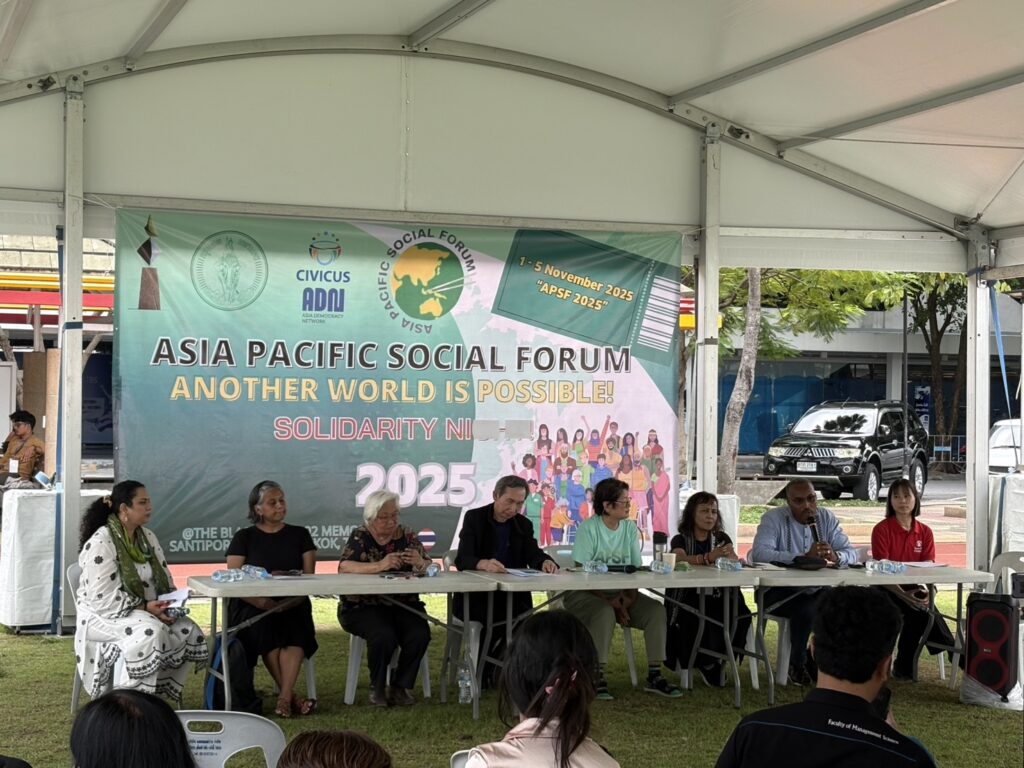

นอกจากเวทีความเป็นธรรมด้านการเปลี่ยนแปลงสภาพภูมิอากาศแล้ว JELI ยังร่วมเป็นเจ้าภาพจัดกิจกรรมในซีรีส์ Social Justice for Working People of Asia and the Pacific ภายใต้ธีม “Finance and Economic Justice” ร่วมกับองค์กรและเครือข่ายอีกกว่า 20 แห่ง ซึ่งประกอบด้วยเวที “Assembly on Social Justice for Working People of Asia and the Pacific” และเวที “Towards Universal Maternity Protection and a Transformative Care Economy” ที่เน้นประเด็นสิทธิแรงงาน ระบบคุ้มครองทางสังคม และเศรษฐกิจการดูแลที่เป็นธรรม
เวทีดังกล่าวมีจุดประสงค์เพื่อผลักดันการรณรงค์ด้านสิทธิแรงงานและสวัสดิการถ้วนหน้า รวมถึงการสร้างความร่วมมือระดับภูมิภาคระหว่างองค์กรแรงงานและภาคประชาสังคม เพื่อกระตุ้นให้รัฐบาลในภูมิภาคพัฒนาและดำเนินนโยบายความคุ้มครองทางสังคมที่ครอบคลุมยิ่งขึ้น
ในการประชุมกลุ่มย่อย JELI ได้นำการสนทนาในประเด็นสถานการณ์งานแพลตฟอร์มในประเทศไทย โดยเฉพาะเกี่ยวกับร่าง พ.ร.บ. ส่งเสริมและคุ้มครองแรงงานอิสระ ซึ่งกำลังเป็นที่ถกเถียงในกลุ่มไรเดอร์ เนื่องจากร่างกฎหมายดังกล่าวจัดให้แรงงานแพลตฟอร์มเป็น “แรงงานกึ่งอิสระ” ซึ่งอาจทำให้แรงงานกลุ่มนี้ไม่ได้รับการคุ้มครองด้านสุขภาพ ความปลอดภัย มาตรฐานแรงงาน และสิทธิด้านสวัสดิการสำคัญต่าง ๆ ตามกฎหมายคุ้มครองแรงงาน
ผู้ร่วมสนทนาจากทั้งไทย ศรีลังกา เวียดนาม และกัมพูชา ได้ร่วมบอกเล่าสถานการณ์งานแพลตฟอร์ตในแต่ละประเทศ และเห็นตรงกันว่าในอนาคต มีความจำเป็นที่จะต้องมีการศึกษาวิจัยเพิ่มเติมเพื่อประเมินกรอบกฎหมายที่เหมาะสมที่สุดสำหรับคุ้มครองแรงงานแพลตฟอร์ม รวมถึงติดตามการผลักดันอนุสัญญา ILO ว่าด้วยการคุ้มครองแรงงานในเศรษฐกิจแพลตฟอร์ม ซึ่งจะช่วยกำหนดมาตรฐานสากลสำหรับการออกกฎหมายในอนาคต ควบคู่กับการเสริมสร้างการรวมตัวของแรงงานแพลตฟอร์มเพื่อเพิ่มการรับรู้และการมีส่วนร่วมเชิงนโยบาย นอกจากนี้ สหภาพแรงงานยังสามารถมีบทบาทสำคัญในการเป็นพื้นที่และส่วนผลักดันให้แรงงานแพลตฟอร์มรวมพลังและผลักดันข้อเรียกร้องร่วมกันได้อย่างมีประสิทธิภาพ
Feminist Participatory Action Research
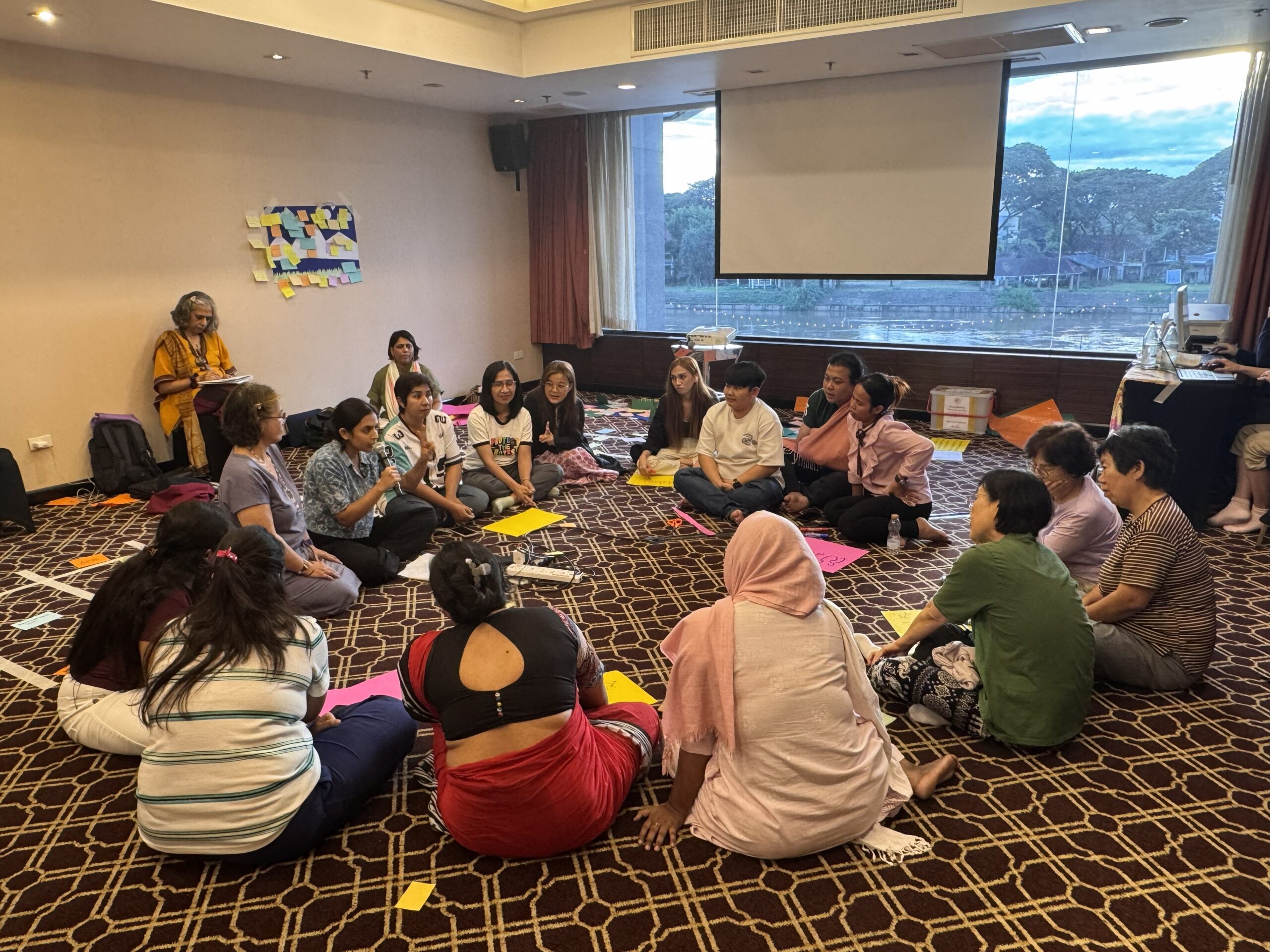
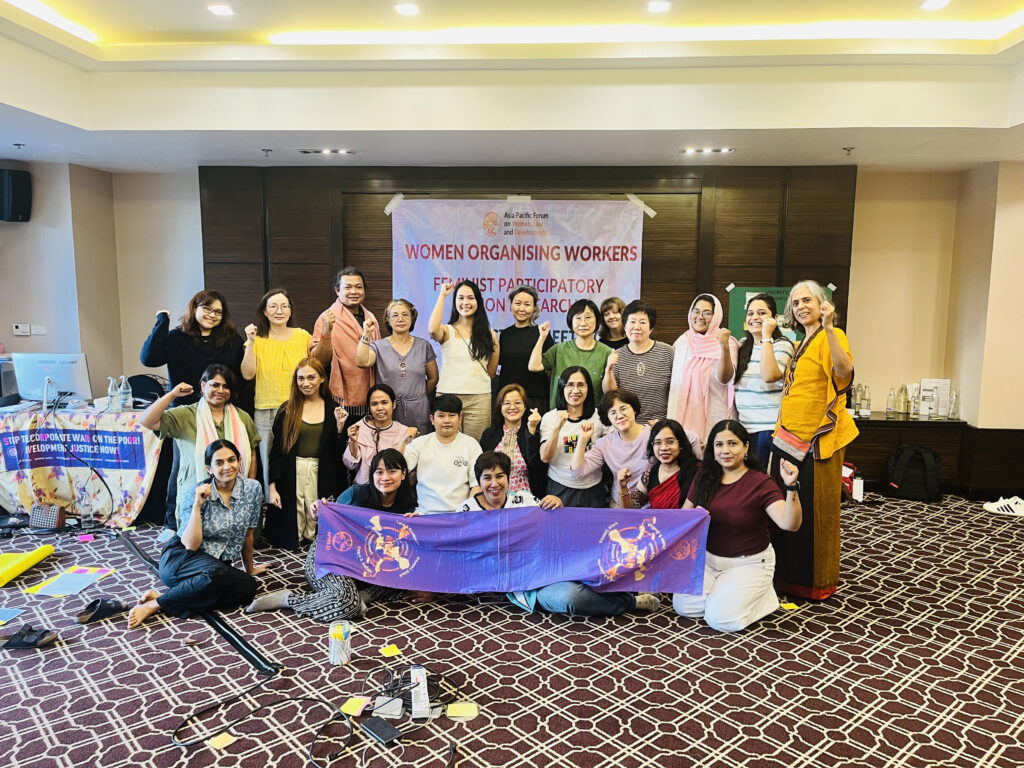
เมื่อวันที่ 7–9 พฤศจิกายน 2568 สถาบันแรงงานและเศรษฐกิที่เป็นธรรม (JELI) เข้าร่วม Reflection Meeting ณ โรงแรมเซ็นทารา เรสซิเดนท์ จังหวัดเชียงใหม่ ตลอด 2 ปีที่ผ่านมา JELI ได้ร่วมดำเนินโครงการ Feminist Participatory Action Research (FPAR) โดยการสนับสนุนจาก Asia Pacific Forum on Women, Law and Development หรือ APWLD ซึ่งงานวิจัยนี้ขับเคลื่อนโดยแกนนำแรงงานหญิงจากสมาคมไรเดอร์ภาคใต้ร่วมกับ JELI โดยมีกลุ่มเป้าหมายและพื้นที่ดำเนินการหลักคือ ไรเดอร์หญิงจากจังหวัดกระบี่ ตรัง และพังงา
FPAR เป็นกระบวนการวิจัยที่ส่งเสริมให้ผู้หญิงและเพศหลากหลายมีส่วนร่วมในทุกกระบวนการอย่างแท้จริง ตั้งแต่การวิเคราะห์ปัญหาและสร้างความเปลี่ยนแปลงจากประสบการณ์ของตนเอง โดยเน้นการเสริมพลัง (Empowerment) ให้ผู้เข้าร่วมเป็นผู้กำหนดคำถาม แนวทางแก้ไข และขับเคลื่อนการเปลี่ยนแปลงเชิงโครงสร้างร่วมกัน กระบวนการนี้จึงไม่เพียงเป็นการเก็บข้อมูลเชิงวิจัย แต่เป็นการสร้างความเป็นผู้นำ ความตระหนักรู้ในสิทธิ และความเชื่อมั่นในพลังของตนเองด้วย
การวิจัยแบบ FPAR ทำให้ผู้วิจัยวิเคราะห์ข้อมูลอย่างเป็นระบบและแกนนำสามารถเข้าถึงกลุ่มไรเดอร์หญิงในพื้นที่ได้ลึกซึ้งขึ้น ได้รับรู้ปัญหาซึ่งนำไปสู่การกำหนดข้อเรียกร้องและเจรจากับหน่วยงานรัฐและบริษัทแพลตฟอร์มเพื่อสวัสดิภาพการทำงานที่เป็นธรรม (Decent Work) นอกจากนี้ ยังเป็นช่องทางในการสร้างเครือข่ายความร่วมมือกับองค์กรต่าง ๆ รวมถึงแรงงานแพลตฟอร์มจากประเทศอื่น ๆ ที่นำไปสู่การรวมตัวและความร่วมมือในระดับที่ใหญ่ขึ้นกว่าเดิม
การเข้าร่วม Reflection Meeting ในครั้งนี้ทำให้ทีมวิจัยได้ทบทวนการทำงานที่ผ่านมาอย่างรอบด้าน และถึงแม้โครงการจะสิ้นสุดลง แต่การขับเคลื่อนงานยังคงดำเนินต่อไปเพื่อเสริมสร้างพลังอำนาจและสนับสนุนการต่อสู้เรียกร้องสิทธิของแรงงานหญิงเพื่อให้เกิดการเปลี่ยนแปลงทั้งในระดับชุมชนและระดับนโยบาย
ประชุมแลกเปลี่ยนความคิดต่อร่าง พ.ร.บ. ส่งเสริมและคุ้มครองแรงงานอิสระ
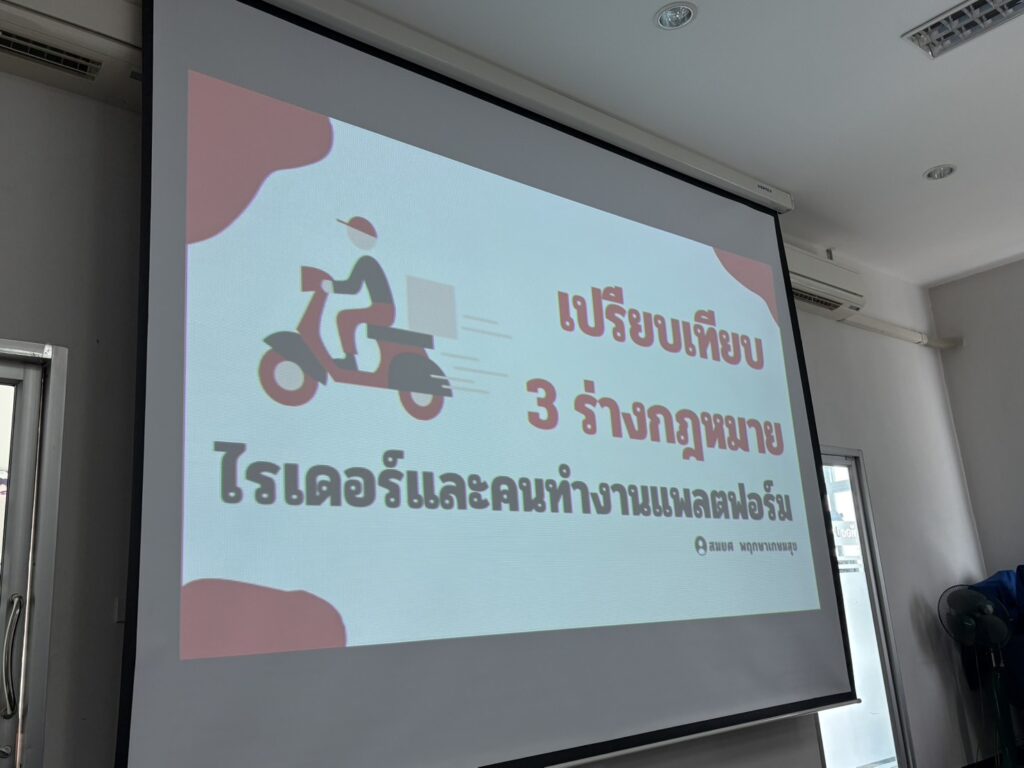
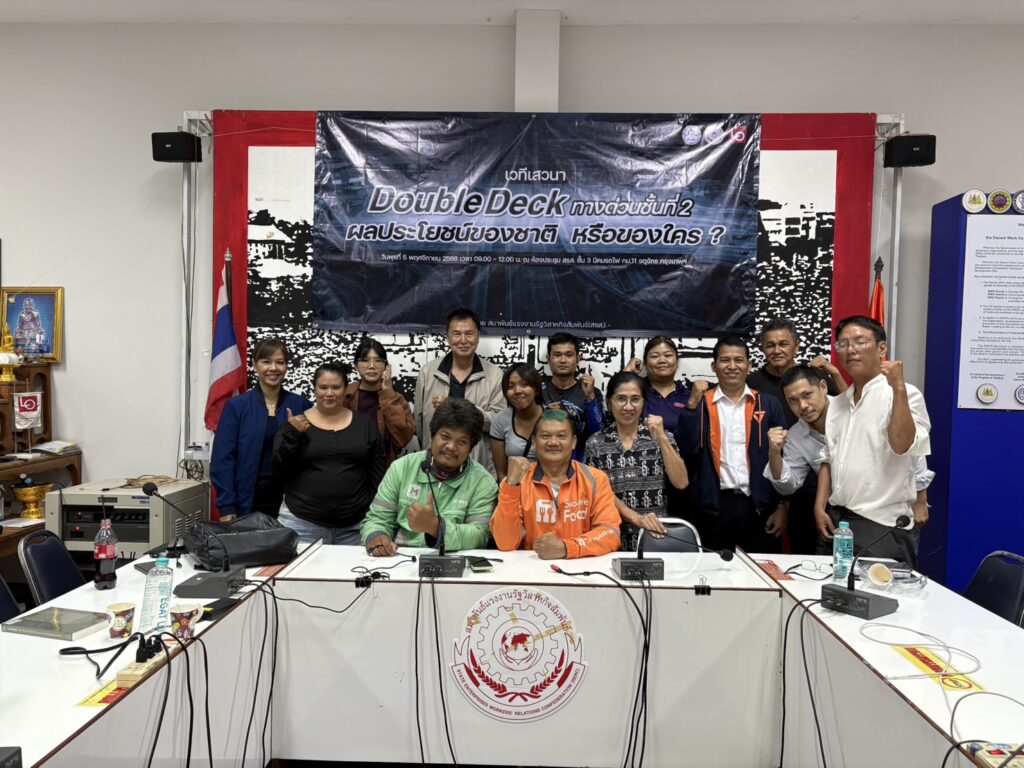
เมื่อวันที่ 13 พฤศจิกายน 2568 สถาบันแรงงานและเศรษฐกิที่เป็นธรรม (JELI) เข้าร่วมการประชุมแลกเปลี่ยนความคิดต่อร่าง พ.ร.บ. ส่งเสริมและคุ้มครองแรงงานอิสระ ณ สมาพันธ์แรงงานรัฐวิสาหกิจสัมพันธ์ (สรส.) พร้อมกับตัวแทนจากเครือข่ายไรเดอร์ Rider Center กลุ่มไรเดอร์เคลื่อนที่เร็ว สหภาพไรเดอร์ สหภาพคนทำงาน Solidarity Center เซีย จำปาทอง สมาชิกสภาผู้แทนราษฎรจากพรรคประชาชน และสาวิทย์ แก้วหวาน ประธานสมาพันธ์สมานฉันท์แรงงานไทย (สสรท.)
หัวข้อการหารือหลักคือการพิจารณาร่างกฎหมายที่เกี่ยวกับการส่งเสริมและคุ้มครองไรเดอร์ จำนวน 3 ร่าง ได้แก่ ร่าง พ.ร.บ. ส่งเสริมและคุ้มครองแรงงานอิสระของกระทรวงแรงงานและพรรคกล้าธรรม และร่างกฎกระทรวงของสหภาพคนทำงาน ซึ่งผู้เข้าร่วมได้ทำความเข้าใจร่างดังกล่าวโดยเปรียบเทียบความคุ้มครองในแต่ละประเด็น ซึ่งท้ายสุดทุกฝ่ายเห็นตรงกันว่าร่าง พ.ร.บ. ส่งเสริมและคุ้มครองแรงงานอิสระของกระทรวงแรงงานและพรรคกล้าธรรมไม่ได้ให้ความคุ้มครองไรเดอร์อย่างตรงจุด และเห็นพ้องในเบื้องต้นว่าควรผลักดันให้กระทรวงแรงงานออกกฎกระทรวงเพื่อคุ้มครองไรเดอร์โดยใช้ร่างของสหภาพคนทำงานเป็นต้นแบบ
เครือข่ายไรเดอร์เข้าพบรัฐมนตรีแรงงาน
ยื่นข้อเสนอกฎกระทรวงคุ้มครองไรเดอร์-คัดค้าน พ.ร.บ. ส่งเสริมและคุ้มครองแรงงานอิสระ
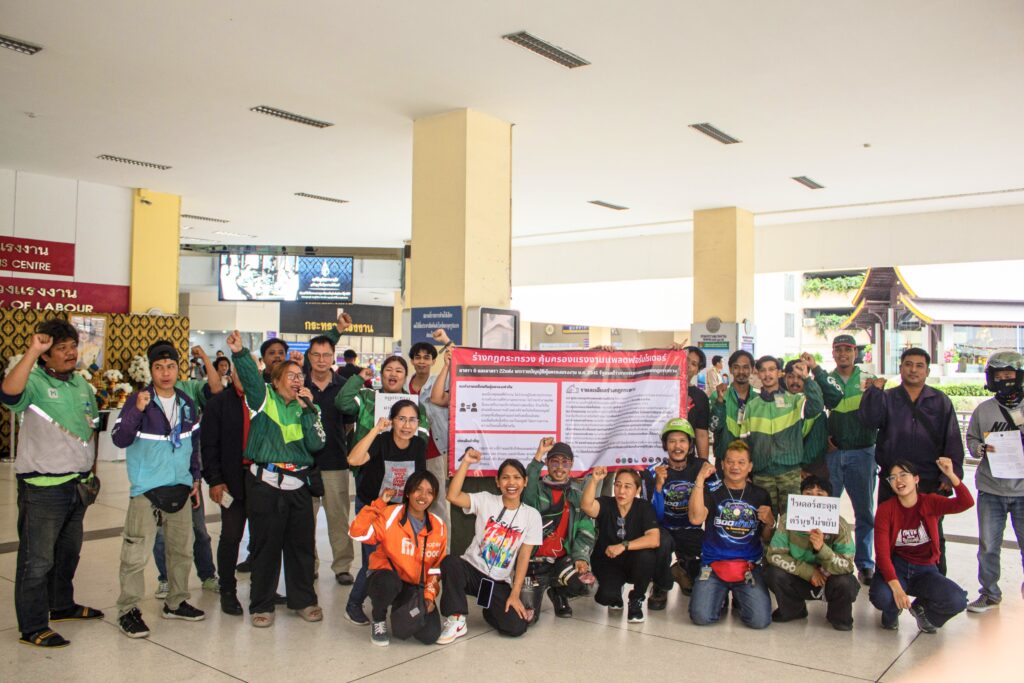
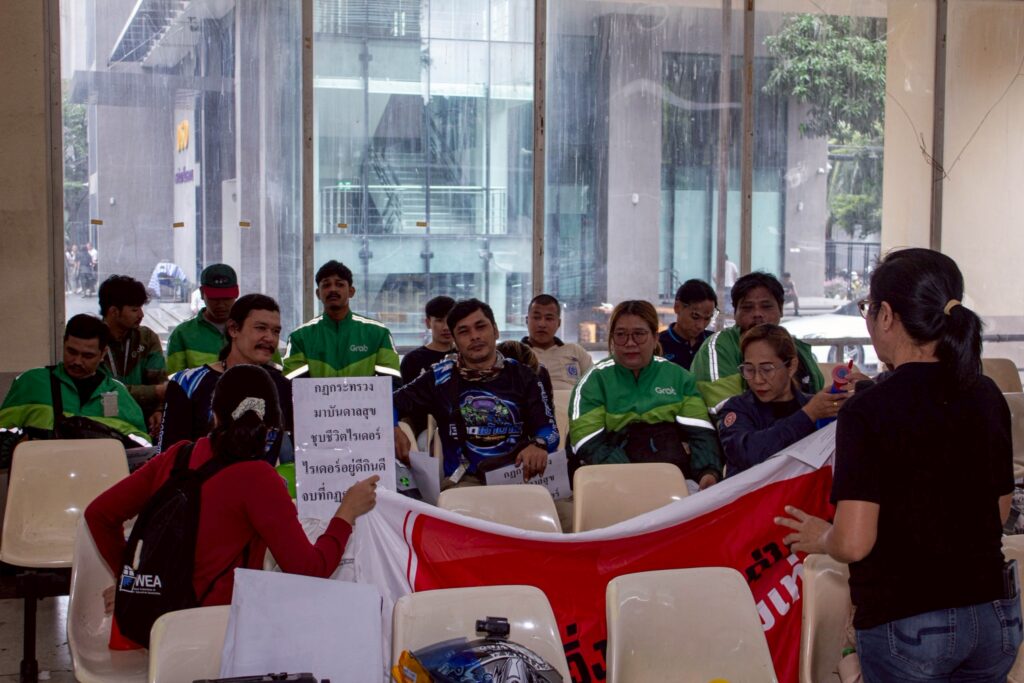
เมื่อวันที่ 17 พฤศจิกายน 2568 เวลา 10.00 น. สถาบันแรงงานและเศรษฐกิจที่เป็นธรรม (JELI) ร่วมกับเครือข่ายแรงงาน สหภาพคนทำงาน สหภาพไรเดอร์ Rider Center แม่บ้านกองสลาก และพลทหาร Grab เข้ายื่นหนังสือถึงรัฐมนตรีว่าการกระทรวงแรงงาน โดยปลัดกระทรวงแรงงานมอบหมายให้ว่าที่ร้อยตรี สมศักดิ์ พรหมดำ ผู้ตรวจราชการกระทรวงแรงงาน เป็นผู้แทน พร้อมกับรองอธิบดีกรมสวัสดิการและคุ้มครองแรงงาน และข้าราชการกระทรวงแรงงาน ณ ห้องประชุมคณะกรรมการแรงงานสัมพันธ์ ชั้น 1 อาคารกระทรวงแรงงาน
ในการหารือครั้งนี้ เครือข่ายไรเดอร์ยืนยันจุดยืนคัดค้านร่างพระราชบัญญัติส่งเสริมและคุ้มครองแรงงานอิสระ พ.ศ. …. ซึ่งไม่ได้คุ้มครองแรงงานแพลตฟอร์ม ทั้งในเรื่องค่าตอบแทนและสภาพการทำงาน และขอให้กระทรวงแรงงานจัดทำกฎกระทรวงแรงงานเพื่อคุ้มครองแรงงานแพลตฟอร์ม โดยอาศัยอำนาจตามมาตรา 6 และ 22 แห่งพระราชบัญญัติคุ้มครองแรงงาน พ.ศ. 2541 โดยได้นำเสนอร่างกฎกระทรวงฉบับสหภาพคนทำงานเพื่อประกอบข้อเรียกร้อง นอกจากนี้ เพื่อร่วมกันหาแนวทางแก้ไขปัญหาสภาพการทำงานของแรงงานแพลตฟอร์มอย่างมีประสิทธิภาพ เครือข่ายไรเดอร์ขอให้กระทรวงแรงงาน โดยกรมสวัสดิการและคุ้มครองแรงงาน เป็นเจ้าภาพในการจัดประชุมหารือร่วมกันระหว่างบริษัทแพลตฟอร์ม ตัวแทนไรเดอร์ และหน่วยงานที่เกี่ยวข้องต่อไป
ทั้งนี้ กรมสวัสดิการและคุ้มครองแรงงานได้ชี้แจงถึงความคืบหน้าของการแก้ประเด็นปัญหาของไรเดอร์ในระหว่างที่ยังไม่มีกฎหมายให้ความคุ้มครอง โดยร่วมกับกระทรวงดิจิทัลเพื่อเศรษฐกิจและสังคม นำข้อเรียกร้องเข้าที่ประชุมอนุกรมการศึกษาแนวทางการกำหนดค่าตอบแทนและสิทธิประโยชน์ขั้นต่ำสำหรับผู้ทำงานบนแพลตฟอร์ม (Food Delivery) โดยมีการจัดประชุมไปแล้ว 3 ครั้ง ครั้งล่าสุดเมื่อวันที่ 10 ตุลาคม 2568 ซึ่งที่ประชุมมีมติร่วมกันให้มีการกำหนดสิทธิประโยชน์ขั้นต่ำสำหรับคนทำงานบนแพลตฟอร์ม ให้กำหนดเรื่องประกันอุบัติเหตุและสิทธิประโยชน์ด้านสวัสดิการที่สนับสนุนการทำงานในการจัดหาอุปกรณ์ป้องกันความปลอดภัย และให้มีการจัดประชุมหารือกับผู้ประกอบธุรกิจแพลตฟอร์ม เพื่อพิจารณาการกำหนดค่ารอบขั้นต่ำ การกำหนดจำนวนงานหลายคำสั่งซื้อหรืองานแบช (Batch Order) และการกำหนดลักษณะสิทธิประโยชน์ขั้นต่ำสำหรับคนทำงานบนแพลตฟอร์ม ก่อนจะหาข้อสรุปเพื่อนำเสนอต่อคณะกรรมการร่วมระหว่างหน่วยงานของรัฐ ดำเนินการตามอำนาจหน้าที่ต่อไป
โดยกระทรวงแรงงานรับดำเนินการตามความเห็นของที่ประชุม ดังนี้
- กรมสวัสดิการและคุ้มครองแรงงาน รวบรวมข้อมูลเกี่ยวกับการตีความแรงงานแพลตฟอร์ม นิติสัมพันธ์ความเป็นนายจ้าง-ลูกจ้าง จากหน่วยงานต่าง ๆ เช่น คณะกรรมการสิทธิมนุษยชนและองค์การแรงงานระหว่างประเทศ เพื่อใช้ในการประกอบการยื่นเรื่องเสนอคณะกรรมการกฤษฎีกา เพื่อจัดทำกฎกระทรวงแรงงานตามข้อเสนอของเครือข่ายไรเดอร์
- สำนักนโยบายแรงงานนอกระบบ รวบรวมความเห็นเพื่อใช้ประกอบการเสนอร่างพระราชบัญญัติส่งเสริมและคุ้มครองแรงงานอิสระ พ.ศ. …. ซึ่งขณะนี้อยู่ระหว่างดำเนินการเสนอคณะรัฐมนตรี
- กรมสวัสดิการและคุ้มครองแรงงาน จัดประชุมหารือร่วมกันระหว่างบริษัทแพลตฟอร์ม ตัวแทนไรเดอร์ และหน่วยงานที่เกี่ยวข้อง เพื่อหาแนวทางการแก้ไขปัญหาสภาพการทำงาน อาทิ ค่าตอบแทน ค่ารอบ งานพ่วง และปัญหาอื่น ๆ ของแรงงานแพลตฟอร์มโดยเร็ว
เชื่อมโยงเครือข่ายเอเชียตะวันออกเฉียงใต้สู่ความร่วมมือด้านงานแพลตฟอร์มระดับภูมิภาค
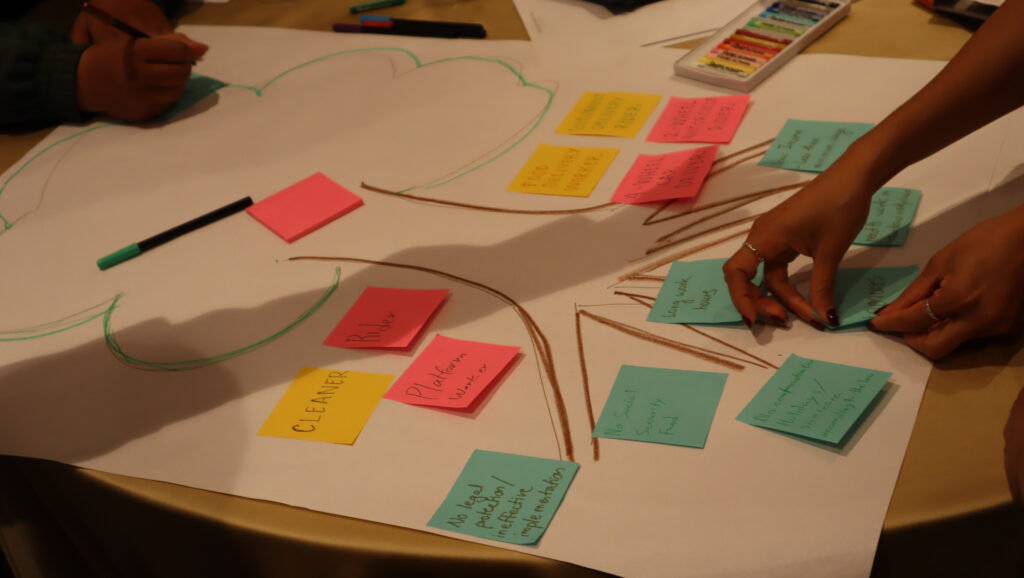
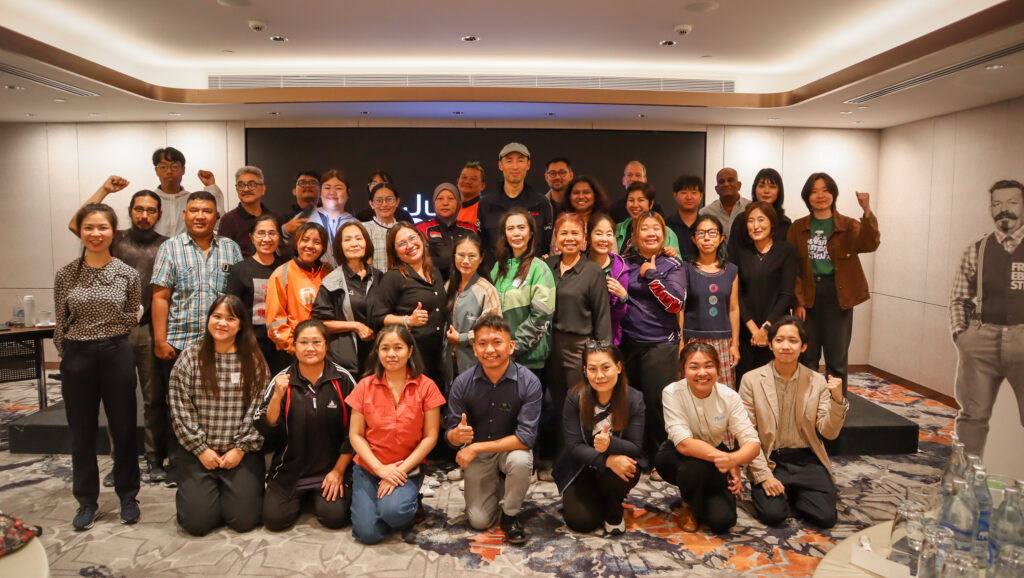
ทุกวันนี้อุตสาหกรรมแพลตฟอร์มเติบโตขึ้นอย่างรวดเร็วและกลายเป็นกำลังสำคัญของเศรษฐกิจยุคใหม่ แต่แรงงานแพลตฟอร์มจำนวนมากยังเข้าไม่ถึงสิทธิขั้นพื้นฐาน ความคุ้มครองทางสังคม และสภาพการทำงานที่เป็นธรรม
วันที่ 19–21 พฤศจิกายน 2568 สถาบันแรงงานและเศรษฐกิจที่เป็นธรรมร่วมมือ (JELI) และมูลนิธิฟรีดริค เอแบร์ท ประเทศไทย (Friedrich-Ebert-Stiftung Thailand) ร่วมกันจัด Regional Networking Visit เชิญผู้นำแรงงานแพลตฟอร์มจากหลายประเทศในเอเชียตะวันออกเฉียงใต้ ได้แก่ มาเลเซีย อินโดนีเซีย ฟิลิปปินส์ ไทย และสิงคโปร์ รวมถึงเกาหลีใต้และอินเดีย ทั้งไรเดอร์ แม่บ้าน หมอนวด รวมถึงสหภาพแรงงาน องค์กรแรงงานระหว่างประเทศ และภาคประชาสังคม มาพบปะกันแบบตัวต่อตัว เพื่อแลกเปลี่ยนประสบการณ์และทำความเข้าใจความท้าทายในภูมิภาคร่วมกัน
กิจกรรมครั้งนี้มีเป้าหมายหลัก คือการสร้างความสัมพันธ์ ความเข้าใจ และโอกาสความร่วมมือข้ามพรมแดนเพื่อนำไปสู่ “เครือข่ายแรงงานแพลตฟอร์มระดับภูมิภาค” ที่มีพลังในการผลักดันประเด็นแรงงานบนเวทีบนเวทีระดับภูมิภาคและระดับโลกในอนาคต
ตลอด 2 วันของการพูดคุย หลังจากได้แลกเปลี่ยนประสบการณ์และแนวทางของแต่ละประเทศ ผู้เข้าร่วมเห็นความสำคัญร่วมกันว่าร่างอนุสัญญา ILO ว่าด้วย “งานที่มีคุณค่าในเศรษฐกิจแพลตฟอร์ม” ซึ่งจะเข้าสู่พิจารณาในการประชุมแรงงานระหว่างประเทศ ครั้งที่ 114 ในปี 2026 เป็นหมุดหมายสำคัญที่ขบวนการแรงงานแพลตฟอร์มในทุกประเทศต้องร่วมกันผลักดัน เพื่อให้กติกานานาชาติสะท้อนความต้องการและสิทธิของคนทำงานได้จริง และในโอกาสนี้ ตัวแทนไรเดอร์ไทยยังได้ร่วมกันจัดตั้ง “สหพันธ์คนทำงานแพลตฟอร์มแห่งประเทศไทย” เพื่อเป็นพื้นที่รวมพลังแรงงานแพลตฟอร์มในระดับชาติ และก้าวสู่การทำงานร่วมกับประเทศต่าง ๆ ในระดับภูมิภาคต่อไป
การพบกันครั้งนี้เป็นอีกก้าวสำคัญในการสร้างพลังร่วมของแรงงานแพลตฟอร์มในภูมิภาค เพื่อนำไปสู่การทำงานที่เข้มแข็งและการเปลี่ยนแปลงที่เป็นรูปธรรมบนเวทีระดับภูมิภาคและระดับโลก
ความเป็นธรรมทางเพศและการป้องกันความรุนแรงในขบวนการแรงงาน


เมื่อวันที่ 26–29 พฤศจิกายน 2568 สถาบันแรงงานและเศรษฐกิจที่เป็นธรรม (JELI) เข้าร่วมเวิร์กชอป “ความเป็นธรรมทางเพศและการป้องกันความรุนแรงในขบวนการแรงงาน ครั้งที่ 1” ซึ่งจัดขึ้นโดยมูลนิธิฟรีดริค เอแบร์ท (FES) ประเทศไทย และมูลนิธิส่งเสริมความเสมอภาคทางสังคม (มสส.) ณ อำเภอชะอำ จังหวัดเพชรบุรี
ปัญหาการล่วงละเมิดและความรุนแรงทางเพศในที่ทำงานยังคงเกิดขึ้นอย่างต่อเนื่อง ส่วนหนึ่งมาจากความเข้าใจที่ยังไม่ครอบคลุม ในบางสถานที่ทำงานที่แม้จะมีสหภาพแรงงานอยู่แล้ว แต่นักสหภาพแรงงานจำนวนมากยังแยกประเด็น “สิทธิแรงงาน” ออกจาก “สิทธิสตรี” ทำให้ปัญหาความรุนแรงทางเพศไม่ได้รับการจัดการอย่างจริงจัง และมักถูกมองว่าเป็นเรื่องส่วนตัวของผู้หญิง
เวิร์กชอปครั้งนี้มุ่งเน้นการเรียนรู้วิธีช่วยเหลือผู้หญิงที่เผชิญความรุนแรง ทั้งในครอบครัวและในที่ทำงาน ผ่านกรณีศึกษาที่เกิดขึ้นจริง เพื่อให้ผู้เข้าร่วมซึ่งประกอบด้วยแกนนำหญิงในชุมชน นักสหภาพแรงงานหญิง และองค์กรสิทธิมนุษยชน ได้เรียนรู้ขั้นตอน การให้คำปรึกษา และแนวทางการประสานงานช่วยเหลือผู้ถูกกระทำ
แม้ความรุนแรงต่อผู้หญิงจะเกิดขึ้นในทุกอาชีพแต่บางกลุ่มมีความเสี่ยงสูงเป็นพิเศษ เช่น คนทำงานผ่านแพลตฟอร์ม เช่น กรณีของ“เมรี” ไรเดอร์หญิงย่านลาดกระบัง ที่ถูกลูกค้าพยายามล่วงละเมิดและทำร้ายร่างกาย โดยที่ไม่ได้รับการช่วยเหลือจากบริษัทแพลตฟอร์มแต่อย่างใด มีเพียงข้อความแสดงความเสียใจจากระบบอัตโนมัติ รวมถึงกรณีของ “น้ำ” ไรเดอร์หญิงที่ถูกลูกค้าลวนลามตลอดเส้นทาง ทั้งสองเหตุการณ์เกิดจากการทำงานโดยตรง แต่กลับไม่ได้รับการช่วยเหลือหรือเยียวยาใด ๆ จากบริษัทแพลตฟอร์ม
สุดท้ายแล้ว ปัญหาความรุนแรงต่อผู้หญิงจะยังคงดำเนินต่อไปหากสังคมยังเพิกเฉยและมองว่าเป็นเรื่องส่วนตัวของผู้ถูกกระทำ การสร้างความเข้าใจเรื่องสิทธิ ความปลอดภัย ความเท่าเทียมทางเพศ ศักดิ์ศรีความเป็นมนุษย์ และการมีระบบช่วยเหลือที่ใช้งานได้จริงจะช่วยให้ทุกคนทำงานได้อย่างปลอดภัยมากขึ้น
ข่าวสำคัญ
ประกาศแล้ว! ราชกิจจานุเบกษาประกาศ พ.ร.บ.คุ้มครองแรงงานฉบับแก้ไขใหม่ แรงงานหญิงลาคลอดได้ 120 วัน มีผลบังคับใช้ 7 ธันวาคม 2568 อ่านที่: Government Contact Center
โลกได้อะไรบ้างหลังสิ้นสุดการประชุมสภาพอากาศ COP30 ที่บราซิล อ่านที่: ไทยโพสต์
สรุป #น้ำท่วมภาคใต้ ที่กำลังเผชิญภาวะวิกฤต กระทบผู้คน 1.3 แสนครัวเรือน อ่านที่: The Matter
พ.ร.บ.คุ้มครองแรงงาน ฉบับ “เมนส์มา ลาได้” รอบรรจุเข้าสภาฯ ผ่านวาระ 2-3 อ่านที่: ประชาไท
เรื่องเล่ารายเดือน
25 พฤศจิกายน “วันยุติความรุนแรงต่อสตรีสากล”
เมื่อต้นเดือนที่ผ่านมา เกิดเหตุการณ์ไรเดอร์หญิงถูกลูกค้าชายทำร้ายร่างกายและพยายามล่วงละเมิดทางเพศระหว่างขี่รถไปส่งแถวเขตลาดกระบัง ด้วยความพยายามต่อสู้ บวกกับโชคดีมีไรเดอร์ชายอีกคนผ่านมาเห็นเหตุการณ์จึงเข้ามาช่วยเหลือ เธอจึงรอดชีวิตมาได้ เมื่อข่าวเผยแพร่ไปในโลกออนไลน์ หลาย ๆ ความคิดเห็นที่แสดงออกมากลับเป็น “ทำไมไม่ไปทำงานอื่น?” หรือ “งานนี้ไม่เหมาะกับผู้หญิง”
ความเห็นเหล่านี้เป็นตัวอย่างที่ชัดเจนว่าผู้หญิงยังคงตกเป็นเหยื่อของความรุนแรงที่ตัวเองไม่ได้ก่อแล้วยังต้องถูกตั้งคำถามเหมือนกับว่าเป็นความผิดของตัวเอง
ไรเดอร์หญิงคนนี้เพียงแค่ทำงานของเธอตามปกติ ขี่รถส่งลูกค้าให้ถึงจุดหมาย เมื่อถึงเวลาก็จะเลิกงานกลับเข้าบ้านเพื่อพักผ่อน แต่สิ่งที่เกิดขึ้นกลับกลายเป็นประสบการณ์เลวร้ายที่ไม่มีใครควรพบเจอ เธอเล่าว่าได้พยายามติดต่อบริษัทแพลตฟอร์มเพื่อแจ้งเหตุ แต่สิ่งที่ตอบกลับมามีเพียงข้อความจากระบบอัตโนมัติ
เมื่อไรเดอร์ต้องเผชิญกับเหตุร้ายขณะทำงานซึ่งเกิดขึ้นบ่อยครั้ง บริษัทแพลตฟอร์มควรมีบทบาทในการป้องกันและรับมือกับเหตุเหล่านี้เพื่อปกป้องความปลอดภัยของคนทำงาน มีระบบช่วยเหลือกรณีฉุกเฉินที่เข้าถึงได้ทันที ที่สำคัญต้องมีมาตรการช่วยเหลือและเยียวยาที่เป็นรูปธรรมและเป็นมาตรฐาน ไม่ใช่ผลักให้เป็นภาระส่วนตัวของคนงานอย่างที่เป็นอยู่
วันที่ 25 พฤศจิกายนและในทุก ๆ วัน มาร่วมกันตระหนักถึงปัญหาความรุนแรงต่าง ๆ ที่ผู้หญิงต้องเผชิญ และยืนหยัดข้างผู้หญิงและทุกคนที่เคยถูกทำร้าย ไม่ว่าจะมีใครเห็นหรือไม่ก็ตาม

What Happened This Month
Asia-Pacific Social Forum 2025
“Climate Justice“
From 1–5 November 2025, the Just Economy and Labor Institute (JELI) co-hosted the Climate Justice track at the Asia-Pacific Social Forum 2025, held at Thammasat University, Tha Phra Chan.
In the session “Gender-Just Climate Solutions,” JELI and speakers highlighted the lived experiences of women, workers, and LGBTQ+ communities who are disproportionately affected by climate crises, extreme heat, flooding, declining income, rising care responsibilities, and continued exclusion from public policies. Despite these challenges, women and workers are leading community-based solutions such as agroecology, community health networks, cooperatives, and local environmental management. Participants agreed that climate justice is impossible without gender justice, which requires shifting power to communities, recognising women and LGBTQ+ persons as decision-makers, valuing care work and quality of life, and ensuring a just and inclusive transition that leaves no worker or community behind.
Another key session, “Community-Led Monitoring & Accountability in Climate Finance,” brought together small-scale fishers, smallholder farmers, informal workers, and feminist and LGBTQ+ activists. Participants pointed out that current climate finance mechanisms are often designed without the input of those most affected, and in some cases, create additional burdens. Examples in Thailand, such as GCF-funded projects, have led to increased debt among farmers and reduced community control over local resources. Informal workers, especially those working outdoors, continue to face extreme heat without adequate protection, despite rising health risks, loss of income, and higher daily expenses.
Participants called for climate finance to be delivered as grants, not loans, and to reach communities directly. They urged governments to recognise extreme heat as a disaster requiring income compensation and universal access to heat-protective equipment. Sun protection and cooling gear should be recognised as basic occupational health rights for outdoor and informal workers. Investments should strengthen food sovereignty, community care systems, and locally rooted livelihoods. The discussion reaffirmed demands for climate reparations and debt cancellation for countries in the Global South.
Overall, the Climate Justice track underscored the importance of placing women, workers, and communities at the forefront of climate policy and development. The discussions emphasized that sustainable solutions begin with listening to those most affected and ensuring that communities have a voice and a meaningful role in decision-making at every level.
In addition to the Climate Justice track, JELI also co-hosted activities under the Social Justice for Working People of Asia and the Pacific series, within the theme “Finance and Economic Justice,” in collaboration with more than 20 organisations and networks. The program included the Assembly on Social Justice for Working People of Asia and the Pacific and Towards Universal Maternity Protection and a Transformative Care Economy, both of which highlighted labour rights, social protection, and a fair and inclusive care economy.
These sessions aimed to strengthen advocacy for universal labour rights and social welfare, while fostering regional collaboration among labour organisations and civil society groups. The discussions encouraged governments across the region to advance more comprehensive and equitable social protection policies.
During the breakout session, JELI led a discussion on the situation of platform work in Thailand, focusing particularly on the Draft Act on the Promotion and Protection of Independent Workers, which has generated concern among delivery riders. The draft law categorises platform workers as “semi-independent workers,” a classification that could weaken their access to essential protections, including occupational health and safety, labour standards, and key social welfare benefits guaranteed under existing labour laws.
Participants from Thailand, Sri Lanka, Vietnam, and Cambodia shared updates on platform work in their respective countries and agreed that further research is needed to assess the most appropriate legal frameworks for protecting platform workers. They also stressed the importance of monitoring the development of a future ILO Convention on Decent Work on the Platform Economy, which would provide global guidance for national legislation. Strengthening worker organising was highlighted as crucial for increasing awareness and enabling meaningful participation in policymaking. In addition, existing trade unions can play a key role in supporting platform workers, providing a collective space to advance shared demands and build stronger advocacy efforts.
Feminist Participatory Action Research
From 7–9 November 2025, the Just Economy and Labor Institute (JELI) participated in the Reflection Meeting held in Chiang Mai. Over the past two years, JELI has collaborated with the Asia Pacific Forum on Women, Law and Development (APWLD) to implement the Feminist Participatory Action Research (FPAR) project. This research was carried out together with women leaders from the Southern Riders Association, with women delivery riders in Krabi, Trang, and Phang Nga as the core target groups.
FPAR is a research approach that ensures meaningful participation of women and gender-diverse people throughout the entire process, from identifying problems to creating change based on their lived experiences. It emphasises empowerment, enabling participants to shape the research questions, propose solutions, and drive structural change. The process is not only about data collection but also about building leadership, strengthening rights awareness, and cultivating confidence in their collective power.
Through the FPAR process, researchers were able to analyse issues more systematically, while community leaders deepened their engagement with women riders in their areas. This led to clearer identification of key problems, the development of demands, and dialogues with state agencies and platform companies to advance decent work for riders. FPAR also opened pathways to broader collaboration with organisations and platform workers from other countries, helping strengthen collective organising at a larger scale.
The Reflection Meeting provided an opportunity for the research team to look back on the work undertaken over the past two years. Although the project has formally concluded, the momentum continues. JELI and the women leaders remain committed to empowering women workers and advancing their rights, both at the community level and within policy spaces.
The Discussion on the Draft Independent Workers Promotion and Protection Bill
On 13 November 2025, the Just Economy and Labor Institute (JELI) participated in a discussion meeting on the Draft Independent Workers Promotion and Protection Bill at the State Enterprise Workers’ Relations Confederation (SERC). The meeting brought together representatives from the Rider Center, the Rapid Move Riders’ Group, the Riders’ Union, the Workers’ Union, Solidarity Center, Thai Labour Solidarity Confederation, and Sia Jampathong, Member of Parliament from the People’s Party.
The discussion focused on reviewing three proposed legal drafts related to the protection and promotion of delivery riders: the drafts proposed by the Ministry of Labour, the Kla Tham Party, and the ministerial regulation drafted by the Workers’ Union. Participants examined and compared the level of protection offered in each version. By the end of the meeting, all parties agreed that the drafts proposed by the Ministry of Labour and the Kla Tham Party did not adequately protect riders. Participants shared a preliminary consensus that the Ministry of Labour should instead be urged to issue a ministerial regulation based on the Workers’ Union draft, which provides more appropriate and comprehensive protection for riders.
Rider Networks Advocate for a Protective Ministerial Regulation
and to Oppose the Draft Independent Workers Bill
On 17 November 2025, the Just Economy and Labor Institute (JELI), together with labour networks including the Workers’ Union, Riders’ Union, Rider Center, the Government Lottery Office Housekeepers, and the Grab Soldiers Collective, submitted a letter to the Minister of Labour. The Permanent Secretary assigned the Inspector-General to receive the letter, joined by the Deputy Director-General of the Department of Labour Protection and Welfare and officials from the ministry.
During the meeting, rider networks reaffirmed their strong opposition to the Draft Independent Workers Promotion and Protection Bill, which does not provide adequate protection for platform workers, particularly regarding fair compensation and safe working conditions. The networks urged the Ministry of Labour to instead issue a ministerial regulation under Sections 6 and 22 of the Labour Protection Act B.E. 2541 (1998) to protect platform workers. They presented the Workers’ Union’s draft ministerial regulation as the basis for this proposal. The networks also requested that the Ministry of Labour, through DLPW, convene a joint meeting between platform companies, rider representatives, and relevant agencies to develop effective solutions to working-condition issues faced by platform workers.
The Department of Labour Protection and Welfare provided an update on ongoing efforts to address riders’ concerns while no dedicated law is in place. DLPW, in collaboration with the Ministry of Digital Economy and Society, has brought riders’ demands to the Subcommittee on Minimum Remuneration and Benefits for Platform Workers (Food Delivery). Three meetings have been held to date, the most recent on 10 October 2025. The subcommittee reached consensus on establishing minimum benefits for platform workers, including accident insurance, welfare support for safety equipment, and further consultations with platform companies on minimum pay-per-delivery rates, batch order rules, and other key protections before submitting a final proposal to the Joint Government Committee.
Following the meeting, the Ministry of Labour agreed to undertake the following actions:
- To convene a tripartite meeting with platform companies, rider representatives, and concerned agencies to identify solutions to issues, including remuneration, pay-per-delivery rates, batch orders, and other challenges faced by platform workers.
- To compile information from agencies such as the National Human Rights Commission and the International Labour Organization regarding interpretations of platform work and employer-employee relations, to support the submission to the Council of State for developing a ministerial regulation as proposed by rider networks.
- To gather stakeholder feedback to support the drafting of the Draft Independent Workers Promotion and Protection Bill, which is currently in preparation for submission to the Cabinet.
Connecting Experiences, Shaping Regional Action on Platform Work
The platform economy has grown rapidly and become a significant force in today’s economic landscape. Yet many platform workers still lack access to basic rights, social protection, and fair working conditions.
From 19 to 21 November 2025, the Just Economy and Labor Institute (JELI) and the Friedrich-Ebert-Stiftung Thailand organised a Regional Networking Visit, inviting platform worker representatives from several Southeast Asian countries, including Malaysia, Indonesia, the Philippines, Thailand, and Singapore, as well as South Korea and India. Participants included riders, domestic workers, massage therapists, trade unions, international labour organisations, and civil society groups. The gathering provided a space for direct dialogue, sharing of experiences, and building a shared understanding of common regional challenges.
This visit aimed to strengthen relationships, deepen mutual understanding, and create opportunities for cross-border cooperation, laying the groundwork for a “regional platform worker network” with the capacity to advance labour rights on both regional and global stages.
Over two days of discussion, after exchanging national experiences and approaches, participants collectively recognised the importance of the upcoming ILO Convention on “Decent Work in the Platform Economy,” which will be considered at the 114th International Labour Conference in 2026. They agreed that platform worker movements across all countries must work together to ensure that international labour standards genuinely reflect the needs and rights of workers.
During the visit, Thai rider representatives also announced the formation of the “Platform Workers Federation of Thailand,” establishing a national space for platform worker organising and paving the way for further collaboration with workers across the region.
This gathering marks an important step in building collective power among platform workers, contributing to stronger collaboration and meaningful progress at both regional and global levels.
Gender Justice and Violence Prevention in the Labour Movement
From 26–29 November 2025, representatives from the Just Economy and Labor Institute (JELI) participated in the first workshop on “Gender Justice and Violence Prevention in the Labour Movement,” organized by Friedrich-Ebert-Stiftung (FES) Thailand and the Social Equality Promotion Foundation in Phetchaburi Province.
Gender-based violence and sexual harassment in the workplace remain persistent issues, partly due to a limited understanding of the problem. In many workplaces, even those with established trade unions, labour activists often separate “labour rights” from “women’s rights,” resulting in sexual violence being overlooked, dismissed as a private matter, or inadequately addressed.
The workshop focused on practical skills for supporting women experiencing violence both at home and at work. Through real-case scenarios, participants, consisting of women community leaders, female trade unionists, and human rights organizations, learned about response protocols, counselling approaches, and coordination mechanisms needed to assist survivors effectively.
Although violence against women occurs across occupations, some groups face heightened risks, including platform workers. For example, “Maree,” a female rider in the Lat Krabang area, was assaulted by a customer yet received no support from the platform company aside from an automated message. Another case involved “Nam,” a female rider who was repeatedly harassed by a customer throughout the delivery route. Both incidents occurred in the course of work, yet neither worker received assistance or compensation from the platform companies involved.
Ultimately, violence against women will continue if society treats it as a private issue. Strengthening public understanding of rights, safety, gender equality, and human dignity, along with establishing clear, responsive support systems, is essential to ensuring that everyone can work in safe and dignified conditions.
In the Headlines
120 days of family leave are now guaranteed under Thailand’s updated labor law. Read more: Tilleke & Gibbins
What did COP30 achieve? Read more: European Commission
“Once in 300 years rain” hits Thai city as floods ravage Southeast Asia. Read more: BBC
Draft bill on workers’ quality of life moves forward, proposing menstrual leave and family caregiving leave. Read more: Prachatai
Voices & Stories
25 November: International Day for the Elimination of Violence Against Women
Earlier this month, a female delivery rider was assaulted and nearly sexually attacked by a male customer while completing an order in the Lat Krabang area. She survived because she fought back, and a passing male rider intervened just in time. Yet when the incident went viral online, many comments questioned her instead of the perpetrator, asking why she chose this job or implying that “this work is not for women.” These reactions clearly show how women continue to be blamed for violence they did not cause, simply for trying to earn a living.
This rider was simply doing her job, transporting a passenger and preparing to return home after her shift. Instead, she faced a traumatic incident no one should ever encounter. She reported that when she tried to contact the platform company, the only response she received was an automated message.
Cases like this are not isolated. When violence occurs during ther duties, platform companies must take responsibility for prevention and response. This includes accessible emergency support systems, safety protocols, and concrete, consistent forms of assistance and compensation, not leaving workers to deal with the consequences alone.
On 25 November, and every day, we must acknowledge the violence that women continue to face and stand with women and all survivors, whether their stories are visible or not.
Thank you for reading along with us. We’ll keep sharing what’s ahead in the next edition!