(See English version below.)
งานของเรา
อีกก้าวสู่มาตรฐานสากล
ว่าด้วย “งานที่มีคุณค่าในเศรษฐกิจแพลตฟอร์ม“
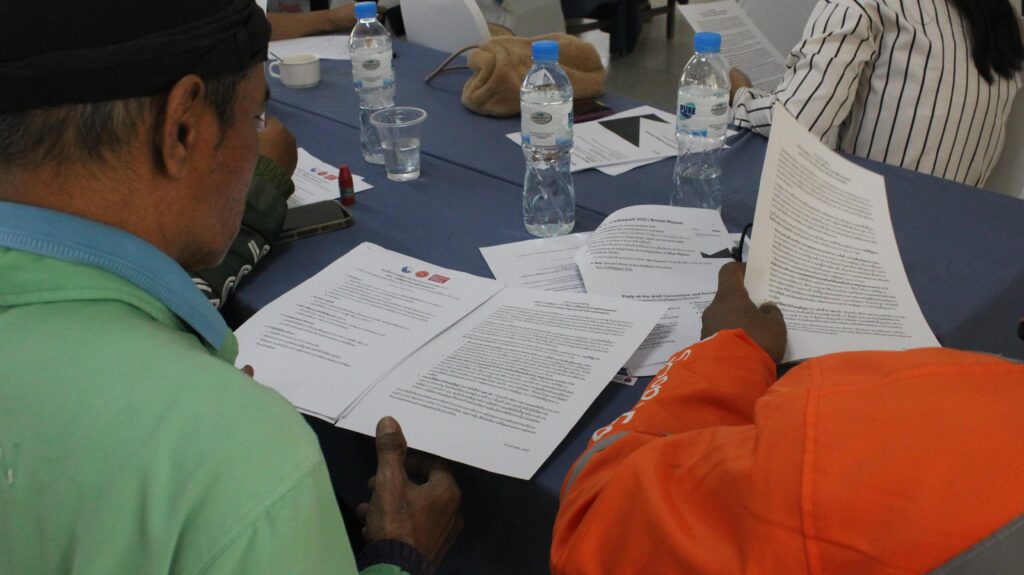
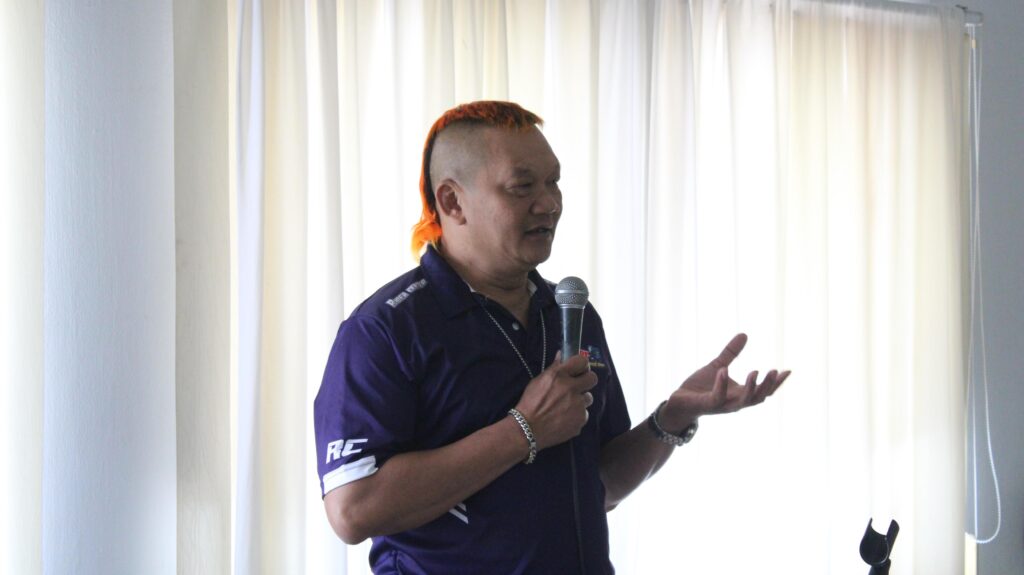
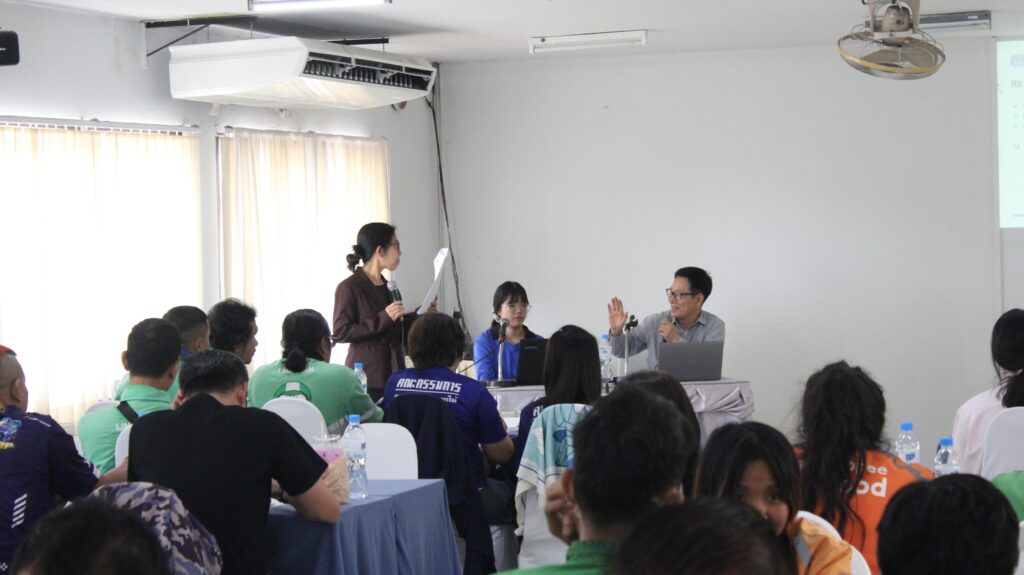
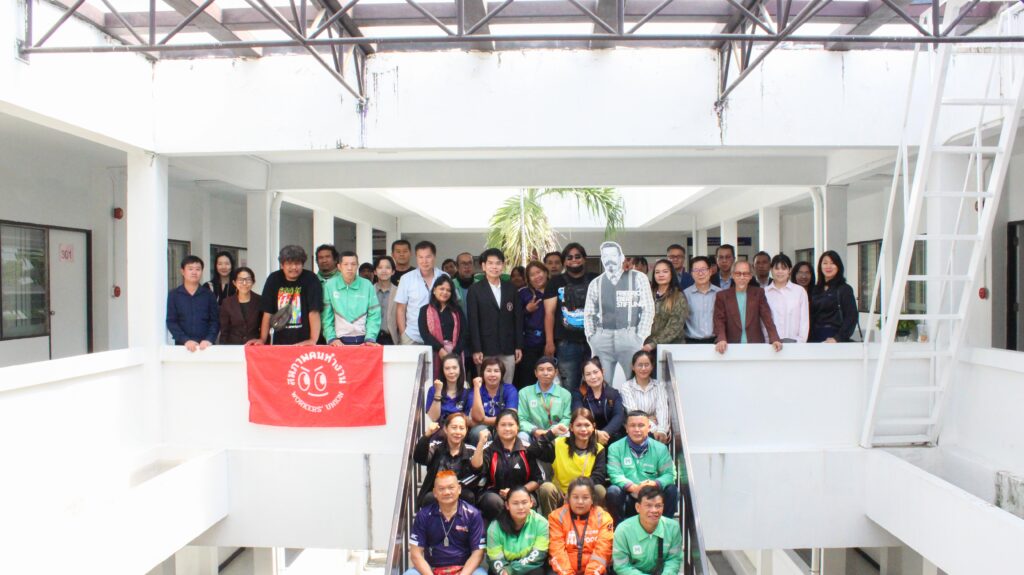
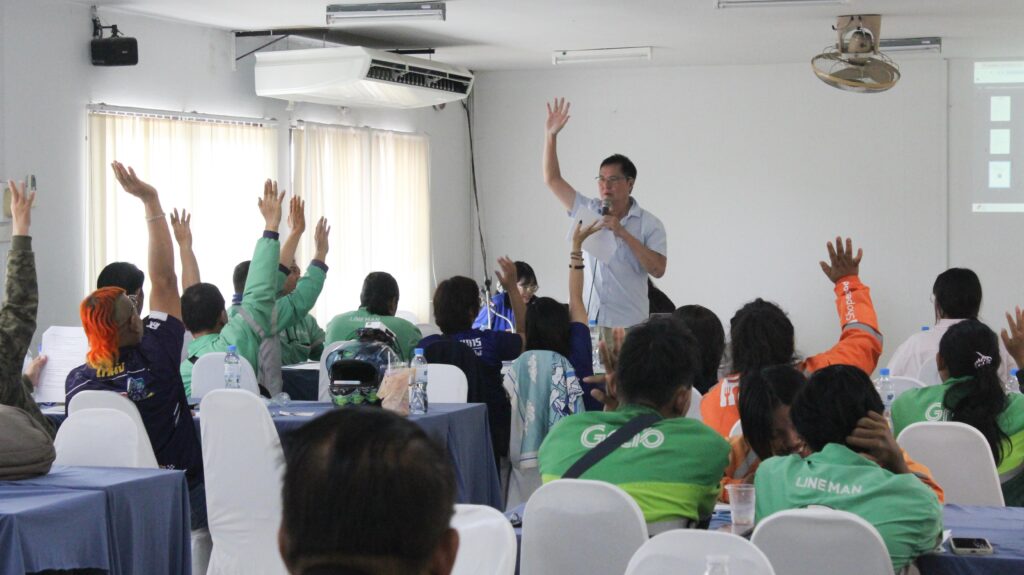
ในปี 2021 องค์การแรงงานระหว่างประเทศ (ILO) เริ่มหยิบปัญหาเรื่องงานแพลตฟอร์มขึ้นมาพิจารณาอย่างจริงจัง ผ่านกระบวนการหารือแบบไตรภาคีระหว่างรัฐบาล นายจ้าง และลูกจ้าง จนมาถึงวันนี้ที่พัฒนามาเป็น “ร่างอนุสัญญาและข้อเสนอแนะว่าด้วยงานที่มีคุณค่าในเศรษฐกิจแพลตฟอร์ม” ซึ่งกำลังจะเข้าสู่ขั้น “รายงานปกน้ำเงิน (Blue Report)”
ในเดือนมีนาคม 2026 และจะถูกนำไปพิจารณาในที่ประชุมแรงงานระหว่างประเทศ (ILC) กลางปีนี้
ปัญหาที่คนทำงานแพลตฟอร์ม เช่น ไรเดอร์ กำลังเผชิญอยู่ทุกวัน ทั้งค่ารอบที่ลดลงเรื่อย ๆ ระบบอัลกอริทึมของแพลตฟอร์มที่ไม่โปร่งใส หรือการไม่มีหลักประกันทางสังคมใด ๆ เป็นผลจากโครงสร้างการจ้างงานที่ยังไม่มีมาตรฐานคุ้มครองที่ชัดเจน และมักถูกซ่อนไว้ใต้คำอธิบายที่ใช้มายาวนานหลายปี โดยเฉพาะในประเทศไทย ว่า “งานแพลตฟอร์มเป็นเรื่องใหม่”
ร่างอนุสัญญาฉบับนี้จึงมีความสำคัญในฐานะ “มาตรฐานแรงงานสากล” ที่ประเทศต่าง ๆ จะใช้เป็นกรอบอ้างอิงในการนำหลักการเหล่านี้ไปใช้ในการกำหนดนโยบายและกฎหมายที่เกี่ยวกับการจ้างงานแพลตฟอร์ม ซึ่งขณะนี้เป็นช่วงเวลาสำคัญที่มาตรฐานนี้กำลังถูกสร้างและปรับให้มีความเหมาะสมที่สุด การมีส่วนร่วมของทุกฝ่ายที่เกี่ยวข้องจะมีความสำคัญอย่างมากในการผลักดันให้คนทำงานได้รับสิทธิและความคุ้มครองที่เป็นธรรม
เมื่อวันที่ 28 มกราคม 2026 สถาบันแรงงานและเศรษฐกิจที่เป็นธรรม และสหภาพคนทำงาน ร่วมกับ Friedrich-Ebert-Stiftung Thailand จึงจัดเวทีหารือ “ร่างอนุสัญญา ILO ว่าด้วยงานที่มีคุณค่าในเศรษฐกิจแพลตฟอร์ม” โดยชวนผู้เชี่ยวชาญจาก ILO คนทำงานแพลตฟอร์ม และสหภาพแรงงาน มาร่วมแลกเปลี่ยนและมองภาพรวมของกระบวนการที่กำลังเดินมาถึงช่วงหัวเลี้ยวหัวต่อที่สำคัญ
ร่างอนุสัญญาฉบับนี้เน้นย้ำที่การวางหลักการคุ้มครองคนทำงานแพลตฟอร์มให้ “ครอบคลุมทุกคน ไม่ว่าจะอยู่ในรูปแบบใดของการจ้างงาน” และคุ้มครองอย่างเป็นรูปธรรม ตั้งแต่ความปลอดภัยในการทำงาน การใช้งานระบบอัตโนมัติ การจัดการข้อมูลส่วนบุคคลและความเป็นส่วนตัว ไปจนถึงการระงับหรือเปิดใช้งานบัญชี ซึ่งล้วนเป็นปัญหาที่คนทำงานแพลตฟอร์มต่างเผชิญอยู่จริงในชีวิตประจำวัน ที่สำคัญคือการยึดหลักสิทธิขั้นพื้นฐานในการทำงาน (Fundamental Principles and Rights at Work: FPRW) ของ ILO
เวทีการหารือนี้จัดขึ้นเพื่อศึกษาและทำความเข้าใจร่วมกันว่าร่างอนุสัญญาฯ ไม่ใช่เรื่องไกลตัว หลายประเทศในภูมิภาคเอเชียตะวันออกเริ่มออกกฎหมายเฉพาะเพื่อคุ้มครองคนทำงานแพลตฟอร์ม ขณะที่ไทยยังมีการผลักดันร่างกฎหมาย เช่น พ.ร.บ. ส่งเสริมและคุ้มครองแรงงานอิสระ ที่ไม่ตอบโจทย์สภาพการทำงานจริงของแรงงานแพลตฟอร์ม และเสี่ยงต่อการจำแนกสถานะแรงงานที่ทำให้คนทำงานไม่ได้รับสิทธิและความคุ้มครองที่สอดคล้องกับมาตรฐานสากลที่กำลังจะเกิดขึ้น
ผู้เข้าร่วมทั้งจากเครือข่ายคนทำงานแพลตฟอร์มและสหภาพแรงงานจึงเห็นร่วมกันว่า อนุสัญญาฉบับนี้จะเป็นประโยชน์ต่อคนทำงาน และขณะนี้ เป็นช่วงเวลาสำคัญที่ประเทศไทยจะต้องมีส่วนร่วมอย่างจริงจังในการผลักดันให้เนื้อหาของอนุสัญญาสะท้อนความเป็นจริง ตลอดทั้งกระบวนการไปจนถึงวันที่จะมีการลงนามให้สัตยาบันในที่สุด
 ร่างอนุสัญญาและข้อเสนอแนะว่าด้วยงานที่มีคุณค่าในเศรษฐกิจแพลตฟอร์ม: https://www.ilo.org/…/ilc114/decent-work-platform-economy
ข่าวสำคัญ
- สหภาพแพทย์ผู้ปฏิบัติการยื่นจดหมายเปิดผนึก ถึงคณะกรรมการสิทธิมนุษยชนแห่งชาติ ร้องเรียนการละเมิดสิทธิมนุษยชนและสภาวะการทำงานเยี่ยงทาสสมัยใหม่ของบุคลากรสาธารณสุข จากกรณีการจากไปของพยาบาลท่านหนึ่ง แผ่สภาวะการทำงานอันเลวร้ายของ บุคลากรสารณสุข ไม่ใช่เพียงพยาบาล แต่รวมถึง บุคลากรทุกคน ไม่ว่าจะเป็น เทคนิคการแพทย์ รังสีเทคนิค แพทย์ เวรเปล เภสัชกร ผู้ช่วยพยาบาล และอื่นๆ อีกนับร้อยชีวิต ที่กำลังถูกลิดรอนความเป็นมนุษย์ อ่านที่: สหภาพแพทย์ผู้ปฏิบัติการ
- ชัยชนะยกแรกของไรเดอร์อินเดีย ประท้วงเรียกร้องแพลตฟอร์มยกเลิกระบบส่งของ 10 นาที ปรับค่าแรงที่ลดจาก 80 รูปีเหลือ 5 รูปี และจัดสวัสดิการพื้นฐาน สหภาพแรงงานมองเป็นก้าวแรก ยังคงเดินหน้ากดดันต่อเนื่องเพื่อให้ได้ค่าแรงที่ยุติธรรม การยุติการบล็อกบัญชีโดยพลการ และสวัสดิการครบถ้วนสำหรับพนักงานหลายแสนคน อ่านที่: ประชาไท
- เกาหลีใต้เตรียมขยายความคุ้มครองให้ฟรีแลนซ์/แรงงานแพลตฟอร์มที่ยังเข้าไม่ถึงสิทธิแรงงานพื้นฐาน ตั้งหลัก “presumption of worker status” ให้แรงงานที่ทำงานให้ธุรกิจของผู้อื่นถูกสันนิษฐานว่าเป็น “ลูกจ้าง” ไว้ก่อนในคดีแพ่ง ย้ายภาระในการพิสูจน์ความสัมพันธ์ไปอยู่ที่นายจ้าง ช่วยคนงานกิ๊กและคนทำงาน subcontract เรียกร้องค่าจ้างค้างจ่าย ค่าชดเชย เงินทดแทน และความคุ้มครองค่าจ้างขั้นต่ำได้ง่ายขึ้น อ่านที่: The Korean Times
เรื่องเล่ารายเดือน
แถลงการณ์
ว่าด้วยร่างอนุสัญญา ILO ว่าด้วยงานที่มีคุณค่าในเศรษฐกิจแพลตฟอร์ม
และกระบวนการกำหนดมาตรฐานสากลสำหรับงานแพลตฟอร์ม
งานแพลตฟอร์มขยายตัวอย่างรวดเร็วในช่วงไม่กี่ปีที่ผ่านมา กลายเป็นส่วนสำคัญของระบบเศรษฐกิจและตลาดแรงงานในประเทศไทย ทว่าสิทธิและความคุ้มครองสำหรับคนทำงานแพลตฟอร์มยังคงตามไม่ทันการขยายตัวนี้ ทำให้คนทำงานแพลตฟอร์มมากกว่าล้านคนขาดหลักประกันความมั่นคงในชีวิตและการทำงาน ในช่วงเวลาที่องค์การแรงงานระหว่างประเทศ (ILO) กำลังจัดทำร่างอนุสัญญาว่าด้วยงานที่มีคุณค่าในเศรษฐกิจแพลตฟอร์ม จึงเป็นจังหวะสำคัญที่ประเทศไทยควรมีส่วนร่วมอย่างจริงจัง เพื่อให้มาตรฐานที่กำลังจะเกิดขึ้นสะท้อนสภาพ การทำงานจริง และนำไปสู่การคุ้มครองคนงานอย่างเป็นรูปธรรม
ร่างอนุสัญญาว่าด้วยงานที่มีคุณค่าในเศรษฐกิจแพลตฟอร์มมีความสำคัญต่อการยกระดับหลักการและสิทธิขั้นพื้นฐานในการทำงาน (Fundamental Principles and Rights at Work) และความคุ้มครองที่เกี่ยวข้องกับสภาพการทำงานของคนทำงานแพลตฟอร์ม ตลอดจนสถานะและความสัมพันธ์ในการทำงาน ค่าตอบแทนและเวลาการทำงาน ความคุ้มครองทางสังคม และการบริหารจัดการงานผ่านระบบอัลกอริทึม ซึ่งการกำหนดมาตรฐานสากลที่ชัดเจนจะช่วยเป็นกรอบอ้างอิงสำคัญให้ทุกฝ่ายร่วมกันพัฒนาแนวปฏิบัติและนโยบายที่เหมาะสม
ขณะนี้ ในช่วงเวลาที่ประเทศไทยกำลังเข้าสู่กระบวนการเลือกตั้งและการจัดตั้งรัฐบาลชุดใหม่ พวกเรา ขอให้รัฐบาลที่จะเข้ามาบริหารประเทศให้ความสำคัญและมีส่วนร่วมอย่างจริงจังกับกระบวนการของ ILO โดย
- มีส่วนร่วมอย่างสร้างสรรค์ในการประชุมแรงงานนานาชาติ (ILC) ครั้งที่ 114 ในเดือนมิถุนายน 2569
ในการประชุมดังกล่าวจะมีการพิจารณาร่างรายงาน (Blue Report) ของร่างอนุสัญญาว่าด้วยงานที่มีคุณค่าในเศรษฐกิจแพลตฟอร์ม พวกเราขอให้รัฐบาลเข้าร่วมการหารือและกำหนดท่าทีอย่างมีข้อมูลรอบด้าน โดยรับฟังข้อเท็จจริงและข้อเสนอแนะจากคนทำงานและผู้มีส่วนได้ส่วนเสีย เพื่อสะท้อนประเด็นปัญหาที่คนทำงานในระบบแพลตฟอร์มเผชิญอยู่ อาทิ ความปลอดภัยและสุขภาพของคนทำงาน และสนับสนุนแนวทางที่ส่งเสริมการคุ้มครองคนทำงานแพลตฟอร์มให้สอดคล้องกับหลักงานที่มีคุณค่า (Decent Work) - ผลักดันนโยบายด้านแรงงานแพลตฟอร์มในประเทศไทยให้สอดคล้องกับมาตรฐานแรงงานสากล ทำให้เกิดผลผ่านกฎหมายและการบังคับใช้จริง และเมื่อร่างมาตรฐานของ ILO ได้รับการรับรอง ขอให้รัฐบาลเดินหน้าลงนามและให้สัตยาบัน เพื่อนำมาตรฐานมาใช้ในประเทศไทย และให้คนทำงานแพลตฟอร์มได้รับสิทธิและความคุ้มครองได้จริง ในระหว่างนี้ ขอให้รัฐบาลชะลอและทบทวนร่างพระราชบัญญัติส่งเสริมและคุ้มครองแรงงานอิสระ ที่ได้กำหนดให้แรงงานแพลตฟอร์มมีสถานะเป็น “แรงงานกึ่งอิสระ” ซึ่งจะนำไปสู่การจำกัดสิทธิแรงงานที่พึงมี และไม่สอดคล้องกับหลักการคุ้มครองแรงงานตามร่างอนุสัญญา ILO ฉบับใหม่ที่อยู่ระหว่างการจัดทำ
- ลงนามให้สัตยาบันในอนุสัญญา ILO ฉบับที่ 87 และ 98 ว่าด้วยเสรีภาพในการสมาคมและสิทธิในการรวมตัวและเจรจาต่อรองร่วม ไทยเป็นหนึ่งในประเทศผู้ร่วมก่อตั้ง ILO ตั้งแต่ปี 2462 แต่กลับยังไม่ได้ให้สัตยาบันอนุสัญญา ILO ฉบับที่ 87 และ 98 ซึ่งเป็นอนุสัญญาหลักภายใต้หลักการและสิทธิขั้นพื้นฐานในการทำงาน (FPRW) การให้สัตยาบันอนุสัญญาทั้งสองฉบับจะช่วยเสริมความเข้มแข็งของสิทธิแรงงานในประเทศไทย
พวกเรายืนยันที่จะร่วมกันติดตามความคืบหน้าของกระบวนการดังกล่าว สนับสนุนความร่วมมือระหว่างเครือข่ายคนทำงาน สหภาพแรงงาน ภาควิชาการ ภาคประชาสังคม และภาครัฐ เพื่อส่งเสริมงานที่มีคุณค่าและความคุ้มครองที่เหมาะสมสำหรับคนทำงานแพลตฟอร์มในประเทศไทย
4 กุมภาพันธ์ 2569
ด้วยความสมานฉันท์
สหพันธ์คนทำงานแพลตฟอร์มแห่งประเทศไทย
สถาบันแรงงานและเศรษฐกิจที่เป็นธรรม
สหภาพคนทำงาน
สมาพันธ์แรงงานรัฐวิสาหกิจสัมพันธ์
สภาองค์การลูกจ้างคนงานไท
สมาพันธ์สมานฉันท์แรงงานไทย
สหพันธ์แรงงานอุตสาหกรรมสิ่งทอ การตัดเย็บเสื้อผ้าและผลิตภัณฑ์หนังแห่งประเทศไทย
What Happened This Month
On the Road to Global Standards on “Decent Work in the Platform Economy“
In 2021, the International Labour Organization (ILO) began examining the realities of platform work through its tripartite process involving governments, employers, and workers. This discussion has since developed into a draft Convention and Recommendation on Decent Work in the Platform Economy, now moving toward the Blue Report stage, scheduled for publication in March 2026, ahead of consideration at the International Labour Conference (ILC) later this year.
Platform workers, such as riders, continue to face daily challenges, including declining pay rates, opaque algorithmic management, and the absence of social protection. These problems stem from employment structures that still lack clear protective standards and are often justified by a long-standing narrative, especially in Thailand, that “platform work is new.”
This draft Convention will play a critical role as an international labour standard that countries can use as a reference. In the future, if Thailand ratifies the Convention, it would signal a commitment to applying these principles in national policies and laws governing platform work. This is a crucial moment, as the standard is still being shaped. The meaningful participation of all relevant stakeholders is essential to ensuring that rights and protections are fully reflected.
On 28 January 2026, the Just Economy and Labor Institute and the Workers’ Union, in collaboration with the Friedrich-Ebert-Stiftung Thailand, organized a social dialogue on the “Draft ILO Convention on Decent Work in the Platform Economy.” The dialogue brought together ILO experts, platform workers, and trade unions to exchange perspectives at a key turning point in the standard-setting process.
The draft Convention addresses issues platform workers face in their everyday working lives, including occupational safety, automated management systems, data and privacy rights, and safeguards around suspension or deactivation. It also includes the application of the ILO’s Fundamental Principles and Rights at Work (FPRW).
This dialogue aimed to deepen shared understanding that the draft Convention is not a distant international process. Several countries in Southeast Asia have already introduced laws specific to platform workers. In Thailand, however, the Ministry of Labour continues to advance the draft Independent Worker Bill, which does not adequately reflect the realities of platform work and risks classifying workers in ways that deny them rights and protections in line with emerging international standards.
Participants from platform worker networks and trade unions agreed that this Convention would be beneficial for workers. This is therefore a critical moment for Thailand to engage seriously in shaping the content of the Convention so that it reflects workers’ lived realities and to move toward ratification in the future.
Draft ILO Convention on Decent Work in the Platform Economy: https://www.ilo.org/…/ilc114/decent-work-platform-economy
In the Headlines
- Thai Frontline Physician Union has submitted an open letter to the National Human Rights Commission of Thailand, raising complaints about human rights violations and working conditions resembling modern-day slavery faced by public health personnel. Read at: Thai Frontline Physician Union (TFPU)
- A first-round victory for Indian riders came as they protested to demand that platforms cancel the 10-minute delivery system, restore wages that had been reduced from 80 rupees to 5 rupees, and provide basic welfare. Labour unions view this as a first step and will continue applying pressure to secure fair wages, end arbitrary account deactivations, and ensure full welfare protection for hundreds of thousands of workers. Read at: Prachatai
- South Korea is preparing to expand labour protection to freelancers and platform workers who still lack basic labour rights. It plans to introduce a “presumption of worker status,” meaning workers providing services to another business are presumed to be employees in civil cases, shifting the burden of proof to employers. This is expected to help gig and subcontract workers more easily claim unpaid wages, compensation, and minimum wage protection. Read at: The Korean Times
Annoucement
Statement
On the Draft ILO Convention on Decent Work in the Platform Economy
and the International Standard-Setting Process for Platform Work
Platform work has expanded rapidly in recent years, becoming an important part of Thailand’s economy and labour market. However, rights and protections for platform workers have not kept pace with this growth. As a result, more than million platform workers lack security in their livelihoods and working conditions. At a time when the International Labour Organization (ILO) is drafting a Convention and Recommendation on Decent Work in the Platform Economy, this is a crucial moment for Thailand to engage seriously in the process to ensure that the emerging standards reflect real working conditions and lead to concrete protections for workers.
The draft Convention on Decent Work in the Platform Economy is important for strengthening the Fundamental Principles and Rights at Work and protections related to platform workers’ working conditions. This includes employment relationship, remuneration and working time, social security, and algorithmic management. Establishing clear international standards will provide an important reference framework for all stakeholders to jointly develop appropriate policies and practices.
At this time, as Thailand is entering an election period and the formation of a new government, we call on the incoming government to prioritize and actively engage with the ILO process by:
- Actively and constructively participating in the 114th International Labour Conference (ILC) in June 2026. At this Conference, the Blue Report of the draft Convention on Decent Work in the Platform Economy will be considered. We urge the government to participate in discussions and take informed positions based on evidence, including listening to facts and recommendations from workers and stakeholders. This should reflect the real challenges faced by platform workers, such as occupational safety and health, and support approaches that strengthen protections in line with the principles of Decent Work.
- Advancing platform labour policies in Thailand in line with international labour standards, ensuring implementation through law and enforcement. Once the ILO standard is adopted, we call on the government to sign and ratify it to ensure that platform workers in Thailand can effectively access rights and protections. In the meantime, we call on the government to suspend and review the Draft Independent Workers Promotion and Protection Bill, which classifies platform workers as “semi-independent workers.” This classification risks limiting workers’ rights and is inconsistent with labour protection principles under the new ILO draft Convention currently under development.
- Ratifying ILO Conventions No. 87 and No. 98 on Freedom of Association and the Right to Organize and Collective Bargaining. Thailand has been an ILO founding member since 1919 but has yet to ratify Conventions No. 87 and 98, which are core conventions under the Fundamental Principles and Rights at Work. Ratifying these conventions would strengthen labour rights in Thailand.
We reaffirm our commitment to jointly monitor the progress of this process and to support cooperation among worker networks, trade unions, academia, civil society, and government to promote decent work and appropriate protections for platform workers in Thailand.
4 February 2026
In solidarity
Platform Workers Federation of Thailand
Just Economy and Labor Institute
Workers’ Union
State Enterprises Workers’ Relations Confederation
National Congress of Thai Workers
Thai Labour Solidarity Confederation
Textiles, Garment and Leather Workers’ Federation
Thank you for reading along with us. We’ll keep sharing what’s ahead in the next edition!