(See English version below.)
“ไม่มีผลงานชิ้นเอกของมนุษย์ชิ้นใดเกิดขึ้นได้โดยปราศจากแรงงานอันยิ่งใหญ่” – André Gide
เราอยู่ในโลกที่กำลังเผชิญกับวิกฤตหลายด้านพร้อมกัน วิกฤตสภาพภูมิอากาศทำให้การทำงานอันตรายขึ้น โดยเฉพาะคนทำงานกลางแจ้งที่ต้องเผชิญความร้อนจัด สงครามระหว่างประเทศและความขัดแย้งทางการเมืองยังคงกระทบชีวิตผู้คน ทำให้ค่าครองชีพสูงขึ้น ในขณะที่ค่าจ้างของแรงงานยังไม่เพียงพอต่อการใช้ชีวิตอย่างมีศักดิ์ศรี และแน่นอนว่า คนที่ได้รับ
ผลกระทบหนักที่สุดก็มักจะเป็นคนที่ได้รับความคุ้มครองน้อยที่สุด
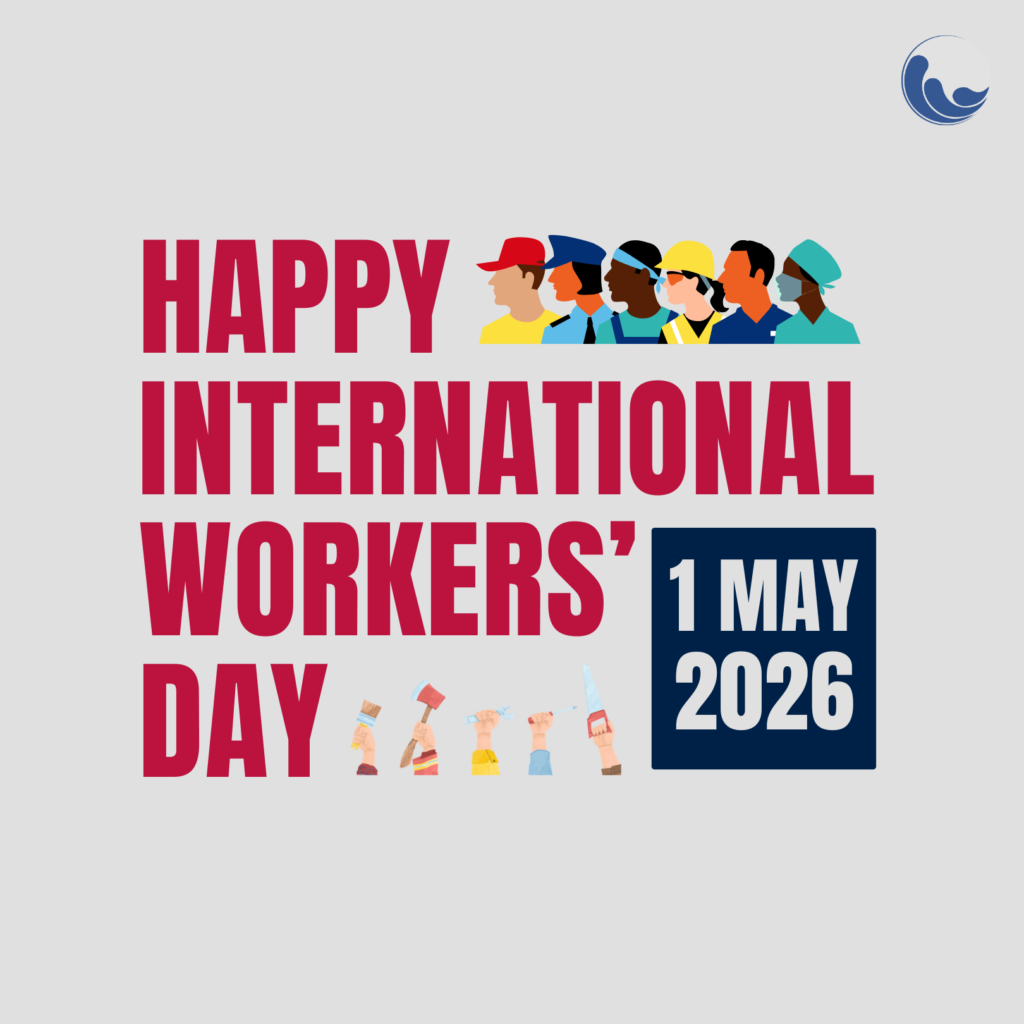
ทุกวันที่ 1 พฤษภาคม เราระลึกว่าสิทธิแรงงานที่มีอยู่ในวันนี้ไม่ได้เกิดขึ้นเอง และไม่ได้ได้มาโดยง่าย แต่ผ่านการต่อสู้
การรวมกลุ่ม และความเป็นน้ำหนึ่งใจเดียวกันของแรงงาน แม้วันนี้การต่อสู้จะยังเผชิญกับข้อจำกัด ความท้าทาย และ
ความเห็นที่แตกต่างกัน แต่แรงงานทั่วโลกยังคงหาหนทางที่จะยืนหยัดและรวมพลังกันต่อไป
ในวันแรงงานสากล 2026 เราขอยืนยันอีกครั้งว่า เราพอแล้ว! กับชนชั้นปกครองพยายามทำให้สิทธิแรงงานถดถอยกลับไป
เราขอเรียกร้อง:
งานที่มีคุณค่า
ค่าจ้างที่เพียงพอต่อการดำรงชีวิต
และ ชีวิตที่มีศักดิ์ศรี ✊
งานของเรา
เครือข่ายแรงงานยื่นข้อเรียกร้องต่อรัฐมนตรีแรงงาน
ผลักดันการคุ้มครองแรงงานแพลตฟอร์มและสิทธิประกันสังคม
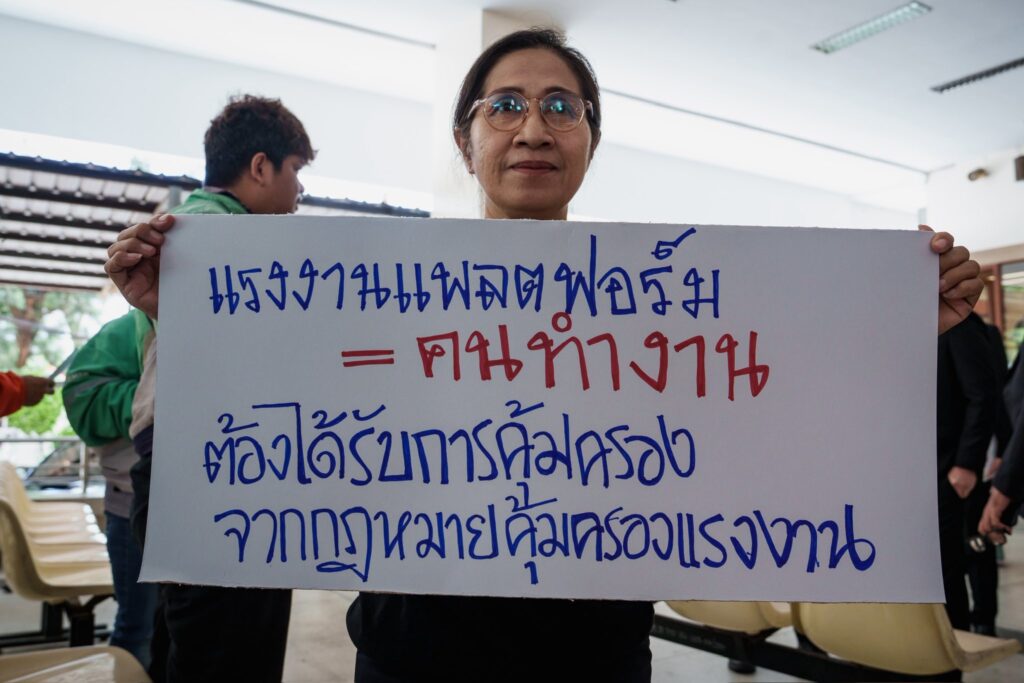
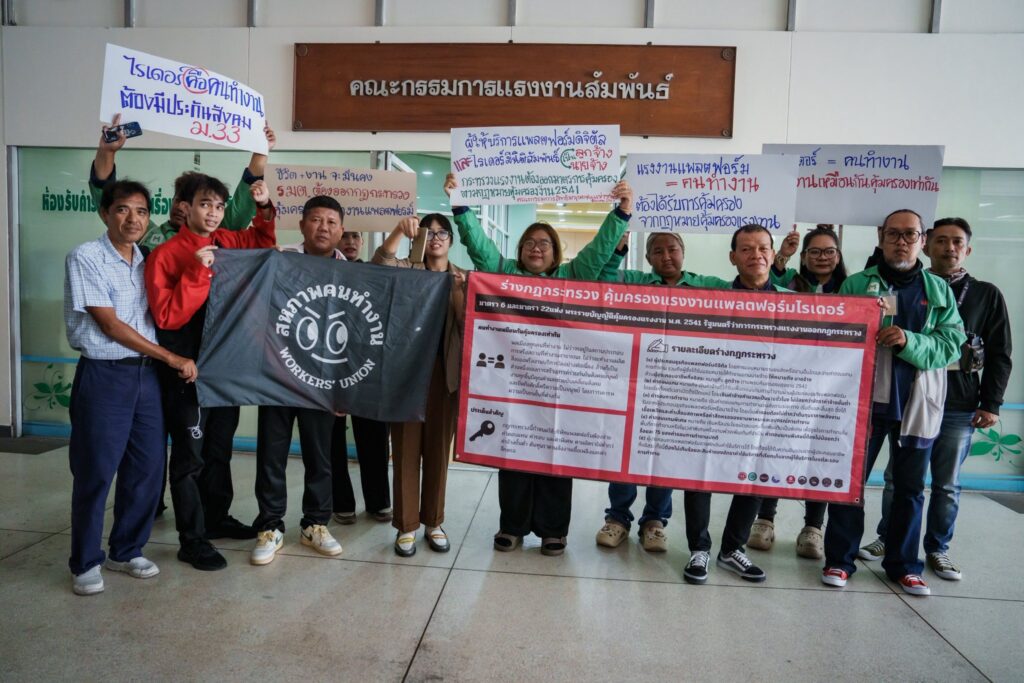
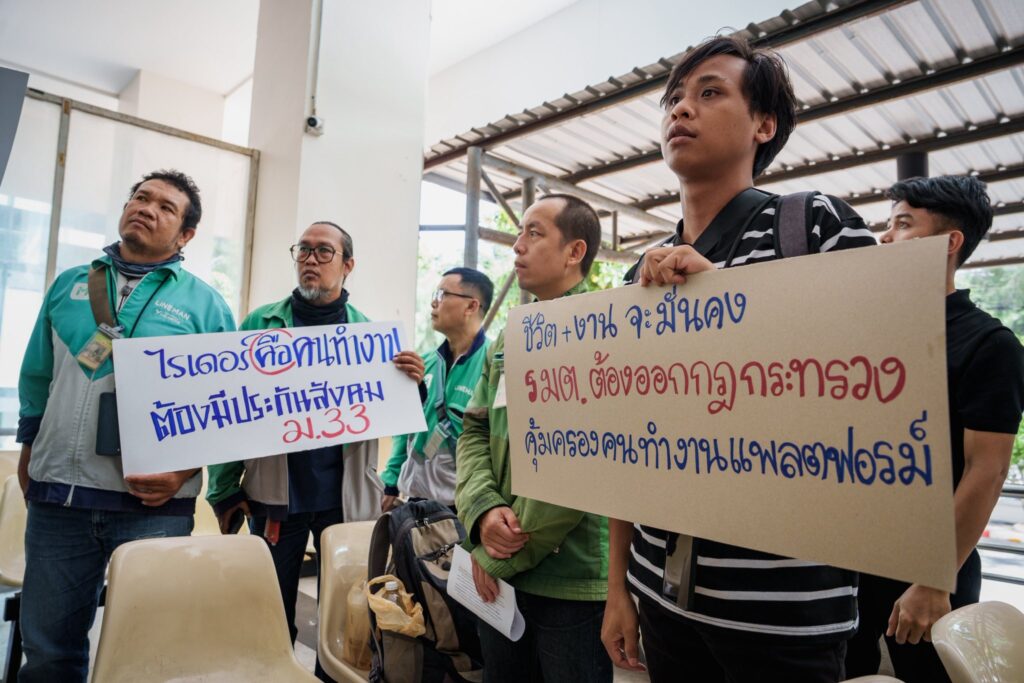
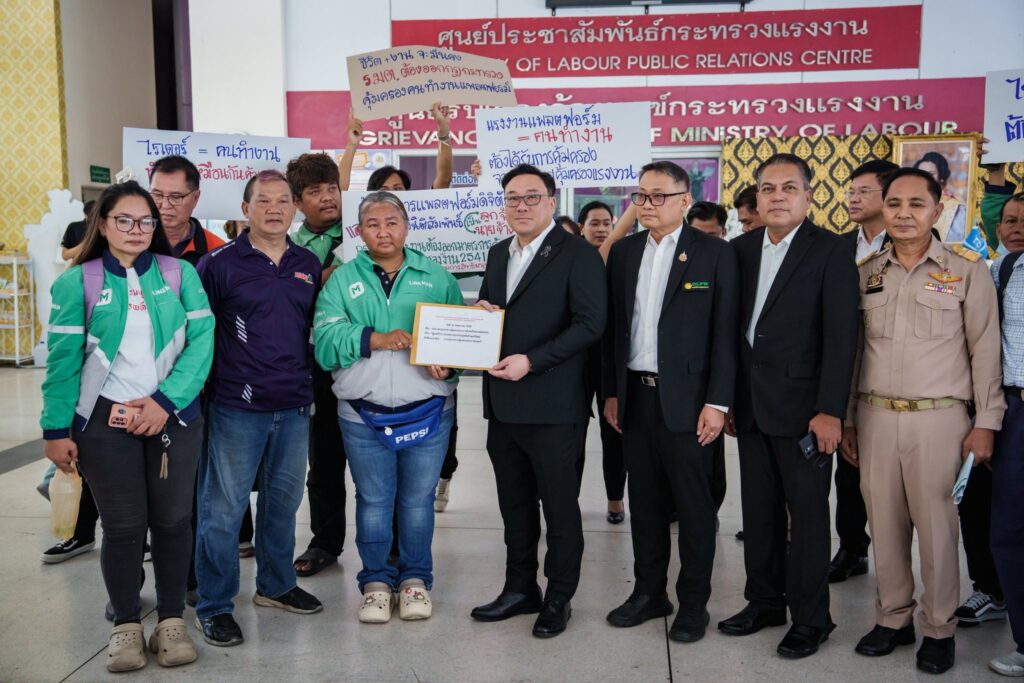
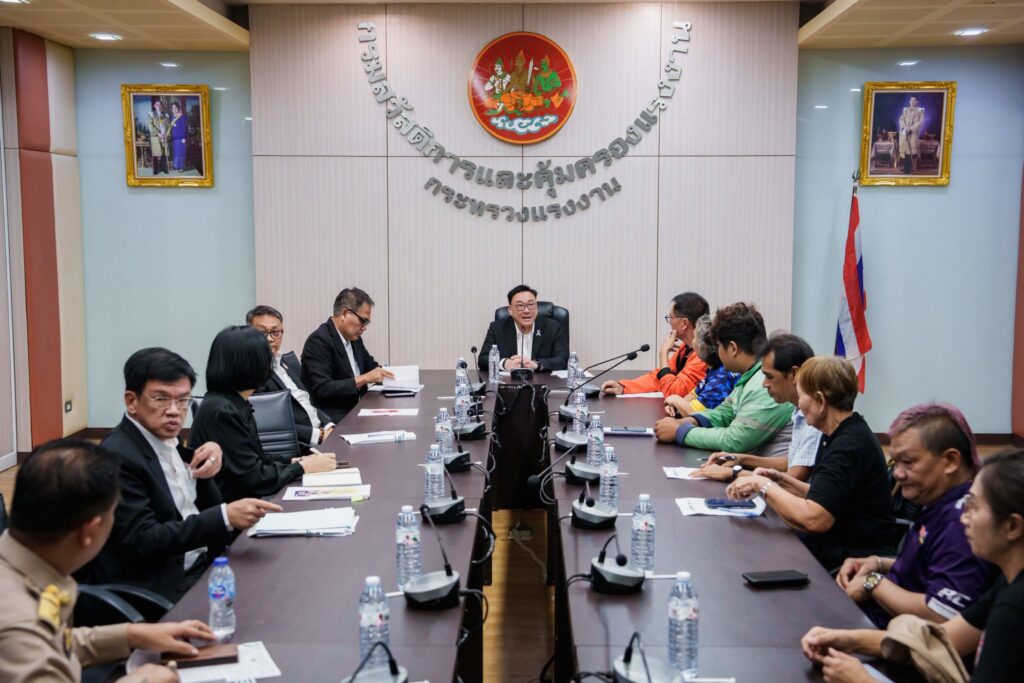
สืบเนื่องจากการหารือเมื่อวันที่ 22 เมษายน 2569 เครือข่ายแรงงานเห็นร่วมกันว่า ในช่วงเวลาที่กระทรวงแรงงานมีแนวคิดผลักดันให้ไรเดอร์เข้าสู่ระบบประกันสังคม และประเทศไทยกำลังเตรียมเข้าร่วมการประชุมใหญ่ประจำปีขององค์การแรงงานระหว่างประเทศ หรือ ILC ที่นครเจนีวาในเดือนมิถุนายนนี้ เป็นโอกาสอันเหมาะสมที่จะเข้าพบรัฐมนตรีว่าการกระทรวงแรงงาน เพื่อหารือข้อเสนอในการคุ้มครองแรงงานแพลตฟอร์ม
ดังนั้น ในวันที่ 18 พฤษภาคม 2569 เครือข่ายแรงงาน นำโดยสหพันธ์คนทำงานแพลตฟอร์มประเทศไทย PWOT สหภาพคนทำงาน Workers’ Union สถาบันแรงงานและเศรษฐกิจที่เป็นธรรม (JELI) ร่วมกับเครือข่ายแรงงาน ได้แก่ Rider Center สมาคมไรเดอร์ภาคใต้ กลุ่มสหภาพแรงงานย่านรังสิตและใกล้เคียง สหภาพคนทำงานแพลตฟอร์มไรเดอร์ (รังสิต) กลุ่มไรเดอร์สระบุรี กลุ่มไรเดอร์ลพบุรี กลุ่มสหกรณ์ร่วมคนทำงานดูแล และเครือข่ายขับเคลื่อนกฎหมายคุ้มครองแรงงานว่าด้วยสิทธิความเป็นมารดาของแรงงานหญิง ได้เข้ายื่นหนังสือข้อเรียกร้องและหารือกับนายจุลพันธ์ อมรวิวัฒน์ รัฐมนตรีว่าการกระทรวงแรงงาน เพื่อผลักดันให้แรงงานแพลตฟอร์มได้รับการคุ้มครองตามข้อเท็จจริงของการทำงาน ไม่ถูกจัดให้อยู่ในสถานะ “แรงงานอิสระ” หรือ “กึ่งอิสระ” ที่อาจทำให้หลุดออกจากระบบคุ้มครองแรงงาน
ข้อเรียกร้องสำคัญของเครือข่ายประกอบด้วย 3 ประเด็นหลัก ได้แก่
- การเข้าถึงระบบประกันสังคม ขอสนับสนุนนโยบายเร่งด่วน ตามที่รัฐมนตรีกระทรวงแรงงาน นายจุลพันธ์ อมรวิวัฒน์ จะดำเนินการลดเงินสมทบประกันสังคม เพื่อช่วยเหลือผู้ประกันตนจากภาวะวิกฤตพลังงานและค่าครองชีพสูง โดยมุ่งเน้นลดภาระลูกจ้างเป็นหลัก ขยายกฎหมายดึงแรงงานนอกระบบ และกลุ่มไรเดอร์กว่า 3 แสนคนเข้าสู่ระบบ จึงขอเรียกร้องเพิ่มสิทธิประโยชน์ประกันสังคมให้ก้าวหน้ากว่า 30 บาทรักษาทุกโรค คือ (1) เพิ่มค่าทำฟัน 2,000 บาท (2) ประกันสังคมต้องกำหนดให้การผ่าตัดแบบส่องกล้อง ไม่ต้องจ่ายส่วนต่างโดยประกาศให้ผู้ประกันตนทราบอย่างทั่วถึง และเพิ่มสิทธิการรักษามะเร็ง ให้ครอบคลุมการรักษาตามที่แพทย์วินิจฉัยจำเป็นใช้ยามุ่งเป้าและยาภูมิคุ้มกันบำบัด โดยประกาศให้ผู้ประกันตนทราบอย่างทั่วถึง (3) กำหนดมาตรการคุ้มครองความปลอดภัยในการทำงานของแรงงานแพลตฟอร์มอย่างเป็นรูปธรรม การเข้าถึงการกองทุนทดแทนกรณีเจ็บป่วยและอุบัติเหตุจากการทำงาน
- ขอคัดค้านร่าง พ.ร.บ. ส่งเสริมและคุ้มครองแรงงานอิสระที่เสนอโดยกระทรวงแรงงาน เพราะเป็น
การบิดเบือนสถานภาพการทำงานที่แท้จริง เอื้อประโยชน์ให้กับกลุ่มทุนธุรกิจแพลตฟอร์ม โดยไม่มีการคุ้มครอง
แรงงาน ทั้งนี้ ขอให้รัฐมนตรีกระทรวงแรงงานอาศัยอำนาจตาม มาตรา 6 และ มาตรา 22 ของ พ.ร.บ. คุ้มครอง
แรงงาน พ.ศ. 2541 ออกกฎกระทรวง ให้มีการคุ้มครองการทำงานของแรงงานแพลตฟอร์มในด้านรายได้ระหว่าง
เปิด-ปิดแอปพลิเคชัน ค่ารอบการทำงานตามต้นทุนระยะทาง รายได้ของงานพ่วง ซึ่งได้แนบร่างกฎกระทรวง
คุ้มครองแรงงานเป็นไปตามข้อวินิจฉัยของคณะกรรมการสิทธิมนุษยชนแห่งชาติ
ให้กรมสวัสดิการคุ้มครองแรงงาน จัดทำฐานข้อมูลแรงงานแพลตฟอร์มอย่างเป็นระบบ จำนวนแรงงาน
สัดส่วนตามเพศ และข้อมูลที่เกี่ยวข้อง และเผยแพร่ต่อสาธารณะ ให้รับเรื่องราวร้องทุกข์กรณีไรเดอร์ถูกระงับบัญชี
ถูกลงโทษ โดยให้มีการเปิดเผยข้อมูลอัลกอริทึม การจ่ายงาน การลงโทษ ให้เกิดความเป็นธรรม - การประชุมใหญ่ประจำปีขององค์การแรงงานระหว่างประเทศ (ILC) ในเดือนมิถุนายน 2569
ขอให้รัฐบาลไทยโดยกระทรวงแรงงานแสดงจุดยืนสนับสนุนอนุสัญญาและข้อเสนอแนะว่าด้วยงานที่มีคุณค่า
ในเศรษฐกิจแพลตฟอร์มในการประชุมดังกล่าว และเมื่อมีการรับรองแล้วเสร็จ ขอให้รัฐบาลไทยลงนามในอนุสัญญา
และนำมาผลักดันกฎหมายและวางมาตรฐานแรงงานแพลตฟอร์มภายในประเทศที่ไม่ต่ำกว่ามาตรฐานสากล
ในการหารือ ตัวแทนไรเดอร์ได้สะท้อนปัญหาการทำงานที่ถูกควบคุมโดยแพลตฟอร์มอย่างชัดเจน เช่น การติดตามตำแหน่งผ่าน GPS การบังคับจองรอบ การลดค่ารอบ การลงโทษเมื่อปฏิเสธงานหรือทำงานไม่ตรงเวลา การระงับบัญชีโดยไม่เป็นธรรม และการเปลี่ยนแปลงสัญญาโดยฝ่ายเดียว ซึ่งสะท้อนว่าไรเดอร์ไม่ได้มีอิสระในการทำงานอย่างแท้จริง แต่ทำงานอยู่ภายใต้ระบบควบคุมของแพลตฟอร์ม จึงควรได้รับการคุ้มครองในฐานะแรงงานที่มีความสัมพันธ์การจ้างงานตามข้อเท็จจริง
นอกจากนี้ ตัวแทนไรเดอร์ยังได้เสนอปัญหาด้านความปลอดภัย โดยเฉพาะไรเดอร์หญิงที่เผชิญการคุกคามทางเพศจากลูกค้าและร้านค้า ทั้งทางกายภาพและผ่านช่องทางแชทออนไลน์ แต่กลับขาดกลไกที่ชัดเจนในการร้องเรียน ติดตามตัวผู้กระทำ หรือขอความร่วมมือจากแพลตฟอร์ม ทำให้แรงงานต้องเผชิญความเสี่ยงโดยไม่มีระบบคุ้มครองที่เพียงพอ
ด้านรัฐมนตรีว่าการกระทรวงแรงงานระบุว่าได้รับทราบปัญหาและความเดือดร้อนของแรงงานแพลตฟอร์ม และมีความตั้งใจที่จะผลักดันให้แรงงานกลุ่มนี้เข้าสู่ระบบประกันสังคม พร้อมได้รับสิทธิประโยชน์ที่เหมาะสม อย่างไรก็ตาม กระทรวงยังยก
ข้อจำกัดทางกฎหมายขึ้นมาในการพิจารณาออกกฎกระทรวงเพื่อคุ้มครองไรเดอร์โดยเฉพาะ และเสนอให้มีการตั้งคณะทำงานร่วม เพื่อศึกษาและทบทวนรูปแบบสัญญา พฤติการณ์การจ้างงาน และความสัมพันธ์ระหว่างแพลตฟอร์มกับแรงงานอย่างละเอียด โดยให้มีตัวแทนไรเดอร์เข้าร่วมให้ความเห็น
รัฐมนตรีแรงงานยังระบุว่าจะสนับสนุนการรับรองมาตรฐานแรงงานสากลว่าด้วยงานที่มีคุณค่าในเศรษฐกิจแพลตฟอร์มในการประชุม ILC และจะศึกษาหลักการจากสหภาพยุโรปหรือ EU Directive เช่น การสันนิษฐานสถานะลูกจ้างเมื่อมีอำนาจควบคุมการทำงาน ความโปร่งใสในการคำนวณค่าตอบแทน และการไม่ใช้ระบบอัตโนมัติหรือ AI ในการตัดสินใจระงับบัญชีหรือเลิกจ้างแรงงานโดยไม่มีการตรวจสอบจากมนุษย์
การหารือครั้งนี้เป็นก้าวสำคัญในการเปิดพื้นที่ให้เสียงของแรงงานแพลตฟอร์มเข้าสู่กระบวนการกำหนดนโยบายโดยตรง อย่างไรก็ตาม นอกจากการเข้าสู่ระบบประกันสังคมแล้ว การคุ้มครองแรงงานแพลตฟอร์มยังต้องรวมถึงการยอมรับสถานะการทำงานตามข้อเท็จจริง การคุ้มครองรายได้ ชั่วโมงการทำงาน ความปลอดภัยในการทำงาน กลไกร้องเรียนที่เป็นธรรม และสิทธิในการรวมกลุ่มและเจรจาต่อรอง เพื่อให้แรงงานแพลตฟอร์มได้รับความคุ้มครองตามหลักการและสิทธิขั้นพื้นฐานในการทำงานได้อย่างแท้จริง
ชวนอ่าน
- ทิศทางกฎหมายแรงงานแพลตฟอร์มในสิงคโปร์และมาเลเซีย สองประเทศแรก ๆ ในเอเชียตะวันออกเฉียงใต้
ที่ออกกฎหมายเฉพาะเพื่อคุ้มครองคนทำงานกิ๊กและแรงงานแพลตฟอร์ม อ่านที่: Tech Policy.Press
- พลังการจัดตั้งของไรเดอร์หญิงผ่านการดูแลและความไว้ใจกัน บทความจาก ALR ชวนสำรวจว่า ประสบการณ์ชีวิต อารมณ์ และภาระของแรงงานหญิง กลายเป็นฐานสำคัญของการมองเห็นปัญหาเชิงระบบและการรวมกลุ่มได้อย่างไร อ่านที่: Asian Labor Review
- ศาลโลกชี้ขาด “สิทธินัดหยุดงาน” ได้รับการคุ้มครองตามกฎหมายระหว่างประเทศ ติดตามคำวินิจฉัยสำคัญที่ยืนยันว่าเสรีภาพในการรวมตัวของแรงงาน และสิทธินัดหยุดงาน เป็นสิทธิที่ได้รับการคุ้มครองในระดับสากล อ่านที่: ประชาไท
ประเด็นที่น่าสนใจ
“ลูกจ้าง” VS “อิสระ”
ตั้งแต่ต้นเดือนพฤษภาคม กระทรวงแรงงานเริ่มส่งสัญญาณให้ความสำคัญกับการคุ้มครองไรเดอร์มากขึ้น โดยเฉพาะแนวทางที่จะดึงไรเดอร์เข้าสู่ระบบประกันสังคม ประเด็นเรื่อง “สถานะการจ้างงาน” ก็กลับมาเป็นข้อถกเถียงสำคัญอีกครั้ง
ในหมู่ไรเดอร์และคนทำงานแพลตฟอร์ม
ในขณะที่ข้อเรียกร้องให้ไรเดอร์ได้รับการยอมรับสถานะ “ลูกจ้าง” ตามสภาพการทำงานจริงมีการผลักดันมาอย่างต่อเนื่อง เพื่อไม่ให้คนทำงานตกหล่นจากความคุ้มครองด้านแรงงานและสามารถเข้าถึงสิทธิประกันสังคมที่เหมาะสม อีกด้านหนึ่ง
ก็ยังมีข้อกังวลต่าง ๆ ที่ถูกหยิบยกขึ้นมาถกเถียงกันในช่วงนี้ เช่น หากไรเดอร์รับงานหลายแอป ใครควรถูกนับเป็นนายจ้าง
การส่งเงินสมทบควรเป็นอย่างไร และการคุ้มครองตามกฎหมายแรงงานจะกระทบต่อความยืดหยุ่นในการทำงานหรือไม่
ในช่วงที่หลายฝ่ายกำลังถกเถียงและหาทางออกร่วมกันว่า หากไรเดอร์ได้รับการคุ้มครองในฐานะลูกจ้างแล้ว “ความอิสระ”
ในการทำงานจะหายไป เราขอชวนกลับไปตั้งคำถามจากจุดเริ่มต้นอีกครั้งว่า “ไรเดอร์ = อิสระจริงหรือไม่?” และชวนติดตามความเคลื่อนไหวในเดือนมิถุนายนนี้ ซึ่งจะมีการหารือเพื่อรับรองอนุสัญญา ILO ว่าด้วยงานที่มีคุณค่าในเศรษฐกิจแพลตฟอร์ม ว่าความคุ้มครองที่เป็นธรรมสำหรับไรเดอร์ในประเทศไทยควรหน้าตาเป็นอย่างไร
“No human masterpiece has been created without great labour.” – André Gide
We’re living in a world full of overlapping crises. Climate change is making work more dangerous, especially for those working outdoors. Imperialist wars and political conflicts continue to disrupt livelihoods and drive up costs, while wages remain far from livable. And again, those most affected are the ones with the least protection.
On 1 May, we remember that the rights workers have today did not come easily, and what was fought for remains unfinished. But through organizing and collective action, despite all the challenges, restrictions, and differences, workers are still finding ways to come together.
And on May Day, we say again: enough of the ruling class rolling back workers’ rights! We call for:
Decent work. A living wage. A life with dignity. ✊
What Happened This Month
Labour networks submit demands to the Labour Minister,
pushing for platform worker protection and social security
Following the national consultation held on 22 April 2026, that this was an important moment to meet with the Minister of Labour and discuss proposals for the protection of platform workers. This came as the Ministry of Labour was considering ways to bring riders into the social security system, while Thailand was preparing to participate in the International Labour Conference (ILC) in Geneva in June.
Therefore, on 18 May 2026, labour networks led by the Platform Workers Federation of Thailand (PWOT), the Workers’ Union, and the Just Economy and Labor Institute (JELI), together with Rider Center, the Southern Riders Association, the Rangsit and Area Labour Union Group, the Platform Rider Workers’ Union (Rangsit), rider groups from Saraburi and Lopburi, the Care Workers Cooperative, and the network advocating for maternity rights protection for women workers, submitted a letter of demands and met with Julapun Amornvivat, Minister of Labour.
The networks called for platform workers to be protected according to the actual conditions of their work, rather than being classified as “independent workers” or “semi-independent workers,” which could exclude them from labour protection systems.
The key demands focused on three main issues.
- Access to social security. The networks expressed support for the Minister’s urgent policy to reduce social security contributions in response to the energy crisis and rising cost of living, particularly to ease the burden on employees. They also called for legal reforms to expand coverage to informal workers and more than 300,000 riders.
The networks further demanded improved social security benefits, including an increase in dental care coverage to 2,000 baht, clear guarantees that endoscopic surgery would not require additional out-of-pocket payments, broader cancer treatment coverage according to medical necessity, and concrete occupational safety measures for platform workers, including access to compensation in cases of work-related injury or illness. - Opposition to the Draft Independent Workers Promotion and Protection Act. The networks opposed the Draft Independent Workers Promotion and Protection Act proposed by the Ministry of Labour, arguing that it distorts the actual employment status of platform workers and benefits platform businesses without providing meaningful labour protection.
They called on the Minister of Labour to use the authority under Sections 6 and 22 of the Labour Protection Act B.E. 2541 to issue ministerial regulations protecting platform workers, including income protection during app-on and app-off periods, fair delivery rates based on distance and costs, and income from stacked orders.
The networks also called on the Department of Labour Protection and Welfare to develop a systematic public database on platform workers, including the number of workers, gender-disaggregated data, and other relevant information, as well as to establish complaint mechanisms for riders facing account suspension, penalties, and unfair algorithmic management. - The International Labour Conference (ILC) in June 2026. The networks called on the Thai government, through the Ministry of Labour, to support the proposed ILO Convention and Recommendation on decent work in the platform economy. Once adopted, the networks urged Thailand to ratify the Convention and use it as a basis for developing domestic laws and labour standards for platform workers that are no lower than international standards.
During the meeting, rider representatives shared how their work is clearly controlled by platforms, including through GPS tracking, compulsory shift booking, reduced delivery rates, penalties for rejecting orders or being late, unfair account suspension, and unilateral changes to contracts. These conditions show that riders do not have genuine independence in their work, but are subject to platform control and should therefore be protected according to the actual employment relationship.
Rider representatives also raised safety concerns, particularly for women riders who face sexual harassment from customers, both physically and through online chat channels. Yet there are still no clear mechanisms for reporting, identifying perpetrators, or obtaining cooperation from platforms, leaving workers exposed to risks without sufficient protection.
The Minister of Labour stated that he had acknowledged the problems faced by platform workers and expressed his intention to bring this group of workers into the social security system with appropriate benefits. However, the Ministry also raised legal limitations regarding the possibility of issuing ministerial regulations specifically to protect riders. The Minister proposed the establishment of a joint working group to study and review platform contracts, working conditions, and the relationship between platforms and workers in detail, with rider representatives included in the process.
The Minister also stated that the Ministry would support the adoption of international labour standards on decent work in the platform economy at the ILC and would study principles from the European Union Platform Work Directive, including the presumption of employment status when there is control over work, transparency in wage calculation, and the prohibition of automated systems or AI making decisions on account suspension or dismissal without human review.
This meeting marked an important step in opening space for platform workers’ voices to directly enter the policymaking process. However, beyond access to social security, the protection of platform workers must also include recognition of their employment status according to the reality of their work, income protection, regulation of working hours, occupational safety, fair complaint mechanisms, and the right to organise and bargain collectively. These are essential to ensuring that platform workers are genuinely protected in line with fundamental principles and rights at work.
In Case You Missed It
- Platform labour laws in Singapore and Malaysia. A look at two of the first countries in Southeast Asia to introduce specific laws protecting gig and platform workers. Read at: Tech Policy.Press
- Women riders’ organising power through care and trust. An article from ALR exploring how Thai women workers’ emotions, exhaustion, and daily burdens become a basis for seeing systemic problems and building collective power. Read at: Asian Labor Review
- International Court of Justice affirms the right to strike under international law. A key ruling confirming that freedom of association and the right to strike are protected under international law. Read at: Prachatai
In Focus
“Employee” vs “Freedom”
Since early May, the Ministry of Labour has begun signalling greater attention to the protection of riders, particularly through the idea of bringing riders into the social security system. This has brought the question of “employment status” back into public debate among riders.
While there has long been a call for riders to be recognised as “employees” according to the actual conditions of their work, so that they are not excluded from labour protections and can access appropriate social security rights, concerns have also been raised. These include questions such as: if riders work across multiple apps, who should be considered the employer? How should social security contributions be made? And would labour law protections affect the flexibility of platform work?
As many are debating whether being protected as employees would mean losing “freedom” at work, we invite readers to return to the starting question: are riders truly independent? We also invite everyone to closely follow developments in June, when discussions will take place toward the adoption of an ILO Convention on Decent Work in the Platform Economy, and to reflect on what protection for riders in Thailand should look like.
Thank you for reading along with us. We’ll keep sharing what’s ahead in the next edition!