(See English version below.)
งานของเรา
Threads of Resilience เมื่อภูมิอากาศคือเรื่องของคนทำงาน
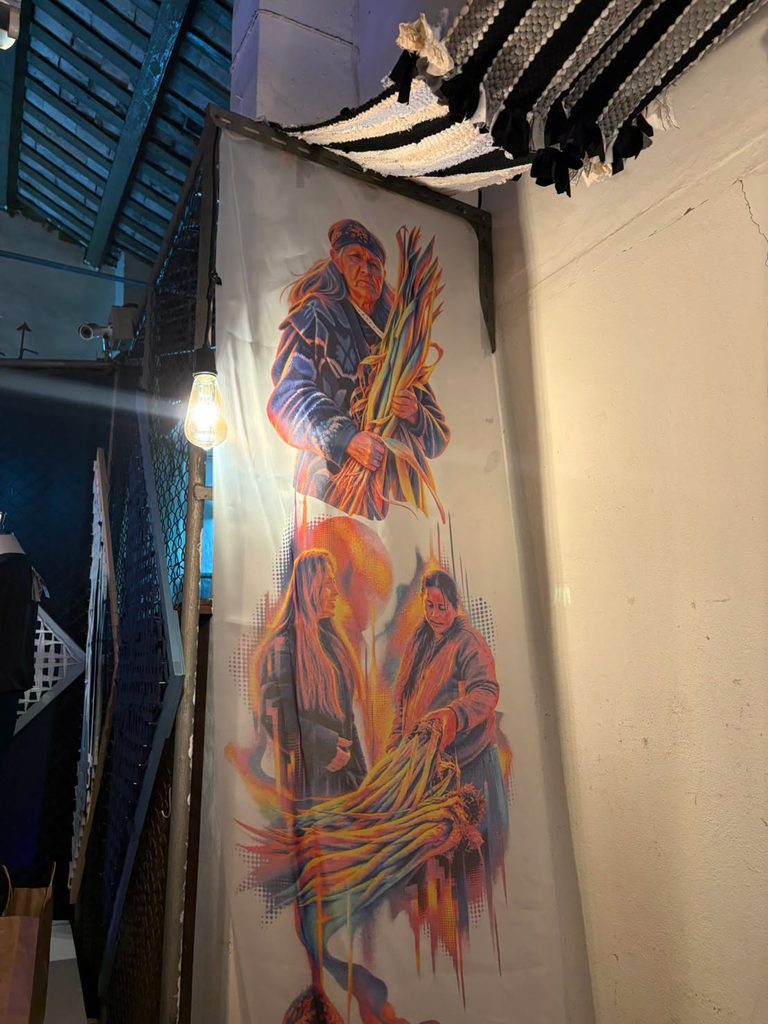

วันที่ 9 ตุลาคม 2569 สถาบันแรงงานและเศรษฐกิจที่เป็นธรรม (JELI) ไปร่วมงาน 🧵 Threads of Resilience: Women on the Frontlines of Climate Change นิทรรศการโดย Pulitzer Center ที่ Nokyoong Tea House ย่านทรงวาด ซึ่งหยิบเรื่องราวของผู้หญิงที่อยู่แนวหน้าของวิกฤตสภาพภูมิอากาศจากหลายพื้นที่มาเล่าผ่านงาน investigative journalism และ art installation
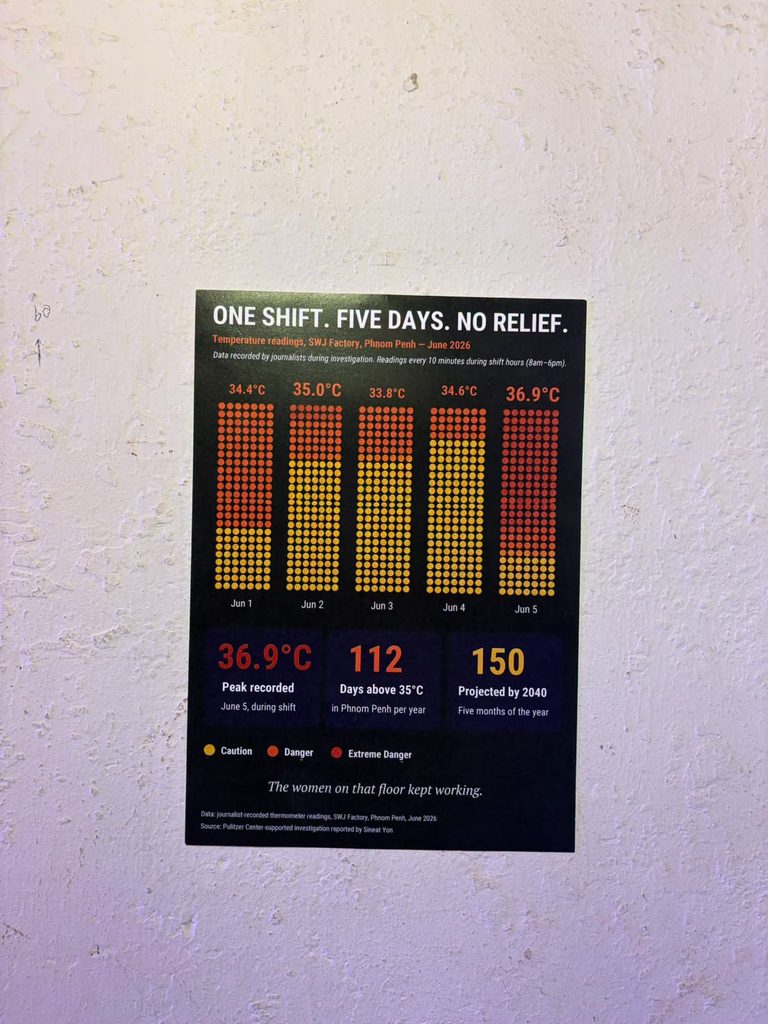
เรื่องแรกคือ แรงงานหญิงในโรงงานผลิตเสื้อผ้าที่กัมพูชา คนงานต้องทำงานท่ามกลางความร้อนในระดับอันตรายถึงอันตรายอย่างยิ่ง บางคนดื่มน้ำแค่ประมาณ 750 มล. ตลอดกะ 12 ชั่วโมง เพื่อหลีกเลี่ยงการเข้าห้องน้ำเพราะจะทำให้สายการผลิตหยุดไปด้วย ขณะที่ตามสถิติ กรุงพนมเปญมีวันที่อุณหภูมิสูงกว่า 35°C ประมาณ 112 วันต่อปี และอาจเพิ่มเป็น 150 วันภายในปี 2040
อีกเรื่องมาจากผู้หญิงชาว Wichí ในอาร์เจนตินา ที่สืบทอดการทอเส้นใยจากต้น chaguar มาหลายรุ่น แต่การตัดป่า การขยายพื้นที่เกษตร ภัยแล้ง และอุณหภูมิที่สูงขึ้น ทำให้พืชชนิดนี้หายากขึ้น ผู้หญิงบางคนต้องเดินเป็นระยะทางรวมเทียบเท่ามาราธอน เพื่อหาเส้นใยสำหรับงานทอเพียงชิ้นเดียว ซึ่งอาจใช้เวลาทำถึงหนึ่งเดือน
เรื่องราวจากทั้งสองประเทศทำให้เราเห็นว่าวิกฤตสภาพภูมิอากาศเป็นเรื่องของโลกการทำงานด้วย เพราะผลกระทบไม่ได้หยุดอยู่ที่ตัวเลขอุณหภูมิ แต่ส่งผลถึงร่างกาย สุขภาพ ชั่วโมงทำงาน รายได้ และต้นทุนที่คนทำงานต้องแบกรับ
เมื่อหันกลับมามองประเทศไทย แค่เรามองออกไปที่ถนน เราจะเห็นไรเดอร์และคนทำงานกลางแจ้งจำนวนมากที่ต้องเผชิญทั้งอากาศร้อนจัด ฝนตก น้ำท่วม จากสภาพอากาศที่รุนแรงขึ้นทุกปี เราชวนทุกคนมาตั้งคำถามว่าเราจะทำอย่างไรให้ความปลอดภัยของคนทำงานเป็นสิ่งที่เข้าถึงได้จริง ทั้งสิทธิในการหยุดพัก น้ำดื่ม พื้นที่หลบแดด และความคุ้มครองเมื่อสภาพอากาศไม่ปลอดภัย
ที่สำคัญ ต้นทุนจากวิกฤตภูมิอากาศต้องไม่ถูกผลักให้คนทำงานเป็นผู้แบกรับอยู่ฝ่ายเดียว แต่ผู้ที่กำหนดเงื่อนไขการทำงานและได้ประโยชน์จากแรงงาน รวมถึงรัฐที่มีหน้าที่คุ้มครองคนทำงาน ต้องร่วมรับผิดชอบด้วย
แรงงานหญิงในยุค Platform Capitalism จากประสบการณ์สู่การจัดตั้งข้ามพรมแดน
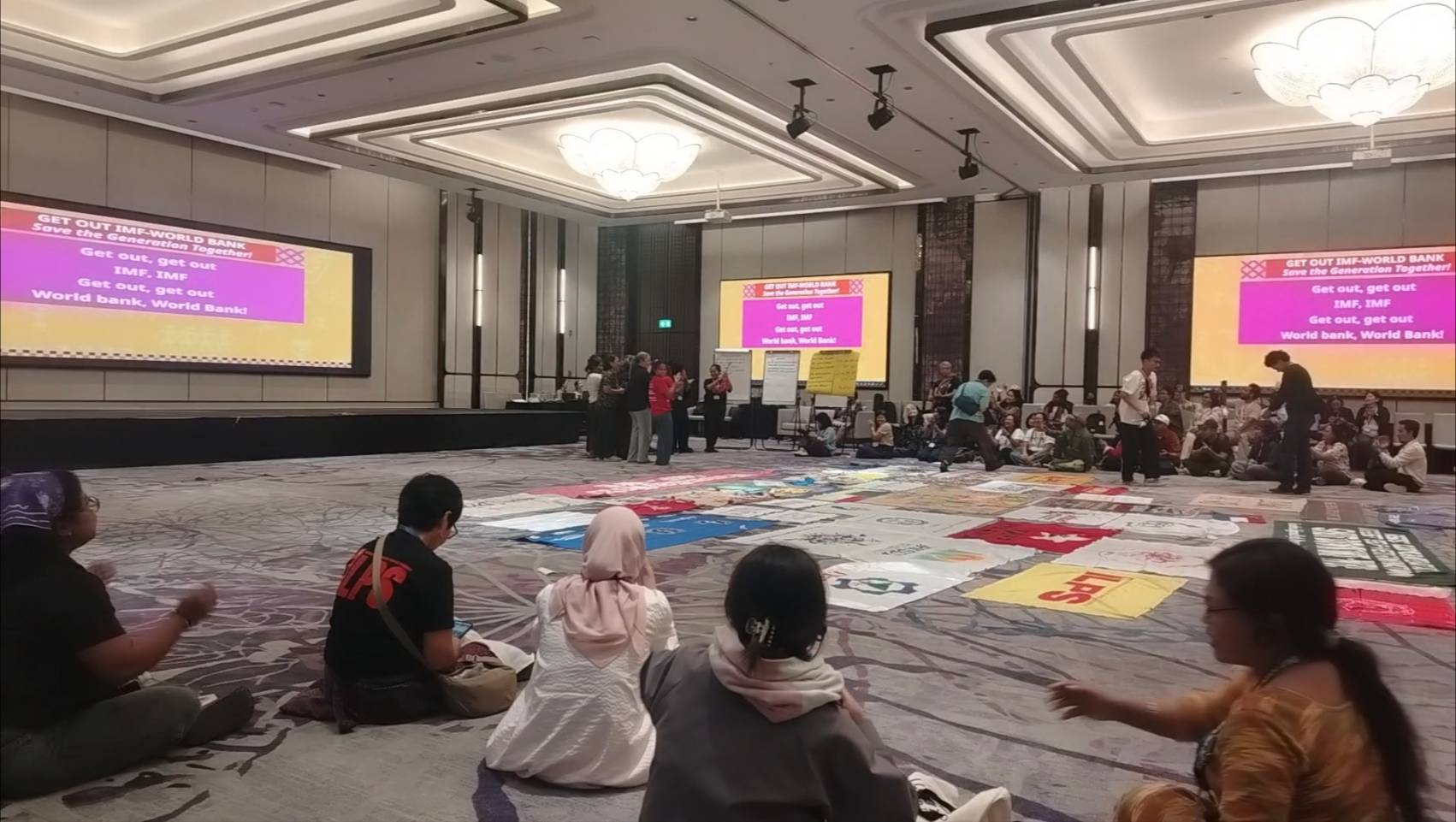
วันที่ 11, 16 และ 17 ตุลาคม 2569 JELI เข้าร่วมการประชุมเชิงปฏิบัติการระดับภูมิภาค “Regional Convening: Reimagining Feminist Resistance Under Platform Capitalism Era” จัดโดย Asia Pacific Forum on Women, Law and Development (APWLD)
การประชุมครั้งนี้เป็นพื้นที่แลกเปลี่ยนระหว่างแรงงานหญิงในระบบแพลตฟอร์ม องค์กรแรงงาน นักวิจัย นักกิจกรรมสตรีนิยม และภาคประชาสังคม เพื่อทำความเข้าใจผลกระทบของระบบทุนนิยมแพลตฟอร์มต่อสิทธิแรงงาน โดยเฉพาะแรงงานหญิง รวมถึงร่วมกันหาแนวทางในการจัดตั้ง การรณรงค์เชิงนโยบาย และการสร้างพลังต่อรองร่วมกันทั้งในระดับประเทศและภูมิภาค
ผู้เข้าร่วมจากประเทศไทย อินเดีย อินโดนีเซีย และกัมพูชาแบ่งปันประสบการณ์จากงานส่งอาหาร ขนส่ง และบริการความงามผ่านแอปพลิเคชัน พบปัญหาร่วมกันหลายเรื่อง ทั้งรายได้ต่ำและไม่แน่นอน ชั่วโมงทำงานยาวนาน ค่าใช้จ่ายในการทำงานที่แรงงานต้องรับผิดชอบเอง และการเข้าถึงประกันสังคมหรือสิทธิแรงงานที่ยังมีข้อจำกัด
อีกประเด็นสำคัญคือการควบคุมการทำงานผ่านระบบอัลกอริทึม การติดตามข้อมูล การให้คะแนน และการระงับหรือปิดบัญชีโดยบริษัท ซึ่งอาจทำให้คนทำงานสูญเสียรายได้และความสามารถในการทำงานได้ทันที ขณะที่แรงงานหญิงยังต้องเผชิญกับการคุกคามและความไม่ปลอดภัยในการให้บริการ โดยเฉพาะงานที่ต้องเข้าไปในบ้านของลูกค้า รวมถึงภาระงานดูแลครอบครัวที่ไม่ได้รับค่าตอบแทน ทำให้การทำงานและการรวมตัวเรียกร้องสิทธิมีข้อจำกัดมากขึ้น
การอภิปรายยังเชื่อมโยงประสบการณ์ของคนทำงานกับอำนาจของบริษัทเทคโนโลยี นักลงทุน และห่วงโซ่มูลค่าระดับโลก
โดยเฉพาะเรื่องข้อมูลที่เกิดจากแรงงานและผู้ใช้บริการ ซึ่งสามารถถูกนำไปวิเคราะห์ สร้างมูลค่าทางธุรกิจ และใช้ควบคุมการทำงาน ขณะที่แรงงานมีอำนาจจำกัดในการเข้าถึงหรือกำหนดการใช้ข้อมูลของตนเอง
ผู้เข้าร่วมเน้นว่า “ข้อมูลเป็นเรื่องการเมือง” เพราะเกี่ยวข้องกับคำถามว่าใครเป็นผู้เก็บ ครอบครอง และใช้ข้อมูล และใช้เพื่อประโยชน์ของใคร นอกจากนี้ยังมีข้อกังวลเรื่องการใช้ข้อมูลเพื่อเฝ้าระวัง การนำข้อมูลแรงงานไปฝึกระบบปัญญาประดิษฐ์โดยไม่มีความยินยอมที่เหมาะสม และผลกระทบของเทคโนโลยีต่อความมั่นคงในการทำงาน จึงมีข้อเสนอให้แรงงานสามารถรวบรวมหลักฐานจากประสบการณ์ของตนเอง และนำข้อมูลเหล่านี้มาใช้สนับสนุนการรวมตัวและการเรียกร้องสิทธิ
อีกประเด็นที่พูดถึงอย่างกว้างขวางคือสถานะการจ้างงานของแรงงานแพลตฟอร์มที่ยังไม่ชัดเจนในหลายประเทศ คนทำงานมักถูกเรียกว่า “หุ้นส่วน” ผู้ประกอบอาชีพอิสระ หรือผู้รับจ้างอิสระ ส่งผลให้การเข้าถึงค่าจ้างขั้นต่ำ สวัสดิการ ประกันสังคม สิทธิการลา และสิทธิในการรวมตัวต่อรองยังมีข้อจำกัด แม้บางประเทศจะเริ่มมีกฎหมายหรือมาตรการที่เกี่ยวข้องแล้ว แต่การบังคับใช้ยังไม่ทั่วถึง และบางมาตรการยังไม่ครอบคลุมปัญหาเฉพาะของแรงงานหญิง
ผู้เข้าร่วมยังอภิปรายถึงอนุสัญญาองค์การแรงงานระหว่างประเทศ ฉบับที่ 193 ว่าด้วยงานที่มีคุณค่าในเศรษฐกิจแพลตฟอร์ม ตั้งแต่สิทธิขั้นพื้นฐานในการทำงาน อาชีวอนามัยและความปลอดภัย ความรุนแรงและการคุกคาม การคุ้มครองทางสังคม การจัดการผ่านอัลกอริทึม ข้อมูลส่วนบุคคล การระงับบัญชี และกลไกจัดการข้อพิพาท
ในวงประชุมมีการย้ำว่า C193 เป็นเครื่องมือสำคัญสำหรับการรณรงค์และผลักดันนโยบาย แต่ไม่ได้ทำให้แรงงานทุกคนได้รับสถานะลูกจ้างหรือได้รับความคุ้มครองโดยอัตโนมัติ ผลในทางปฏิบัติยังขึ้นอยู่กับการดำเนินการและการบังคับใช้กฎหมายของแต่ละประเทศ รวมถึงการมีส่วนร่วมของแรงงานในการกำหนดนโยบาย
หนึ่งในข้อเสนอที่เกิดขึ้นจากการแลกเปลี่ยนคือการจัดตั้ง Feminist Gig Workers Alliance เพื่อเชื่อมโยงแรงงานหญิงและองค์กรที่ทำงานเรื่องแพลตฟอร์มในประเทศต่าง ๆ ให้สามารถแลกเปลี่ยนข้อมูล ประสบการณ์ และพัฒนาความร่วมมือกันต่อไป
Women Rebuild the World
ประสบการณ์ของผู้หญิงกับคำถามเรื่องเศรษฐกิจโลกและความเป็นธรรม
ระหว่างวันที่ 13–15 ตุลาคม 2569 JELI เข้าร่วมกิจกรรมภายใต้ Women Rebuild the World: Educate, Organise, Mobilise! ซึ่งจัดขึ้นในช่วงเดียวกับการประชุมประจำปี IMF–World Bank ที่กรุงเทพฯ โดย Asia Pacific Forum on Women, Law and Development (APWLD) ร่วมกับ JASS Associates และเครือข่ายภาคประชาสังคม
กิจกรรมเปิดพื้นที่ให้ขบวนการผู้หญิง นักกิจกรรมระดับชุมชน กลุ่มชนพื้นเมือง องค์กรภาคประชาสังคม และผู้ได้รับผลกระทบจากประเทศต่าง ๆ ใน Global South ได้แลกเปลี่ยนประสบการณ์ วิเคราะห์โครงสร้างเศรษฐกิจโลก และร่วมกันพัฒนาแนวทางการต่อสู้เพื่อความเป็นธรรม
การพูดคุยในช่วงแรกเชื่อมโยงประวัติศาสตร์อาณานิคมเข้ากับโครงสร้างการเงินโลกในปัจจุบัน โดยผู้เข้าร่วมพูดถึงหนี้สิน เงื่อนไขเงินกู้ มาตรการรัดเข็มขัด การแปรรูปรัฐวิสาหกิจและบริการสาธารณะ ตลอดจนรูปแบบการพัฒนาที่ให้ความสำคัญกับการลงทุนและการใช้ทรัพยากร ขณะที่ผลกระทบจากนโยบายเหล่านี้ตกอยู่กับชุมชนในรูปของการสูญเสียที่ดินและทรัพยากร ความไม่มั่นคงในการทำงาน และภาระการดูแลครอบครัวที่เพิ่มขึ้น โดยเฉพาะสำหรับผู้หญิง
กิจกรรมยังเปิดพื้นที่ให้ผู้เข้าร่วมจากหลายประเทศนำประสบการณ์ของชุมชนมาแลกเปลี่ยนกัน ผู้แทนจากปาปัวตะวันตกพูดถึงผลกระทบจากเหมือง Freeport การพลัดถิ่นของชาว Amungme และการต่อสู้ของผู้หญิงในชุมชน ขณะที่ผู้แทนจากจังหวัดนูซาเต็งการาตะวันออก ประเทศอินโดนีเซีย เล่าถึงโครงการพลังงานความร้อนใต้พิภพและผลกระทบต่อพื้นที่เกษตร แหล่งน้ำ และการดำรงชีวิต
ผู้แทนจากฟิลิปปินส์เชื่อมโยงนโยบายเศรษฐกิจ การปรับโครงสร้าง และการค้าเสรีเข้ากับความไม่มั่นคงในการทำงาน ภาระงานดูแล และสภาพการจ้างงานของผู้หญิง ส่วนผู้แทนจากฮอนดูรัสพูดถึงบทบาทของผู้หญิงในการต่อต้านโครงการสกัดทรัพยากร รวมถึงการคุกคามและการดำเนินคดีกับผู้ปกป้องสิทธิ
นอกจากการอภิปราย ยังมีกิจกรรมที่ใช้ศิลปะและการสื่อสารเป็นส่วนหนึ่งของการเรียนรู้ ทั้งการทำโปสเตอร์โดยไม่ใช้ AI การทำ zine การแต่งเพลงและดนตรีเพื่อการเคลื่อนไหว การฉายภาพยนตร์และสารคดี รวมถึง Feminist Library และ Community Market ซึ่งเปิดพื้นที่ให้ผู้เข้าร่วมแลกเปลี่ยนสิ่งพิมพ์ ความรู้ และประสบการณ์จากขบวนการต่าง ๆ
ในวันที่ 15 ตุลาคม มีพื้นที่สำหรับผู้ได้รับผลกระทบจากหลายประเทศขึ้นพูดถึงผลของนโยบายและโครงการพัฒนาที่เกี่ยวข้องกับ IMF และ World Bank ทั้งเรื่องการสูญเสียที่ดิน การสูญเสียสมาชิกในชุมชน หนี้สิน และความไม่มั่นคงในชีวิต ตัวแทนจากไนจีเรีย เคนยา ซูดานใต้ ฟิจิ อินโดนีเซีย ฟิลิปปินส์ รวมถึงชุมชนที่ได้รับผลกระทบจากเขื่อนปากมูนในประเทศไทยได้ร่วมถ่ายทอดประสบการณ์ในเวทีนี้
ช่วงค่ำยังมีการแสดงทางวัฒนธรรมและการสะท้อนปัญหาของชุมชนต่าง ๆ ที่เข้าร่วม ก่อนปิดกิจกรรมด้วยเสียงของผู้เข้าร่วมที่ร่วมกันเรียกร้องความรับผิดชอบจาก IMF และ World Bank
โดยรวมแล้ว Feminist Learning Space เป็นพื้นที่สำหรับการเรียนรู้ทางการเมือง การวิเคราะห์ปัญหาร่วมกัน และการสร้างความเป็นน้ำหนึ่งใจเดียวกันระหว่างขบวนการผู้หญิงและชุมชนจากหลายประเทศ การพูดคุยตลอดกิจกรรมทำให้เห็นว่าปัญหาเรื่องหนี้ การค้า ที่ดิน ทรัพยากร สิทธิแรงงาน และบริการสาธารณะเชื่อมโยงกัน และคนที่ได้รับผลกระทบควรมีพื้นที่ในการกำหนดทางเลือกและอนาคตของตนเอง
เสียงคนทำงานแพลตฟอร์มบนเวที Civil Society Policy Forum
วันที่ 14 ตุลาคม 2569 เมรี จุลพันธ์ ไรเดอร์จากกรุงเทพฯ และตัสแทนสหพันธ์คนทำงานแพลตฟอร์มประเทศไทย (PWOT) เข้าร่วมวงเสวนาออนไลน์ “When AI Is the Boss: Platform Work, Social Security, and ILO Convention No. 193” จัดขึ้นใน Civil Society Policy Forum ระหว่างการประชุมประจำปี IMF–World Bank Group 2026 ที่กรุงเทพฯ โดยมี ITUC และองค์กรเครือข่ายด้านแรงงาน สิทธิมนุษยชน และการคุ้มครองทางสังคมร่วมจัด
ชื่อของวงสนทนาตั้งคำถามตรงไปตรงมากับสภาพการทำงานบนแพลตฟอร์มในปัจจุบัน เพราะสำหรับไรเดอร์และคนทำงานแพลตฟอร์มจำนวนมาก AI ไม่ได้เป็นเทคโนโลยีที่จะเข้ามาเปลี่ยนงานในอนาคต แต่เป็นส่วนหนึ่งของการทำงานอยู่แล้ว ระบบอัตโนมัติถูกใช้ในการแจกงาน กำหนดค่าตอบแทน ติดตามผลงาน ให้คะแนน และตัดสินใจเกี่ยวกับบัญชีของคนทำงาน
จากประสบการณ์ของเมรี ปัญหาไม่ได้อยู่เพียงว่าแพลตฟอร์มใช้ AI มากแค่ไหน แต่อยู่ที่ว่าเมื่อระบบเป็นผู้ตัดสิน คนทำงานสามารถถาม ชี้แจง หรือโต้แย้งกับใครได้บ้าง เธอเล่าถึงประสบการณ์ด้านความปลอดภัยระหว่างทำงาน และการพยายามติดต่อแพลตฟอร์มหลังเกิดเหตุ ซึ่งทำให้เห็นข้อจำกัดของระบบที่ใช้ข้อความและกระบวนการอัตโนมัติเป็นตัวกลางระหว่างบริษัทกับคนทำงาน
เมรียังตั้งข้อสังเกตว่า บริษัทเป็นผู้สร้างและกำหนดวิธีใช้ระบบเหล่านี้ AI จึงไม่ควรถูกใช้เป็นคำอธิบายเพื่อหลีกเลี่ยงความรับผิดชอบต่อสิ่งที่เกิดขึ้นกับคนทำงาน โดยเฉพาะเมื่อแพลตฟอร์มสามารถกำหนดกติกา ราคา เงื่อนไขการรับงาน และบทลงโทษได้ แต่คนทำงานกลับมีพื้นที่จำกัดในการต่อรองหรือตั้งคำถามกับการตัดสินใจเหล่านั้น
ตรงนี้เชื่อมโยงกับอนุสัญญาองค์การแรงงานระหว่างประเทศ ฉบับที่ 193 ว่าด้วยงานที่มีคุณค่าในเศรษฐกิจแพลตฟอร์ม ซึ่งกำหนดมาตรฐานเกี่ยวกับการบริหารจัดการด้วยอัลกอริทึม รวมถึงสถานะการจ้าง การรวมตัว และการคุ้มครองทางสังคม สำหรับเมรี การมีกฎหมายและมาตรฐานที่รับรองสิทธิของคนทำงานแพลตฟอร์มจะทำให้คนทำงานมีหลักยึดมากขึ้น เมื่อต้องเผชิญกับการตัดสินใจของระบบที่ส่งผลต่อรายได้ งาน และความปลอดภัยของตนเอง
การตั้งคำถามเรื่อง “AI เป็นหัวหน้า” จึงต้องถามต่อว่า ใครเป็นคนกำหนดระบบ ใครรับผิดชอบต่อผลของการตัดสินใจ และคนทำงานมีสิทธิแค่ไหนเมื่อระบบนั้นส่งผลต่อชีวิตการทำงานของพวกเขา
JELI ร่วม Bangkok Dialogues
นำประเด็นแรงงานแพลตฟอร์มเข้าสู่วงสนทนาความร่วมมือ South-North
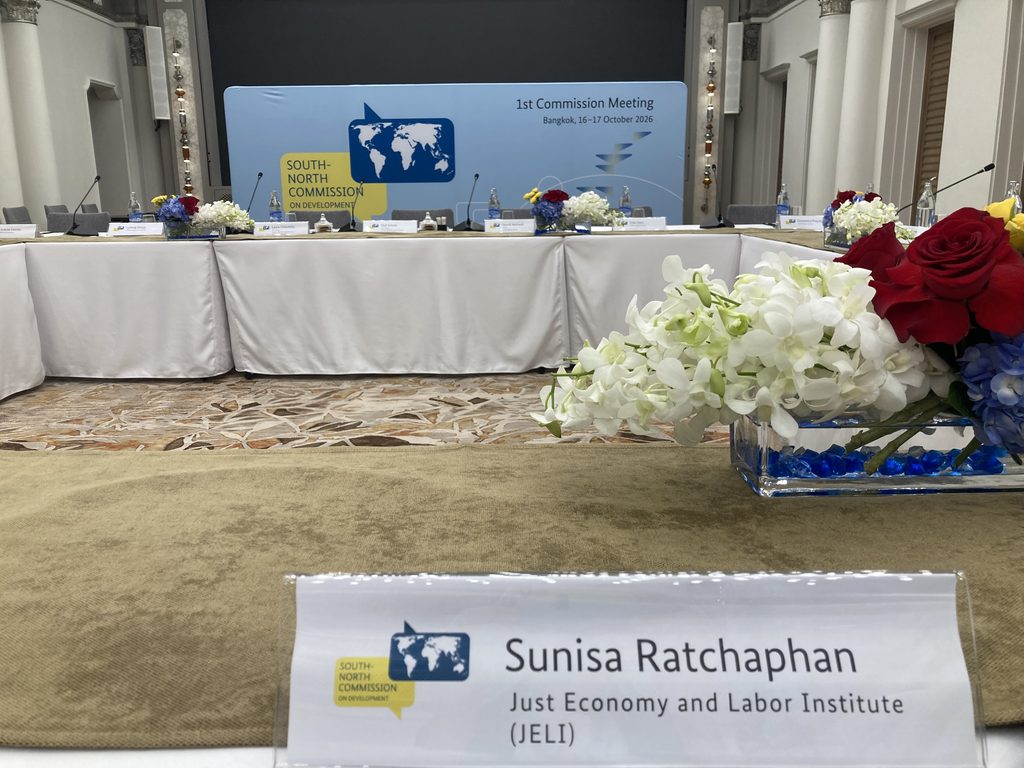
วันที่ 16 ตุลาคม 2569 JELI เข้าร่วม “The Bangkok Dialogues: Sharing National and Regional Non-State Actors’ Reflections with the Co-Chairs of the South-North Commission on Development” ซึ่งเปิดพื้นที่ให้องค์กรภาคประชาสังคมและผู้มีส่วนเกี่ยวข้องจากประเทศไทยและภูมิภาคเอเชียแลกเปลี่ยนข้อท้าทายและประเด็นที่ควรถูกนำไปพิจารณาในการพัฒนาความร่วมมือระหว่าง Global South และ Global North
วงสนทนาจัดขึ้นก่อนการประชุมครั้งแรกของ South-North Commission on Development ในกรุงเทพฯ โดยมี Olaf Scholz อดีตนายกรัฐมนตรีเยอรมนี และ Laura Chinchilla อดีตประธานาธิบดีคอสตาริกา ซึ่งเป็นประธานร่วมของคณะกรรมาธิการ เข้าร่วมรับฟังโดยตรง ข้อเสนอจากวง Bangkok Dialogues จะถูกนำไปประกอบการกำหนดประเด็นสำคัญสำหรับการประชุมของคณะกรรมาธิการในวันที่ 17 ตุลาคม และการจัดทำข้อเสนอในระยะต่อไป
ตัวแทนจากองค์กรภาคประชาสังคมในไทย 16 องค์กรได้แลกเปลี่ยนประเด็นที่กำลังเป็นความท้าทายในภูมิภาค ตั้งแต่การละเมิดสิทธิแรงงาน การค้ามนุษย์ การย้ายถิ่นอย่างปลอดภัย ผู้ลี้ภัย การเปลี่ยนแปลงสภาพภูมิอากาศ สิ่งแวดล้อม AI ไปจนถึงการเข้าถึงบริการสาธารณสุขและประเด็นสิทธิมนุษยชนอื่น ๆ
ในส่วนของ JELI ได้นำเสนอปัญหาและช่องว่างในการคุ้มครองคนทำงานในเศรษฐกิจแพลตฟอร์ม เพื่อให้ประเด็นเรื่องรูปแบบการจ้างงานที่กำลังเปลี่ยนไปและสิทธิของคนทำงานแพลตฟอร์มถูกนำเข้าไปอยู่ในการสนทนาที่กว้างขึ้นเรื่องการพัฒนา ความร่วมมือระหว่างประเทศ และความเป็นธรรมทางเศรษฐกิจ
South-North Commission on Development จัดตั้งขึ้นเพื่อพัฒนาข้อเสนอเกี่ยวกับความร่วมมือระหว่างประเทศในโลกที่มีหลายขั้วมากขึ้น โดยให้ความสำคัญกับการแก้ปัญหาร่วมกัน การพัฒนารูปแบบความร่วมมือใหม่ และวาระหลังปี 2030
PWOT หารือ กสม. เดินหน้าการคุ้มครองคนทำงานแพลตฟอร์ม
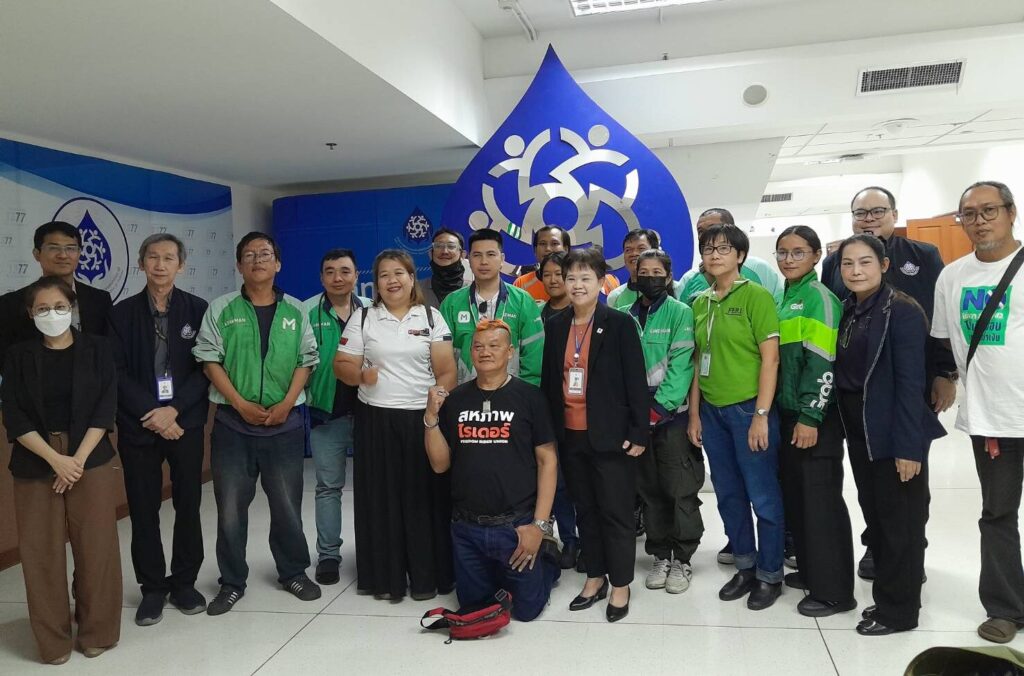
วันที่ 22 ตุลาคม 2569 JELI ร่วมกับ PWOT เข้าหารือกับคณะกรรมการสิทธิมนุษยชนแห่งชาติ (กสม.) เพื่อหารือความคืบหน้าด้านการคุ้มครองคนทำงานแพลตฟอร์มและกรณีร้องเรียนที่เกิดขึ้นกับไรเดอร์ในหลายพื้นที่
หนึ่งในประเด็นสำคัญคือจุดยืนของ กสม. ต่อสถานะการทำงานของไรเดอร์ ซึ่ง กสม. เคยตรวจสอบเมื่อปี 2566–2567 และมีความเห็นว่า ความสัมพันธ์ระหว่างไรเดอร์กับบริษัทแพลตฟอร์มมีลักษณะเป็นการจ้างแรงงาน เนื่องจากแพลตฟอร์มมีอำนาจกำหนดกฎ เงื่อนไขการทำงาน วิธีการจ่ายงานและค่าตอบแทน รวมถึงบทลงโทษ ขณะที่ไรเดอร์ไม่มีอำนาจต่อรองในเงื่อนไขเหล่านั้น กสม. จึงเคยเสนอให้กระทรวงแรงงานพัฒนามาตรการคุ้มครอง รวมถึงการออกกฎกระทรวงภายใต้พระราชบัญญัติคุ้มครองแรงงาน พ.ศ. 2541 เพื่อให้ไรเดอร์ได้รับสิทธิและสวัสดิการตามกฎหมาย
ในการหารือครั้งนี้ กสม. ย้ำว่าข้อเสนอเรื่องสถานะและการคุ้มครองดังกล่าวยังต้องถูกผลักดันต่อ พร้อมเสนอให้เครือข่ายคนทำงานขยายการรวมตัวและสร้างความเข้าใจเรื่องสิทธิให้กับคนทำงานแพลตฟอร์มในพื้นที่ต่าง ๆ มากขึ้น
วงพูดคุยยังลงรายละเอียดถึงกรณีจริงที่กำลังเกิดขึ้นกับคนทำงาน โดยเฉพาะกรณีของนางสาวเพ็ญนภา ไรเดอร์หญิงในจังหวัดกระบี่ที่ได้รับบาดเจ็บสาหัสจากอุบัติเหตุระหว่างทำงาน ซึ่ง PWOT ต้องการผลักดันเรื่องสิทธิจากกองทุนเงินทดแทนให้เป็นคดีตัวอย่าง เพื่อทดสอบว่าคนทำงานแพลตฟอร์มที่ได้รับบาดเจ็บจากการทำงานควรเข้าถึงความคุ้มครองในระบบแรงงานได้อย่างไร และเพื่อสามารถช่วยสร้างความเข้าใจเรื่องสิทธิจากการบาดเจ็บในการทำงานได้กว้างขึ้น
อีกหลายกรณีเกี่ยวข้องกับความปลอดภัยและอำนาจของแพลตฟอร์มโดยตรง ทั้งข้อร้องเรียนเรื่องระบบช่วยเหลือของแพลตฟอร์มที่ไม่สามารถให้การสนับสนุนจากมนุษย์ได้อย่างทันท่วงทีเมื่อเกิดเหตุฉุกเฉิน รวมถึงกรณีไรเดอร์ในจังหวัดกระบี่ถูกระงับบัญชีจากแพลตฟอร์มอย่างถาวร ซึ่ง กสม. ได้รับเรื่องร้องเรียนจาก PWOT ไว้แล้ว นอกจากนี้ ไรเดอร์ยังสะท้อนปัญหาถนนชำรุดหลายจุดที่เพิ่มความเสี่ยงในการทำงาน โดย กสม. แนะนำให้รวบรวมภาพและข้อมูลจุดเสี่ยงเพื่อส่งต่อให้ตรวจสอบและประสานหน่วยงานที่เกี่ยวข้อง
การพูดคุยขยับมาถึงคำถามว่า เมื่อเกิดอุบัติเหตุ ถูกระงับบัญชี หรือเผชิญความเสี่ยงจากระบบและสภาพแวดล้อมในการทำงาน คนทำงานสามารถใช้กลไกใดเพื่อเรียกร้องสิทธิและความรับผิดชอบได้จริง
กสม. ยังแจ้งด้วยว่า ในปี 2570 ประเด็นสิทธิมนุษยชนของคนทำงานแพลตฟอร์มจะเป็นหนึ่งในประเด็นสำคัญของสมัชชาสิทธิมนุษยชน และขณะนี้มีการศึกษามาตรฐานของ ILO Convention No. 193 เปรียบเทียบกับกฎหมายแพลตฟอร์มของสหภาพยุโรป เพื่อพัฒนาข้อเสนอด้านกฎหมายและนโยบายสำหรับประเทศไทยต่อไป
ไรเดอร์ภาคใต้เผชิญรายได้ลด ต้นทุนเพิ่ม และความเสี่ยงบนถนน
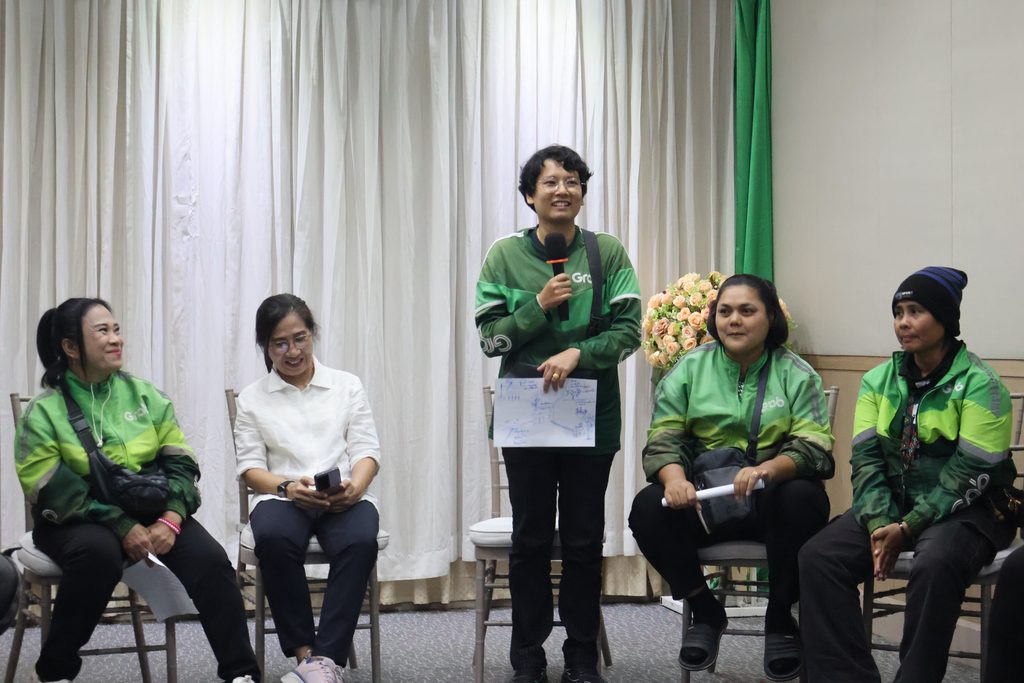
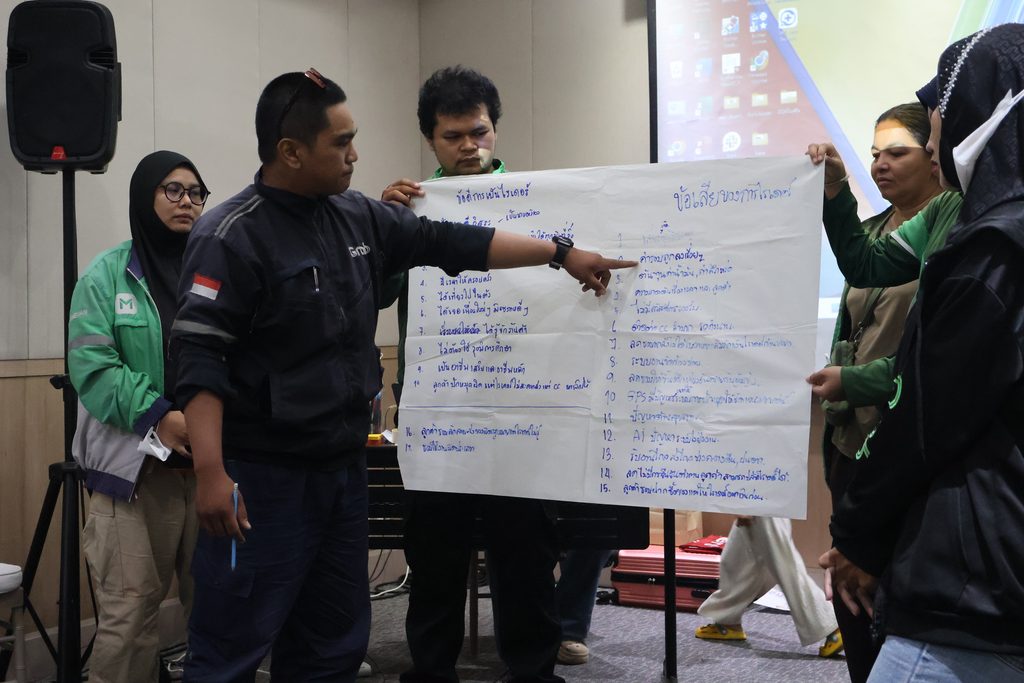
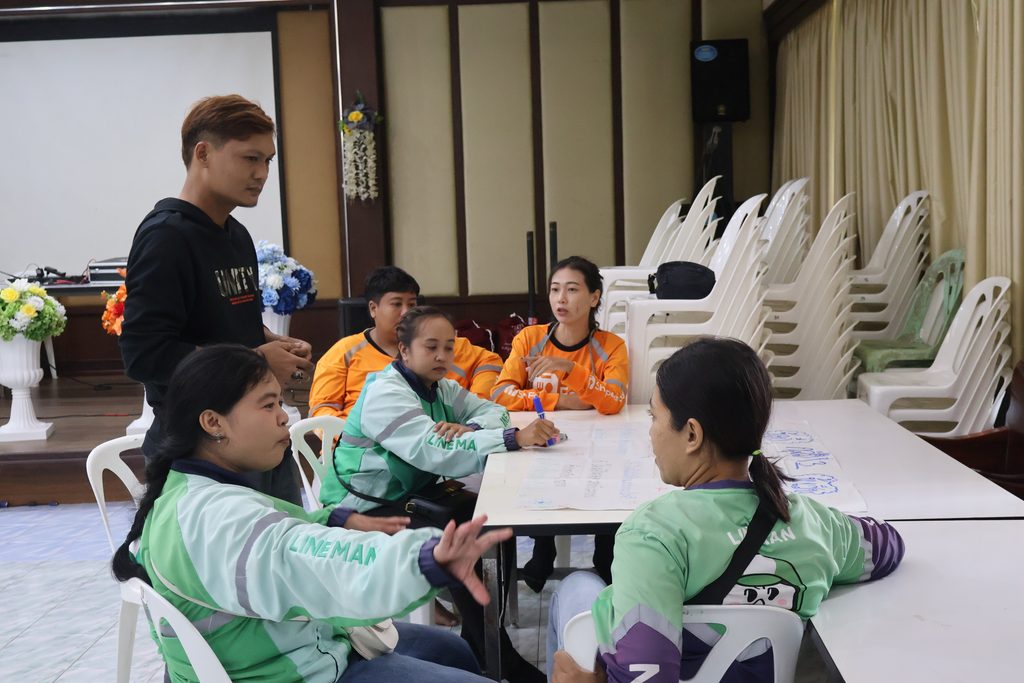
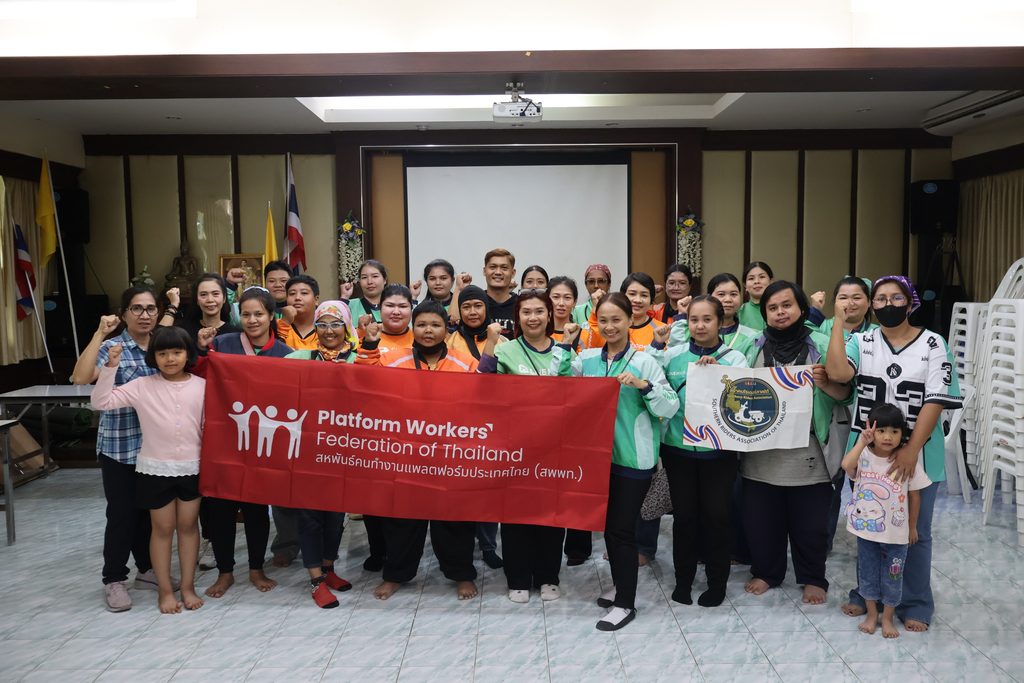
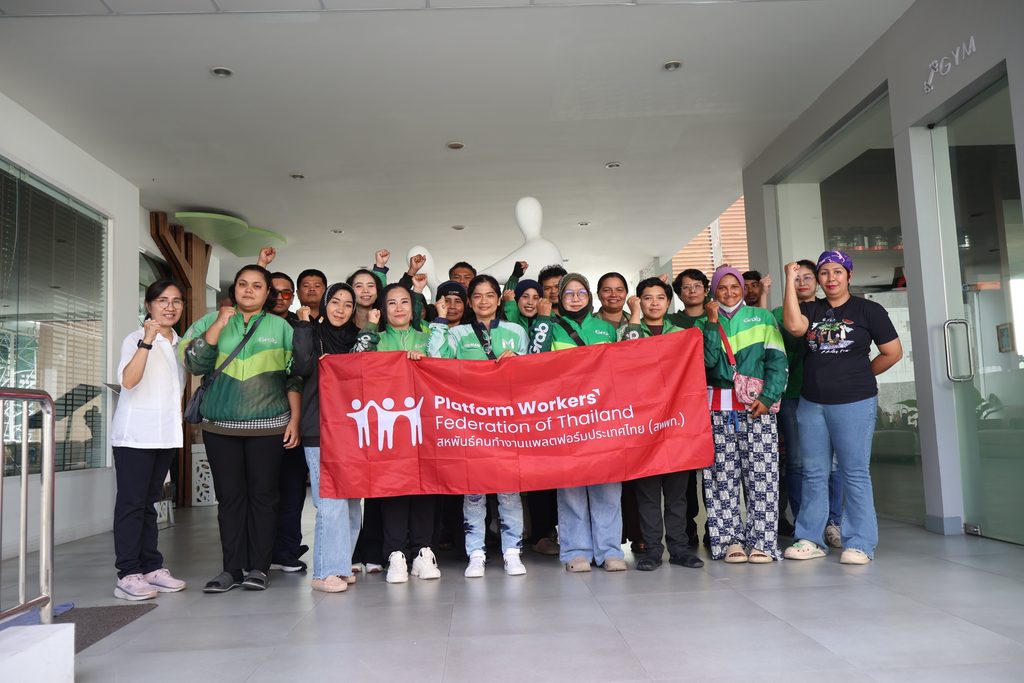
ระหว่างวันที่ 21–25 ตุลาคม 2569 JELI ลงพื้นที่พูดคุยและแลกเปลี่ยนกับไรเดอร์เกือบ 70 คนในสามจังหวัดภาคใต้ ได้แก่ ตรัง ภูเก็ต และกระบี่ เพื่อรับฟังสภาพการทำงานและปัญหาที่คนทำงานกำลังเผชิญ
สิ่งที่ได้ยินจากทั้งสามพื้นที่มีหลายส่วนที่คล้ายกัน โดยเฉพาะรายได้ที่ลดลงสวนทางกับต้นทุนการทำงานที่สูงขึ้น ไรเดอร์เล่าว่าค่าตอบแทนต่อรอบลดลงอย่างต่อเนื่อง ขณะที่ค่าน้ำมัน ค่าครองชีพ และค่าบำรุงรักษารถยังเพิ่มขึ้น ทำให้ต้องใช้เวลาทำงานมากขึ้นเพื่อให้ได้รายได้ใกล้เคียงเดิม
อีกเรื่องที่ถูกพูดถึงมากคือ ความปลอดภัยและความมั่นคงในการทำงาน เมื่อเกิดอุบัติเหตุระหว่างวิ่งงาน คนทำงานจำนวนมากยังต้องรับภาระและความเสี่ยงด้วยตัวเอง ขณะที่สวัสดิการและหลักประกันจากการทำงานยังไม่ชัดเจนเพียงพอ
ในภูเก็ต ปัญหาความปลอดภัยมีลักษณะเฉพาะของเมืองท่องเที่ยว การจราจรที่หนาแน่นและรถยนต์ที่เบียดเข้าใช้ช่องทางริมถนนทำให้พื้นที่สำหรับรถจักรยานยนต์ลดลง ทั้งที่ไรเดอร์ยังต้องส่งงานให้ทันเวลาที่กำหนด ไรเดอร์หญิงคนหนึ่งที่ร่วมแลกเปลี่ยนเล่าว่า เธอประสบอุบัติเหตุมาแล้วถึง 6 ครั้งในปีนี้
นอกจากนี้ ไรเดอร์ในภูเก็ตยังพูดถึงความเสี่ยงจากอาชญากรรม โดยในช่วงเดือนที่ผ่านมา มีรายงานจากคนในพื้นที่ว่ามี
ไรเดอร์ถูกจี้สองราย ผู้เสียหายได้แจ้งความไว้แล้ว แต่ในช่วงที่มีการพูดคุยยังไม่มีความคืบหน้าในคดี
เรื่องค่าตอบแทนยังคงเป็นข้อกังวลสำคัญ ไรเดอร์ในภูเก็ตระบุว่า ค่ารอบเริ่มต้นอยู่ที่ประมาณ 18 บาท ขณะที่ราคาน้ำมันอยู่ที่มากกว่า 42 บาทต่อลิตร สำหรับคนทำงาน ต้นทุนเหล่านี้ไม่ใช่ค่าใช้จ่ายประกอบอาชีพเล็กน้อย แต่เป็นส่วนที่หักออกจากรายได้โดยตรงในทุกวัน
เมื่อพูดถึงสวัสดิการและความมั่นคง หลายคนเห็นตรงกันว่าค่าตอบแทนควรสะท้อนต้นทุนที่เกิดขึ้นจริงมากกว่านี้ และคนทำงานแพลตฟอร์มควรเข้าถึงการคุ้มครองทางสังคมเช่นเดียวกับคนทำงานกลุ่มอื่น
ประชุมคณะทำงานคุ้มครองคนทำงานแพลตฟอร์ม
วันที่ 26 ตุลาคม 2569 ตัวแทน PWOT เข้าร่วมประชุม “คณะทำงานกำหนดแนวทางการคุ้มครองคนทำงานในระบบแพลตฟอร์ม” ของกระทรวงแรงงาน เพื่อหารือแนวทางการคุ้มครองคนทำงานแพลตฟอร์ม ทั้งเรื่องสถานะการทำงาน ประกันสังคม ค่าตอบแทน และการระงับบัญชีของคนทำงาน
หนึ่งในประเด็นหลักที่ยังเห็นต่างกันคือ สถานะของไรเดอร์ ในที่ประชุม ผู้แทนกระทรวงแรงงานยังคงมีความเห็นว่าไรเดอร์
ไม่ได้อยู่ในความสัมพันธ์แบบลูกจ้าง–นายจ้างกับบริษัทแพลตฟอร์ม และยังไม่มีข้อสรุปว่าหน่วยงานใดควรเป็นเจ้าภาพหลักในการดูแลเรื่องสิทธิและการคุ้มครองคนทำงานกลุ่มนี้
PWOT ยังคงยืนยันข้อเสนอเรื่อง การออกกฎกระทรวงภายใต้พระราชบัญญัติคุ้มครองแรงงาน พ.ศ. 2541 เพื่อกำหนดมาตรการคุ้มครองเฉพาะสำหรับคนทำงานแพลตฟอร์ม ขณะที่ในที่ประชุมมีการตั้งข้อสังเกตถึงข้อจำกัดและประเด็นทางกฎหมายของแนวทางดังกล่าว จึงยังไม่มีข้อสรุปในเรื่องนี้
ประเด็น ประกันสังคมมาตรา 33 ก็ยังมีความเห็นต่างกัน ผู้แทนกระทรวงเห็นว่าการนำไรเดอร์เข้าสู่มาตรา 33 ไม่สามารถทำได้ภายใต้การจัดประเภทไรเดอร์เป็นผู้ประกอบอาชีพอิสระ ขณะที่ตัวแทนคนทำงานยืนยันว่าการมีความยืดหยุ่นในการเลือกเวลาทำงานไม่ควรถูกใช้เป็นเหตุผลเพียงอย่างเดียวในการตัดคนทำงานออกจากความคุ้มครองตามกฎหมาย
ที่ประชุมยังหารือเรื่อง การระงับหรือปิดบัญชีของไรเดอร์โดยไม่มีเหตุผลที่ชัดเจน โดยกระทรวงแรงงานระบุว่าจะนำประเด็นนี้ไปหารือกับบริษัทแพลตฟอร์มและเชิญบริษัทเข้ามาพูดคุยอีกครั้ง
ส่วนเรื่องค่าตอบแทน ตัวแทน PWOT เสนอว่าการพิจารณาค่ารอบควรเริ่มจากต้นทุนจริงของการทำงาน ตั้งแต่การเดินทางจากจุดเริ่มต้นไปรับงานจนถึงส่งลูกค้า รวมถึงค่าน้ำมัน ค่าเสื่อมสภาพของรถ ค่าอินเทอร์เน็ต และค่าโทรศัพท์ โดยมีการหารือถึงค่ารอบสำหรับระยะทาง 3 กิโลเมตรแรก แต่การประชุมครั้งนี้ยังไม่ได้ข้อสรุปเรื่องอัตราหรือหลักเกณฑ์ร่วมกัน
การประชุมจะมีการนัดหมายเพื่อหารือกันอีกครั้ง โดยประเด็นเรื่องสถานะของไรเดอร์ การเข้าถึงประกันสังคม การออกกฎกระทรวง ค่าตอบแทน และการระงับบัญชี ยังคงเป็นเรื่องที่ต้องหารือต่อในคณะทำงาน
ปฏิรูปประกันสังคมอย่างไร ให้ครอบคลุมคนทำงานมากขึ้น
วันที่ 31 ตุลาคม 2569 JELI เข้าร่วม “โครงการเวทีระดมสมองชุมชนนโยบายด้านการปฏิรูประบบประกันสังคมของประเทศไทย ครั้งที่ 2 การขยายความครอบคลุมของระบบ” จัดโดยมูลนิธิฟรีดริค เอแบร์ท ประจำประเทศไทย ร่วมกับสถาบันวิจัยเพื่อการพัฒนาประเทศไทย หรือ TDRI และคณะเศรษฐศาสตร์ มหาวิทยาลัยธรรมศาสตร์
วงประชุมแลกเปลี่ยนกันอย่างกว้างขวางถึงแนวทางปฏิรูประบบประกันสังคมให้ครอบคลุมคนทำงานทุกภาคส่วน ทั้งแรงงานนอกระบบและคนทำงานกิ๊ก รวมถึงการเพิ่มสิทธิประโยชน์ เช่น การรักษาพยาบาล การพัฒนาความยั่งยืนของระบบบำนาญ ตลอดจนธรรมาภิบาลและความโปร่งใสในการบริหารจัดการกองทุน
ชาคร เลิศนิทัศน์ นักวิจัยอาวุโส TDRI ตั้งคำถามสำคัญต่อการขยายระบบประกันสังคมไว้ 4 เรื่อง ได้แก่ ใครบ้างควรอยู่ในระบบ จะเก็บเงินสมทบอย่างไร คนทำงานจะได้รับสิทธิอะไรกลับมา และใครควรเป็นผู้บริหารหรือร่วมอุดหนุนระบบ
ชาครยังชี้ให้เห็นว่า นิยาม “ลูกจ้าง” ในมาตรา 33 เป็นช่องทางที่ค่อนข้างแคบ ทำให้คนจำนวนมากที่ “ทำงานให้คนอื่น” ไม่ถูกนับเป็นลูกจ้าง และถูกผลักไปอยู่ในมาตรา 40 แทน
ด้าน ระกาวิน ลีชนะวานิชพันธ์ ประธานกรรมการมูลนิธิเพื่อการพัฒนาแรงงานและอาชีพ เล่าถึงประสบการณ์การต่อสู้ของแรงงานนอกระบบที่ดำเนินมายาวนานกว่า 20 ปีเพื่อให้เข้าถึงสิทธิในระบบประกันสังคม แม้ปัจจุบันจะเข้าถึงสิทธิได้บางส่วน แต่ยังมีข้อจำกัดจากนิยามในมาตรา 33 และลักษณะการทำงานของแรงงานนอกระบบ
อีกข้อกังวลคือ หากแรงงานนอกระบบเข้าสู่ระบบประกันสังคมในรูปแบบที่ต้องส่งเงินสมทบมากขึ้น จะออกแบบอย่างไรให้เหมาะกับคนทำงานที่มีรายได้ต่ำและไม่แน่นอน
อรรคณัฐ วันทนะสมบัติ จากสถาบันเอเชียศึกษา จุฬาลงกรณ์มหาวิทยาลัย พูดถึงการจ้างงานรูปแบบใหม่ โดยแบ่งคนทำงานกิ๊กออกเป็น 3 กลุ่ม ได้แก่ “กิ๊กใหม่” หรือ New Gig เช่น microwork, crowdwork และ content creation “กิ๊กเก่า” หรือ Old Gig เช่น ฟรีแลนซ์ ผู้ประกอบอาชีพอิสระ และผู้รับจ้างอิสระ และ “Digitalized Gig Work” หรืองานเดิมที่ย้ายมาทำผ่านแพลตฟอร์ม เช่น งานส่งอาหาร เรียกรถ บริการในบ้าน และวินมอเตอร์ไซค์ที่เข้าร่วมแพลตฟอร์ม
อรรคณัฐยังพูดถึง ILO Convention No. 193 ว่าด้วยงานที่มีคุณค่าในเศรษฐกิจแพลตฟอร์ม ซึ่งได้รับการรับรองเมื่อวันที่ 12 มิถุนายน 2569 โดยมีประเด็นสำคัญตั้งแต่ความปลอดภัยในการทำงาน เสรีภาพในการรวมกลุ่มและต่อรองร่วม การระงับบัญชี การบริหารจัดการด้วยอัลกอริทึม และการมีมนุษย์เข้ามาทบทวนการตัดสินใจของระบบ
อีกหลักสำคัญคือ Primacy of Facts หรือการให้น้ำหนักกับข้อเท็จจริงที่เกิดขึ้นในการทำงานมากกว่าชื่อเรียกในสัญญาหรือข้อตกลง โดย Article 9 กำหนดให้การพิจารณาสถานะความสัมพันธ์ในการจ้างดูจากข้อเท็จจริงของการทำงานเป็นหลัก
สำหรับกรอบการคุ้มครองแรงงานกิ๊ก อรรคณัฐเสนอให้มีมาตรฐานคุ้มครองขั้นต่ำสำหรับคนทำงานทุกกลุ่ม และพิจารณาความรับผิดชอบของนายจ้างหรือแพลตฟอร์มตามระดับการควบคุมงาน ระบบประกันสังคมควรรองรับรายได้ที่ผันผวนและการทำหลายงาน โดยใช้กองทุนประกันสังคมเดิมเป็นฐานและยกระดับมาตรา 40 ให้คุ้มครองได้จริง
ข้อเสนออื่น ๆ ยังครอบคลุมค่าตอบแทนที่เป็นธรรม ความโปร่งใสในการคำนวณรายได้และการเปลี่ยนกติกา สัญญาที่เป็นลายลักษณ์อักษรและเข้าใจง่าย การให้เหตุผลและสิทธิอุทธรณ์เมื่อถูกลงโทษ สิทธิของแรงงานต่อข้อมูลที่ตนสร้าง สิทธิในการรวมกลุ่มและต่อรองร่วม และการมีกลไกบังคับใช้กฎหมายและระงับข้อพิพาทที่รวดเร็ว
แม้การระดมสมองครั้งนี้จะมีข้อเสนอที่หลากหลาย แต่ยังไม่ได้ข้อยุติที่ชัดเจน หลายเรื่องยังต้องหารือต่อ ทั้งการขยายความครอบคลุม วิธีส่งเงินสมทบ สิทธิประโยชน์ และความยั่งยืนของกองทุน โดยจะมีการจัดเวทีเพื่อพัฒนาข้อเสนอในครั้งต่อไป
ข่าวน่าติดตาม
- AI เข้าใกล้งานไรเดอร์มากขึ้น แต่ระบบจัดการงานยังคงมองไม่เห็น
Grab Thailand ประกาศความร่วมมือกับ OpenAI เพื่ออบรมการใช้ ChatGPT ให้คนขับ ไรเดอร์ และร้านค้ากว่า 3,000 คน พร้อมระบุว่า Driver AI Assistant มีคนขับในไทยใช้งานแล้วกว่า 120,000 คน ความเคลื่อนไหวนี้ทำให้เห็นว่า AI กำลังเข้ามาอยู่ในชีวิตการทำงานของคนบนแพลตฟอร์มมากขึ้นเรื่อย ๆ แต่ในอีกด้านหนึ่ง คนทำงานยังมีข้อมูลจำกัดมากเกี่ยวกับระบบอัลกอริทึมที่ใช้แจกงาน คำนวณค่าตอบแทน ให้คะแนน หรือระงับบัญชี เมื่อบริษัทกำลังผลักดันให้คนทำงานใช้ AI มากขึ้น คำถามเรื่องความโปร่งใสและสิทธิของคนทำงานต่อระบบ AI ที่แพลตฟอร์มใช้เองก็ควรถูกพูดถึงไปพร้อมกัน อ่านที่: Grab Thailand - เมื่อพื้นที่ออนไลน์กลายเป็นจุดนัดหมายของไรเดอร์เวียดนาม
Tech Policy Press ติดตามการเคลื่อนไหวของคนขับและไรเดอร์ในเวียดนาม หลังมีการใช้กลุ่มออนไลน์เรียกร้องให้คนทำงานปิดแอป Grab ชั่วคราวเพื่อประท้วงเรื่องค่าคอมมิชชันและความไม่โปร่งใสของค่าโดยสาร แม้การ boycott จะไม่ได้ขยายตัวอย่างชัดเจน แต่กระแสดังกล่าวทำให้ปัญหาค่าตอบแทนถูกพูดถึงกว้างขึ้น และหน่วยงานการแข่งขันของเวียดนามขอให้แพลตฟอร์มชี้แจงโครงสร้างค่าโดยสาร กรณีนี้น่าสนใจตรงที่คนทำงานซึ่งกระจัดกระจายและไม่มีพื้นที่ทำงานร่วมกัน กำลังทดลองใช้พื้นที่ออนไลน์เพื่อแลกเปลี่ยนข้อมูลและสร้างแรงกดดันต่อแพลตฟอร์ม ขณะที่คำถามเรื่องสถานะการจ้าง ประกันสังคม และสิทธิในการต่อรองยังคงไม่ได้รับคำตอบชัดเจน อ่านที่: Tech Policy Press - เส้นทางเข้า OECD ทำให้สิทธิในการรวมตัวของแรงงานไทยถูกตั้งคำถามอีกครั้ง
ในระหว่างที่ไทยกำลังเดินหน้ากระบวนการสมัครเข้าเป็นสมาชิก OECD สหภาพแรงงานไทยและ TUAC ได้ยกประเด็นช่องว่างด้านสิทธิแรงงานขึ้นหารือกับผู้แทน OECD โดยเฉพาะการที่ไทยยังไม่ได้ให้สัตยาบัน ILO Convention No. 87 และ 98 ว่าด้วยเสรีภาพในการสมาคมและการเจรจาต่อรองร่วม กระบวนการเข้า OECD จึงไม่ได้มีเพียงมิติด้านเศรษฐกิจหรือการลงทุน แต่ทำให้คำถามเรื่องสิทธิในการรวมตัวของแรงงานไทย รวมถึงข้อจำกัดที่แรงงานบางกลุ่มยังเผชิญ ถูกหยิบขึ้นมาพิจารณาในระดับระหว่างประเทศอีกครั้ง อ่านที่: TUAC - เสียงจากภายนอกห้องประชุม IMF–World Bank
ระหว่างการประชุมประจำปี IMF–World Bank ที่กรุงเทพฯ เกษตรกรและเครือข่ายภาคประชาชนรวมตัวใกล้พื้นที่จัดประชุมเพื่อพูดถึงหนี้ ที่ดิน บริการสาธารณะ และผลของนโยบายเศรษฐกิจต่อชีวิตของคนในชุมชน ภาพของการประชุมเศรษฐกิจระดับโลกที่เกิดขึ้นพร้อมกับการเคลื่อนไหวด้านนอกทำให้เห็นว่าการถกเรื่องเศรษฐกิจไม่ได้มีแค่ตัวเลขหรือแนวนโยบายเท่านั้น แต่ยังมีคนจำนวนมากที่ต้องอยู่กับผลของการตัดสินใจเหล่านั้น คำถามสำคัญคือ เสียงของพวกเขาเข้าไปอยู่ในกระบวนการกำหนดนโยบายได้มากน้อยแค่ไหน อ่านที่: Khaosod English
ปักหมุดเดือนหน้า
Thai Therapy Spa at Home บนเวที Solidarity AI 2026
JELI ชวนเข้าร่วมงาน Solidarity AI 2026 ในวันที่ 12–15 พฤศจิกายน 2569 ณ จุฬาลงกรณ์มหาวิทยาลัย งานนี้เป็นพื้นที่ชวนคนทำงาน นักจัดตั้ง นักวิจัย และคนทำงานด้านเทคโนโลยีมาพูดคุยกันว่า AI และเทคโนโลยีดิจิทัลจะถูกออกแบบและกำกับอย่างไรให้คนทำงานและชุมชนมีส่วนกำหนดทิศทางของมันได้มากขึ้
หนึ่งใน session ที่เราอยากชวนให้ติดตามเป็นพิเศษคือ “Thai Therapy Spa at Home: Design Clinic” ในวันที่ 12 พฤศจิกายน เวลา 11.10–12.10 น. ซึ่งจะนำประสบการณ์การรวมตัวของคนทำงานนวดจาก Thai Therapy Spa at Home มาแลกเปลี่ยน ตั้งแต่ปัญหาที่ทำให้คนทำงานเริ่มรวมตัว ความเห็นต่างภายในกลุ่ม การตัดสินใจร่วมกัน ไปจนถึงคำถามว่าการรวมตัวช่วยให้สมาชิกมีอำนาจเพิ่มขึ้นจากเดิมอย่างไร
หนึ่งในผู้ร่วมพูดคุยคือ “หยก” เกษธิดา โคตรสงคราม กรรมการบอร์ด JELI และคนทำงานนวดที่เป็นแรงขับเคลื่อนสำคัญในการก่อตั้งและพัฒนา Thai Therapy Spa at Home ซึ่งเป็นกลุ่มกิจการเพื่อสังคมของคนทำงานนวดที่ JELI สนับสนุนการจัดตั้งมาอย่างต่อเนื่อง ปัจจุบันกลุ่มจัดสรรงานระหว่างสมาชิก สนับสนุนการช่วยเหลือกันและการพัฒนาวิชาชีพ รวมถึงกำลังพัฒนากองทุนสวัสดิการร่วมกัน
ใน session นี้ หยกและสมาชิก Thai Therapy Spa at Home จะนำประสบการณ์จริงของกลุ่มมาให้ผู้เข้าร่วมช่วยกันคิดต่อว่า จะพัฒนาการตัดสินใจร่วมกันและสร้างอำนาจของสมาชิกให้เข้มแข็งขึ้นได้อย่างไร
📌 ดูรายละเอียดและลงทะเบียน Solidarity AI 2026
What Happened This Month
Threads of Resilience: Women on the Frontlines of Climate Change
On 9 October 2026, the Just Economy and Labour Institute (JELI) visited 🧵 Threads of Resilience: Women on the Frontlines of Climate Change, an exhibition by the Pulitzer Center at Nokyoong Tea House in Song Wat. Through investigative journalism and art installations, the exhibition tells the stories of women living and working on the frontlines of the climate crisis in different parts of the world.
One story follows women garment workers in Cambodia, who work under dangerous and, at times, extremely dangerous levels of heat. Some workers drink only around 750 ml of water during a 12-hour shift to avoid taking bathroom breaks that would interrupt the production line. Phnom Penh already experiences around 112 days a year above 35°C, a number that could rise to 150 days by 2040.
Another story comes from Wichí women in Argentina, who have passed down the practice of weaving with fibres from the chaguar plant for generations. Deforestation, agricultural expansion, drought and rising temperatures are making the plant increasingly difficult to find. Some women now have to walk distances equivalent to a marathon just to gather enough fibre for a single piece of weaving, which can take up to a month to complete.
The stories from Cambodia and Argentina show that the climate crisis is also a question about work. Its effects do not stop at rising temperatures. They reach into workers’ bodies and health, their working hours, their income, and the costs they are expected to absorb.
Looking back at Thailand, we do not have to look far. Riders and many other outdoor workers are already working through extreme heat, heavy rain and flooding as weather conditions become more severe. This raises a practical question: what would it take to make safety at work something workers can actually access? That includes the right to rest, drinking water, places to take shelter from the heat, and protection when weather conditions make work unsafe.
Most importantly, the costs of the climate crisis should not be pushed onto workers alone. Those who set working conditions and benefit from workers’ labour, together with the state institutions responsible for worker protection, also have a responsibility to act.
Women Workers under Platform Capitalism:
From Shared Experience to Cross-Border Organising
On 11, 16 and 17 October 2026, JELI joined the regional convening “Reimagining Feminist Resistance Under Platform Capitalism Era,” organised by the Asia Pacific Forum on Women, Law and Development (APWLD).
The convening created a space for women platform workers, labour organisations, researchers, feminist activists and civil society groups to exchange experiences and better understand how platform capitalism is affecting labour rights, particularly for women. Participants also discussed organising, policy advocacy and ways to build collective bargaining power at both national and regional levels.
Participants from Thailand, India, Indonesia and Cambodia shared experiences from food delivery, transport and app-based beauty services. Despite working in different sectors and countries, many faced similar problems, including low and unpredictable income, long working hours, work-related costs paid out of pocket, and limited access to social security and labour rights.
Another major issue was the control of work through algorithms, data tracking, ratings and account suspension or deactivation, which can immediately cut workers off from jobs and income. Women workers also face harassment and safety risks while providing services, particularly when work takes place inside customers’ homes. At the same time, unpaid care responsibilities at home can make both working and organising for rights more difficult.
The discussions also connected workers’ experiences with the power of technology companies, investors and global value chains. One focus was the data generated by workers and users, which can be analysed, turned into business value and used to manage work, while workers themselves have very little power to access or decide how their data is used.
Participants stressed that “data is political” because it raises questions about who collects, owns and uses data, and who benefits from it. Concerns were also raised about surveillance, the use of workers’ data to train AI systems without appropriate consent, and the impact of technology on job security. One proposal was for workers to document evidence from their own experiences and use this information to support organising and collective demands.
Employment status was another issue discussed across countries. Platform workers are frequently described as “partners”, self-employed workers or independent contractors, limiting their access to minimum wages, benefits, social security, leave and collective bargaining. Some countries have begun introducing relevant laws or measures, but enforcement remains uneven and some protections still fail to address the specific problems women workers face.
Participants also discussed ILO Convention No. 193 on Decent Work in the Platform Economy, including fundamental rights at work, occupational safety and health, violence and harassment, social protection, algorithmic management, personal data, account deactivation and dispute resolution.
The discussion stressed that C193 is an important tool for campaigning and policy advocacy, but it does not automatically make every worker an employee or guarantee protection on its own. What it means in practice will still depend on implementation and enforcement in each country, as well as meaningful worker participation in policymaking.
One proposal emerging from the convening was the creation of a Feminist Gig Workers Alliance, which could connect women workers and organisations working on platform issues across countries to exchange information, share experiences and develop future collaboration.
Women Rebuild the World:
Women’s Experiences and Questions of Global Economic Justice
From 13–15 October 2026, JELI joined activities under Women Rebuild the World: Educate, Organise, Mobilise!, held alongside the IMF–World Bank Annual Meetings in Bangkok and organised by APWLD, JASS Associates and civil society networks.
The activities created a space for women’s movements, grassroots activists, Indigenous groups, civil society organisations and affected communities from across the Global South to exchange experiences, analyse global economic structures and develop ways to struggle for greater justice.
The early discussions connected the history of colonialism with today’s global financial system. Participants spoke about debt, loan conditions, austerity, the privatisation of state enterprises and public services, and development models that prioritise investment and resource extraction. Communities experience the consequences through the loss of land and resources, insecure work and growing care responsibilities, particularly for women.
Participants from different countries also brought experiences from their own communities into the discussion. Representatives from West Papua spoke about the impacts of the Freeport mine, the displacement of the Amungme people and women’s struggles in affected communities. A representative from East Nusa Tenggara in Indonesia shared experiences of geothermal energy projects and their effects on farmland, water sources and livelihoods.
Participants from the Philippines connected economic policy, structural adjustment and free trade with insecure work, care responsibilities and women’s working conditions. A representative from Honduras spoke about women’s role in resisting extractive projects, as well as the harassment and legal action faced by human rights defenders.
Learning also took place through art and communication. Activities included making posters without AI, zine-making, music and songwriting for movements, film and documentary screenings, as well as a Feminist Library and Community Market where participants could exchange publications, knowledge and experiences from different movements.
On 15 October, people affected by policies and development projects linked to the IMF and World Bank shared their experiences, including the loss of land, the loss of community members, debt and insecurity. Representatives from Nigeria, Kenya, South Sudan, Fiji, Indonesia and the Philippines took part, along with communities affected by the Pak Mun Dam in Thailand.
The evening included cultural performances and reflections on the problems facing participating communities, before the activities closed with participants collectively calling for accountability from the IMF and World Bank.
Overall, the Feminist Learning Space provided a place for political learning, collective analysis and solidarity between women’s movements and communities from different countries. The discussions showed how debt, trade, land, resources, labour rights and public services are connected, and why the people most affected should have a say in shaping the alternatives and futures they want.
Platform Workers’ Voices at the Civil Society Policy Forum
On 14 October 2026, Bangkok-based rider Maree Chunlaphan joined the online session “When AI Is the Boss: Platform Work, Social Security, and ILO Convention No. 193,” part of the Civil Society Policy Forum held alongside the 2026 IMF–World Bank Group Annual Meetings in Bangkok. The session was co-organised by ITUC and a broad group of labour, human rights and social protection organisations.
The title of the session speaks directly to how platform work already operates. For many riders and other platform workers, AI is not a future technology that may one day change their jobs. Automated systems are already allocating work, setting pay, monitoring performance, assigning ratings and making decisions about workers’ accounts.
From Maree’s experience, the question is not simply how much AI a platform uses. It is what workers can do when a system makes a decision about them. Who can they ask? Who can they explain the situation to? And how can they challenge a decision? She spoke about her own experience of safety risks while working and what happened when she tried to contact the platform afterwards, highlighting the limits of systems that place automated messages and processes between companies and the people who work through them.
Maree also pointed out that these systems do not appear on their own. Companies design them and decide how they are used. AI should therefore not become an explanation that allows a company to step away from responsibility, particularly when platforms can set prices and rules, decide how work is allocated and impose penalties, while workers have very little space to negotiate or question those decisions.
This is where ILO Convention No. 193 on Decent Work in the Platform Economy becomes important. The Convention establishes standards on algorithmic management alongside employment status, freedom of association and social security. For Maree, having laws and standards that recognise platform workers’ rights would give workers something concrete to rely on when automated decisions affect their income, work and safety.
So the question behind “AI is the boss” is who designs the system, who is responsible for its decisions, and how much say workers have when those decisions shape their working lives.
JELI Joins the Bangkok Dialogues,
Bringing Platform Work into the South-North Discussion
On 16 October 2026, JELI joined “The Bangkok Dialogues: Sharing National and Regional Non-State Actors’ Reflections with the Co-Chairs of the South-North Commission on Development.” The dialogue provided a space for civil society organisations and other stakeholders from Thailand and across Asia to share challenges and issues that should be considered in future cooperation between the Global South and Global North.
The dialogue took place ahead of the inaugural meeting of the South-North Commission on Development in Bangkok. Its Co-Chairs, former German Chancellor Olaf Scholz and former President of Costa Rica Laura Chinchilla, joined the discussion directly. The issues raised during the Bangkok Dialogues were intended to inform the Commission’s meeting on 17 October and its future recommendations.
Representatives from 16 Thai civil society organisations raised a wide range of challenges facing the region, including labour rights abuses, human trafficking, safe migration, refugees, climate change, environmental issues, AI, access to basic healthcare and other human rights concerns.
JELI shared the problems and gaps in protection facing workers in the platform economy, bringing changing forms of employment and platform workers’ rights into a wider discussion about development, international cooperation and economic justice.
The South-North Commission on Development was established to develop proposals for international cooperation in an increasingly multipolar world, with a focus on shared global challenges, new forms of cooperation and the post-2030 agenda.
PWOT and NHRC Discuss Next Steps for Platform Worker Protection
On 22 October 2026, the Platform Workers Federation of Thailand (PWOT) met with the National Human Rights Commission of Thailand (NHRC), with JELI helping to coordinate the discussion. The meeting focused on the next steps for platform worker protection and several ongoing cases involving riders in different parts of the country.
A key part of the discussion returned to the NHRC’s position on riders’ employment status. Following an investigation in 2023–2024, the Commission concluded that the relationship between riders and platform companies has the characteristics of an employment relationship. Platforms set rules and working conditions, determine how jobs and payments are allocated, and can impose penalties, while riders have little bargaining power over those terms. The NHRC previously recommended that the Ministry of Labour develop stronger protections, including a ministerial regulation under the Labour Protection Act B.E. 2541 (1998), so that riders can access labour rights and benefits under the law.
During this meeting, the NHRC reiterated that these recommendations still need to be carried forward and encouraged worker networks to continue organising and building awareness of labour rights among platform workers across the country.
The discussion also moved from legal status to concrete cases. One was the case of Pennapa, a woman rider in Krabi who was seriously injured in a work-related accident. PWOT is looking to pursue her right to protection under the Workmen’s Compensation Fund as a test case, raising the wider question of whether platform workers injured while working should be covered by existing labour protection mechanisms.
Other cases raised questions about platform safety and accountability. Workers reported problems with emergency support systems that offer little or no access to human assistance when serious incidents occur. PWOT has also submitted a complaint concerning a Krabi rider whose account was permanently suspended by a platform. Riders further raised concerns about damaged roads that create additional risks while working, and the NHRC advised workers to document hazardous locations so that the relevant authorities can be called on to respond.
The discussion therefore went beyond the question of how riders should be classified under the law. It also asked what workers can actually do when they are injured, suspended from a platform, or exposed to risks created by the systems and environments in which they work.
The NHRC also shared that platform workers’ human rights will be one of the issues highlighted in its 2027 Human Rights Assembly. A comparative study of ILO Convention No. 193 and the European Union’s platform work legislation is also underway, with the aim of developing further legal and policy recommendations for Thailand.
Southern Riders Face Falling Income, Rising Costs and Risks on the Road
From 21–25 October 2026, JELI met with nearly 70 riders across Trang, Phuket and Krabi to hear about their working conditions and the problems they are currently facing.
Many of the same concerns came up across all three provinces, particularly falling income alongside rising work-related costs. Riders said delivery rates have continued to decline while fuel, living costs and vehicle maintenance have become more expensive, leaving many people working longer hours just to maintain a similar level of income.
Another major concern was safety and security at work. When accidents happen while riders are working, many still have to bear the risks and costs themselves, while access to welfare and protection remains unclear.
In Phuket, road safety has its own particular challenges as a major tourist destination. Heavy traffic and cars moving into the roadside lanes leave less space for motorcycles, while riders are still expected to complete deliveries within the time set for each job. One woman rider who joined the discussion said she had already been involved in six accidents this year.
Riders in Phuket also spoke about the risk of crime. Workers in the area reported that two riders had been robbed in the previous month. The cases had been reported to the police, but at the time of the discussion there had been no progress.
Pay remains another major concern. Riders in Phuket said delivery rates start at around 18 baht, while fuel costs more than 42 baht per litre. For workers, these are not small business expenses. They come directly out of their daily earnings.
When the discussion turned to welfare and security, many riders shared the same view. Pay should better reflect the real costs of doing the job, and platform workers should be able to access social protection in the same way as other workers.
Meeting of the Working Group on Platform Worker Protection
On 26 October 2026, a representative of PWOT joined a meeting of the Ministry of Labour’s Working Group on Guidelines for the Protection of Platform Workers. The discussion covered workers’ legal status, social security, pay and account deactivation.
One of the main points of disagreement remains the employment status of riders. Ministry representatives maintained the view that riders are not in an employer–employee relationship with platform companies. There was also no clear agreement on which agency should take primary responsibility for protecting the rights of platform workers.
PWOT continued to push for a ministerial regulation under the Labour Protection Act B.E. 2541 (1998) that would provide protections specifically for platform workers. Legal concerns and limitations of this approach were also raised during the meeting, and no conclusion was reached.
There were also different views on bringing riders into Social Security Section 33. Ministry representatives maintained that this would not be possible while riders continue to be classified as independent workers. Worker representatives argued that flexibility over working hours should not, by itself, be used to exclude workers from labour protection.
The meeting also discussed riders being suspended or permanently deactivated from platforms without clear reasons. The Ministry said it would raise the issue with platform companies and invite them for further discussion.
On pay, PWOT proposed that delivery rates should be based on the actual costs of doing the job, starting from the journey to pick up an order through to delivery. These costs include fuel, vehicle depreciation, mobile data and phone expenses. The discussion included the rate for the first three kilometres of a job, but no common rate or formula was agreed at this meeting.
Another meeting will be scheduled, with riders’ employment status, access to social security, the proposed ministerial regulation, pay and account deactivation still on the table for further discussion.
How Can Thailand’s Social Security System Cover More Workers?
On 31 October 2026, JELI joined the second Policy Community on Reforming Thailand’s Social Security System, this time focusing on extending coverage. The meeting was organised by Friedrich-Ebert-Stiftung Thailand together with the Thailand Development Research Institute (TDRI) and the Faculty of Economics at Thammasat University.
Participants discussed how Thailand’s social security system could be reformed to cover workers across different sectors, including informal and gig workers. The discussion also covered improvements to benefits such as healthcare, the long-term sustainability of the pension system, and governance and transparency in the management of the Social Security Fund.
Chakorn Loetnithat, Senior Researcher at TDRI, raised four key questions for expanding social security coverage. Who should be included in the system? How should contributions be collected? What should workers receive in return? And who should manage and subsidise the system?
Chakorn also pointed out that the definition of an “employee” under Section 33 is relatively narrow. As a result, many people who effectively “work for someone else” are not recognised as employees and are instead pushed into Section 40.
Rawawin Leechanavanichpan, Chair of the Foundation for Labour and Employment Promotion, shared the experience of informal workers who have spent more than 20 years pushing for access to social security. While they now have access to some benefits, the definition under Section 33 and the nature of informal work continue to create limitations.
Another concern is how a system requiring higher contributions could be designed for informal workers whose incomes are both low and unpredictable.
Akkanut Wantanasombat from Chulalongkorn University’s Institute of Asian Studies discussed changing forms of work and divided gig workers into three groups. “New Gig” includes work created directly through platforms, such as microwork, crowdwork and content creation. “Old Gig” refers to more traditional freelance, self-employed and independent contract work. “Digitalized Gig Work” covers existing forms of work that have moved onto platforms, including food delivery, ride-hailing, home services and motorcycle taxi drivers who join digital platforms.
Akkanut also discussed ILO Convention No. 193 on Decent Work in the Platform Economy, adopted on 12 June 2026. Key issues include occupational safety, freedom of association and collective bargaining, account deactivation, algorithmic management and the right to human review of automated decisions.
Another important principle is Primacy of Facts, which gives greater weight to what actually happens in the working relationship than to the label used in a contract or agreement. Article 9 requires employment status to be determined mainly from the facts of how the work is performed.
For gig worker protection, Akkanut proposed minimum protections across different forms of gig work, with employer or platform responsibility reflecting the level of control they exercise over workers. Social security should also be able to accommodate fluctuating incomes and people working multiple jobs, using the existing Social Security Fund as the core system while strengthening Section 40 so that it provides meaningful protection.
Other proposals included fair pay, transparency in how earnings are calculated and rules are changed, written contracts that are easy to understand, clear reasons and appeal rights when penalties are imposed, workers’ rights over the data they generate, freedom of association and collective bargaining, and effective legal enforcement with faster dispute resolution.
The discussion produced a wide range of proposals but no final model. Questions around expanding coverage, contributions, benefits and the long-term sustainability of the fund will continue to be discussed in future sessions.
News to Watch
- AI Is Moving Closer to Riders’ Work, While the Systems Managing Them Remain Opaque
Grab Thailand announced a partnership with OpenAI to provide ChatGPT training to more than 3,000 drivers, riders and merchants, while also reporting that its Driver AI Assistant is already being used by more than 120,000 drivers in Thailand. The development shows how quickly AI is becoming part of everyday platform work. At the same time, workers still have very limited information about the algorithms used to allocate jobs, calculate pay, assign ratings or suspend accounts. As companies encourage workers to make greater use of AI, questions about transparency and workers’ rights over the AI systems used by platforms themselves need to be part of the conversation too. Read at: Grab Thailand - When Online Spaces Become a Meeting Point for Vietnam’s Riders
Tech Policy Press followed organising among drivers and riders in Vietnam after online groups called on workers to temporarily switch off the Grab app in protest over commissions and a lack of fare transparency. While the boycott did not clearly spread on a large scale, it brought wider attention to pay and prompted Vietnam’s competition authority to ask platforms to explain how fares are calculated. What is particularly interesting is how workers who are scattered across different places and do not share a physical workplace are experimenting with online spaces to exchange information and put pressure on platforms, while questions around employment status, social security and bargaining rights remain unresolved. Read at: Tech Policy Press - Thailand’s Path to the OECD Raises the Question of Workers’ Organising Rights Again
As Thailand moves through the process of applying for OECD membership, Thai trade unions and the Trade Union Advisory Committee to the OECD (TUAC) have raised gaps in labour rights with OECD representatives. One key issue is that Thailand has still not ratified ILO Conventions No. 87 and 98 on freedom of association and collective bargaining. The OECD accession process is therefore not only about economics or investment. It is also bringing renewed international attention to workers’ organising rights in Thailand and the restrictions that some groups of workers continue to face. Read at: TUAC - Voices from Outside the IMF–World Bank Meetings
During the IMF–World Bank Annual Meetings in Bangkok, farmers and civil society networks gathered near the meeting venue to raise concerns about debt, land, public services and the impact of economic policies on communities. The contrast between a major global economic meeting and the mobilisation taking place outside showed that debates about the economy are not only about figures or policy frameworks. Many people have to live with the consequences of those decisions. The question is how much space their voices have in the policymaking process itself. Read at: Khaosod English
Coming Up Next
Thai Therapy Spa at Home at Solidarity AI 2026
JELI invites you to join Solidarity AI 2026, taking place from 12–15 November 2026 at Chulalongkorn University. The conference brings together workers, organisers, researchers and technologists to discuss how AI and digital technologies can be designed and governed in ways that give workers and communities a greater say in the direction they take.
One session we especially want to highlight is “Thai Therapy Spa at Home: Design Clinic“ on 12 November from 11.10 AM to 12.10 PM. The session will bring the organising experience of massage workers from Thai Therapy Spa at Home into the discussion, from the problems that first brought workers together and disagreements within the group to collective decision-making and the question of whether organising has given members more power than they had before.
One of the speakers is “Yok” Kettida Kotsongkram, a JELI board member and massage worker who has been a driving force behind the establishment and development of Thai Therapy Spa at Home. JELI has supported the organising of the group, which operates as a social enterprise led by massage workers. Today, the group distributes work among members, supports mutual aid and professional development, and is working towards a shared welfare fund.
During the session, Yok and other Thai Therapy Spa at Home members will bring their own organising experience into the room and invite participants to think together about how collective decision-making and members’ power can be strengthened further.
📌 See the programme and register for Solidarity AI 2026
Thank you for reading along with us. We’ll keep sharing what’s ahead in the next edition!