(See English version below.)
งานของเรา
ถึงเวลา “ส่ง” สิทธิและความเป็นธรรมให้คนทำงานในเศรษฐกิจแพลตฟอร์ม
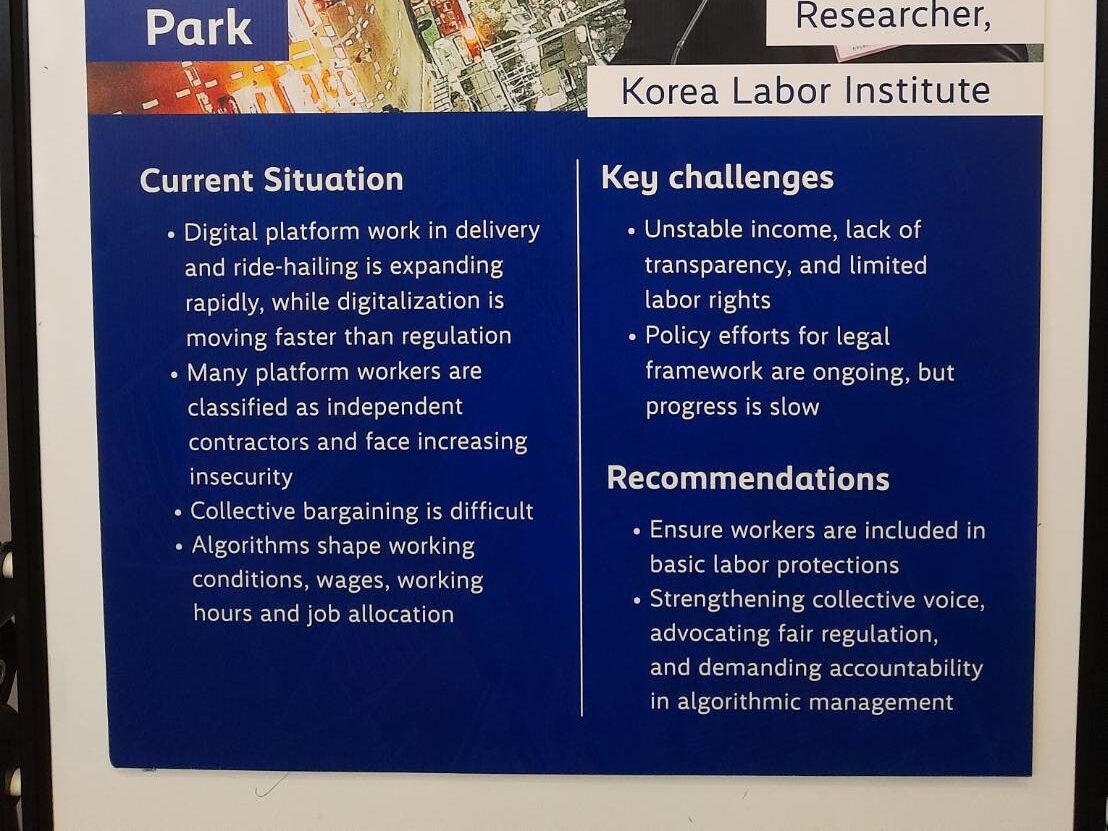
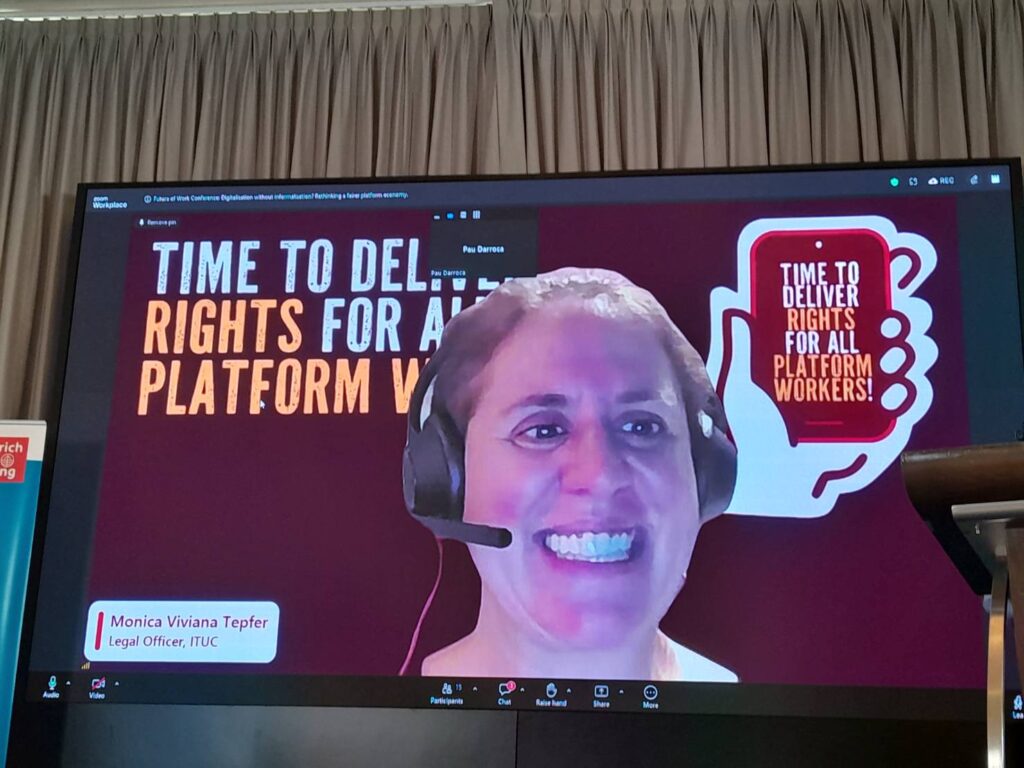
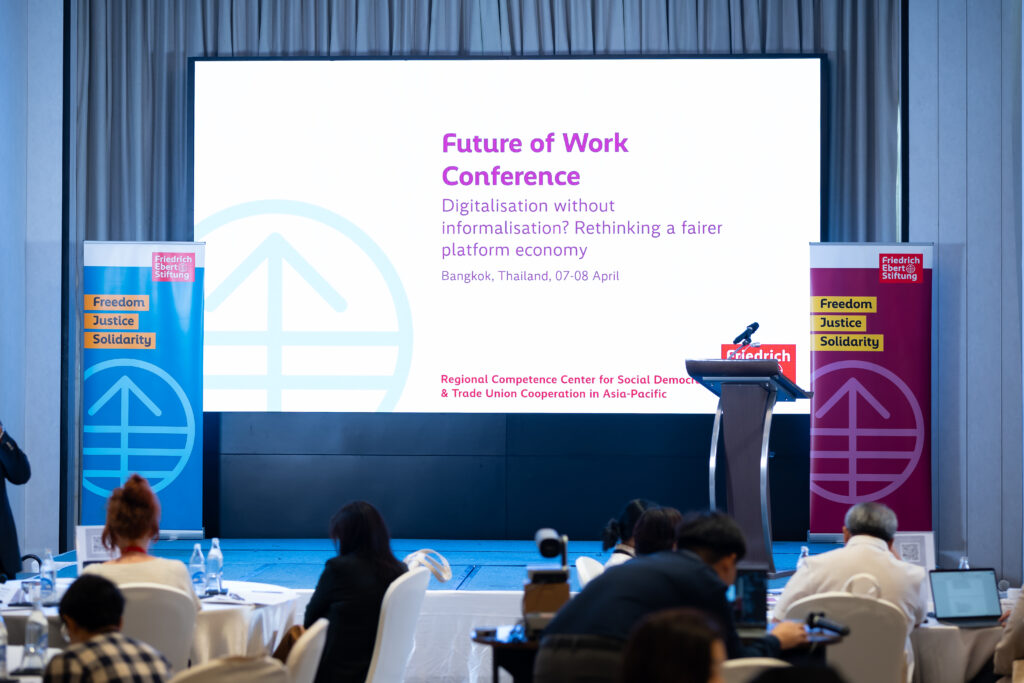
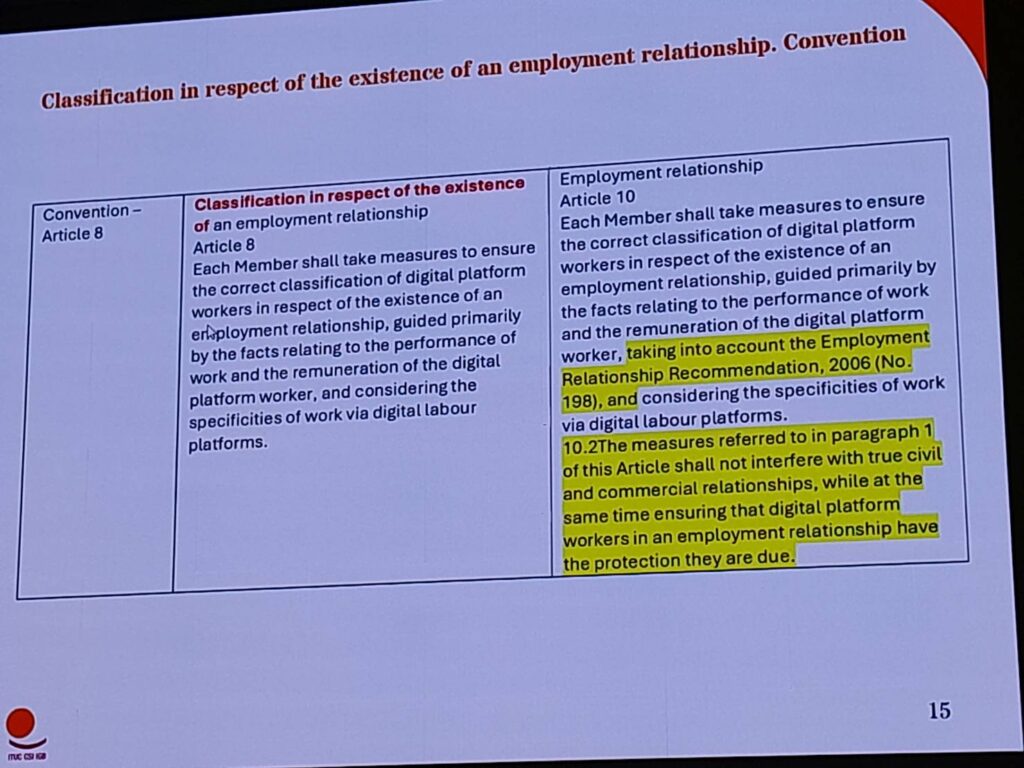
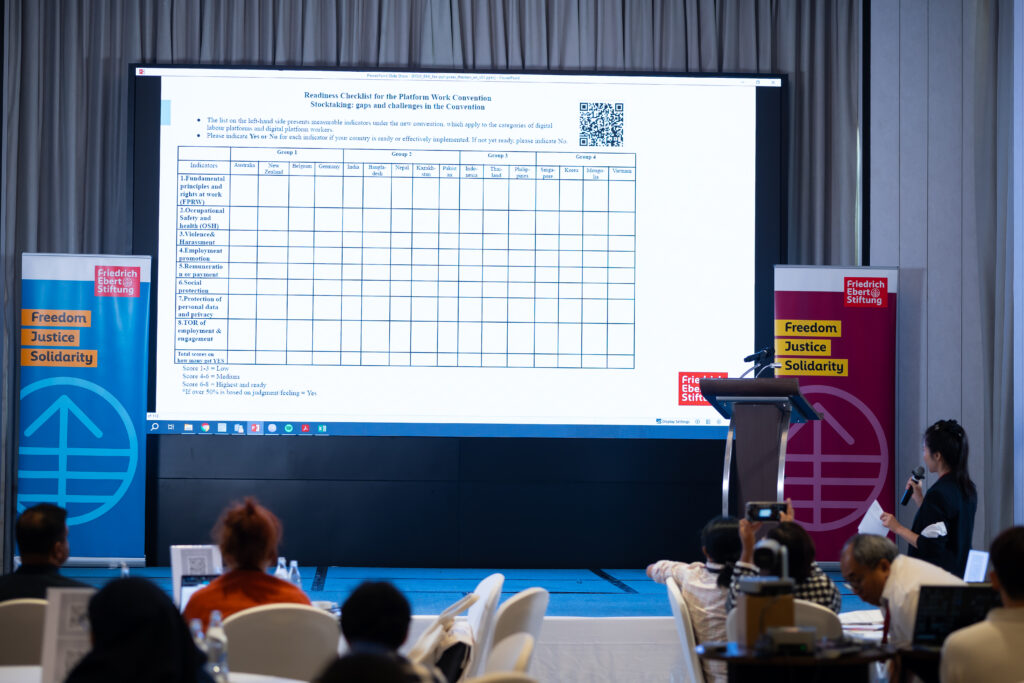
7–8 เมษายน 2569 สถาบันแรงงานและเศรษฐกิจที่เป็นธรรม (JELI) เข้าร่วมการประชุม Future of Work Conference 2026 ภายใต้หัวข้อ “Digitalisation without informalisation? Rethinking a fairer platform economy” จัดขึ้นโดย Friedrich-Ebert-Stiftung (FES) และ International Trade Union Confederation (ITUC) โดย JELI ได้เข้าร่วมและดำเนินรายการในช่วง “Stocktaking: gaps and challenges in the Convention” ร่วมกับ Mr. Pong-Sul Ahn จากองค์การแรงงานระหว่างประเทศ (ILO) สำนักงานประจำภูมิภาคเอเชียและแปซิฟิก เพื่อทบทวนภาพรวมสถานการณ์และข้อค้นพบสำคัญเกี่ยวกับอนาคตของงานและเศรษฐกิจแพลตฟอร์ม
ผู้เข้าร่วมจากหลายประเทศในเอเชียรายงานตรงกันว่า รัฐบาลกำลังผลักดันกฎหมายแรงงานฉบับใหม่โดยไม่ได้ปรึกษาและให้การมีส่วนร่วมของขบวนการแรงงานอย่างเหมาะสม ตัวอย่างเช่น Korean Confederation of Trade Unions (KCTU) ระบุว่าในวันแรงงานสากลหรือ May Day ปีนี้ ขบวนการแรงงานเกาหลีใต้จะจัดการชุมนุมครั้งใหญ่เพื่อต่อต้านกฎหมายแรงงานฉบับใหม่ที่ไม่ผ่านกระบวนการปรึกษากับสหภาพแรงงาน ขณะที่ในอินโดนีเซีย สถานการณ์มีลักษณะคล้ายกัน โดยรัฐบาลไม่ได้เปิดให้มีการหารือกับสหภาพแรงงาน ส่งผลให้ปีนี้จะมีการเคลื่อนไหวครั้งใหญ่เพื่อเรียกร้องประชาธิปไตยด้านแรงงาน
สำหรับในบางประเทศ เช่น สิงคโปร์ ได้ออกกฎหมาย Platform Workers Act และเริ่มบังคับใช้แล้ว โดยคนงานแพลตฟอร์มสามารถเข้าถึงกองทุนเงินทดแทนและประกันสังคมได้ รวมถึงออสเตรเลียที่เริ่มสร้างกลไกคุ้มครองแรงงานแพลตฟอร์มอย่างเป็นรูปธรรม เช่น การกำหนดมาตรฐานขั้นต่ำและสิทธิในการท้าทายการปิดบัญชี อย่างไรก็ตาม กฎหมายยังคงยึดสถานะแรงงานแบบ “กึ่งลูกจ้าง” และไม่ได้ขยายการคุ้มครองเทียบเท่ากฎหมายแรงงานหลักทั้งหมด สำหรับประเทศอื่นๆ การรายงานสะท้อนให้เห็นถึงปัญหาการจ้างงานในระบบแพลตฟอร์มที่ยังขาดความชัดเจนด้านการคุ้มครองแรงงาน เช่น เกาหลีใต้ ซึ่งมีข้อเสนอที่สอดคล้องกับประเทศไทย คือให้แรงงานแพลตฟอร์มเข้าสู่กฎหมายคุ้มครองแรงงานหลักของประเทศ
ประเด็นสำคัญคือ การไม่มีหลักเกณฑ์ที่ชัดเจนในการจัดประเภทสถานะการจ้างงานให้เป็น “ลูกจ้าง” ทำให้ภาระการพิสูจน์ยังคงตกอยู่กับแรงงาน และเปิดช่องให้การกำหนดเกณฑ์ในระดับประเทศถูกใช้เพื่อคงสถานะแรงงานแบบไม่เป็นทางการ ส่งผลให้เกิดความไม่ชัดเจนในการตีความ และอาจทำให้แรงงานแพลตฟอร์มไม่สามารถเข้าถึงสิทธิแรงงานได้อย่างแท้จริง ดังนั้น ข้อเรียกร้องของขบวนการแรงงานในเอเชียต่อรัฐบาลคือ เรียกร้องให้ยกระดับเนื้อหานี้ขึ้นมาอยู่ในช่วงต้นของอนุสัญญาเพื่อเพิ่มความสำคัญในการบังคับใช้ และรัฐบาลไม่ควรเร่งออกกฎหมายใหม่ที่เสี่ยงต่อการจัดประเภทแรงงานผิด (misclassification) แต่ควรรอให้อนุสัญญาผ่านการรับรองในเดือนมิถุนายนก่อน แล้วจึงจัดทำกฎหมายภายในประเทศให้สอดคล้องกับมาตรฐานดังกล่าว
📌 ชวนอ่านชุดเครื่องมือสำหรับการรณรงค์: ผลักดันอนุสัญญาและข้อแนะนำ ILO ว่างานแพลตฟอร์ม: https://www.ituc-csi.org/campaign-toolkit-platform-convention
เสริมพลังไรเดอร์ตรัง เปิดพื้นที่เรียนรู้เรื่องสิทธิและการรวมตัว
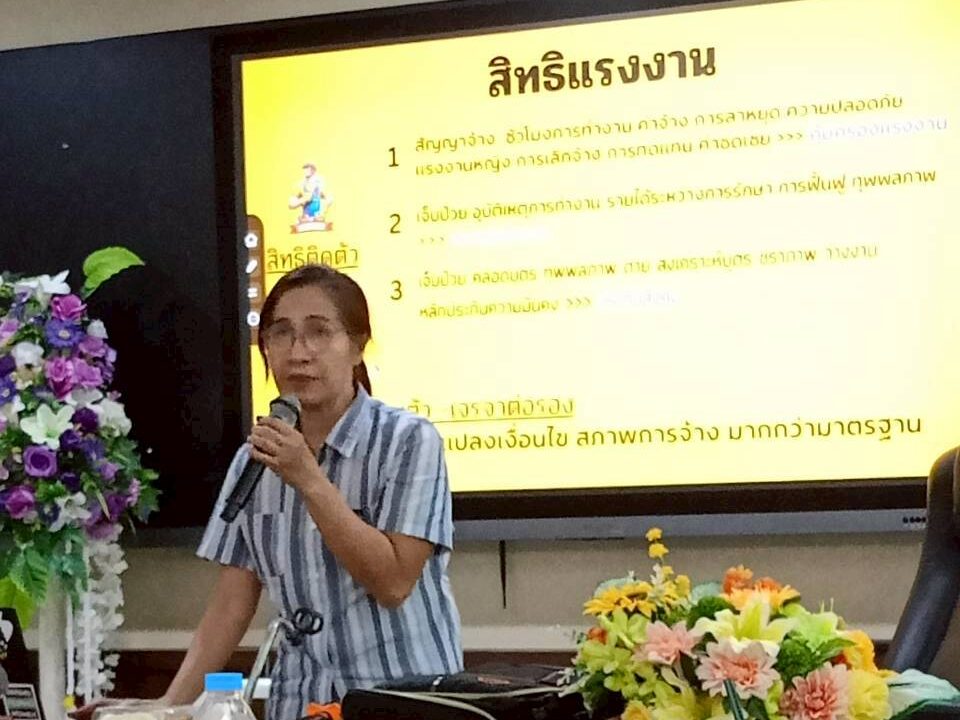
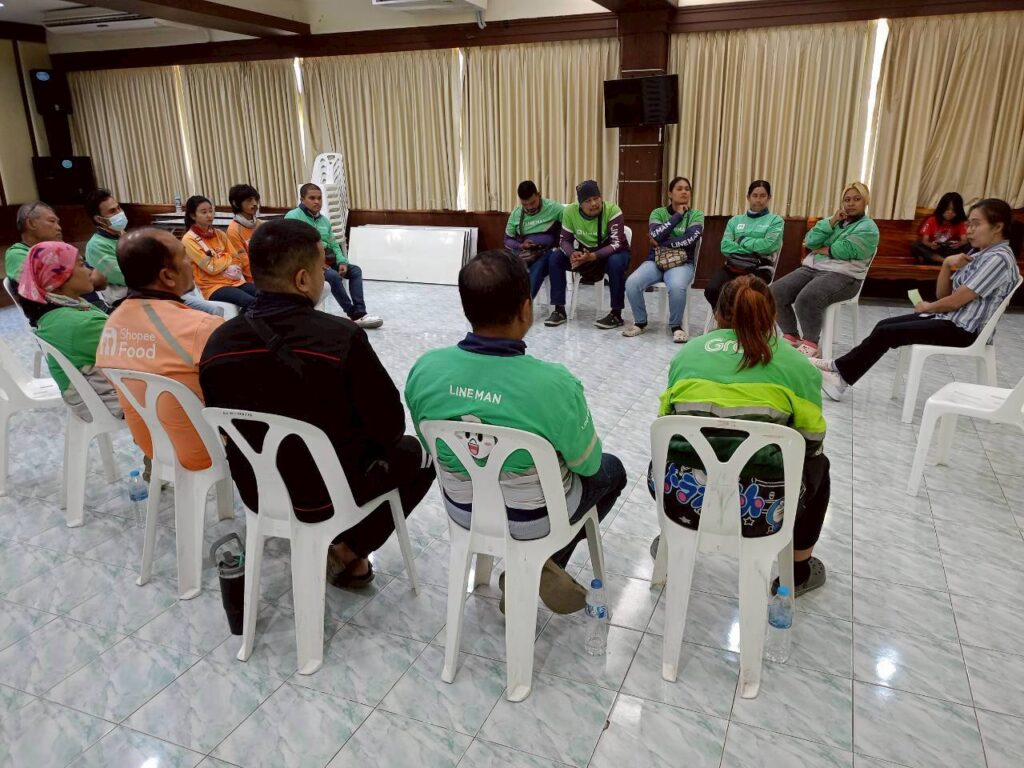
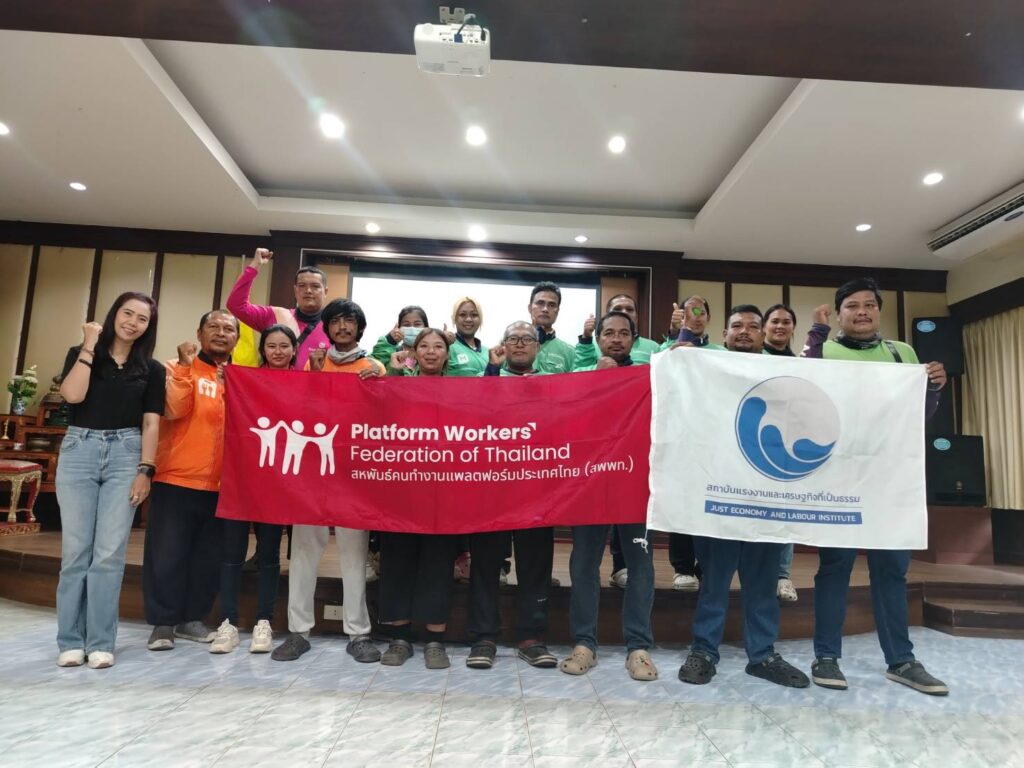
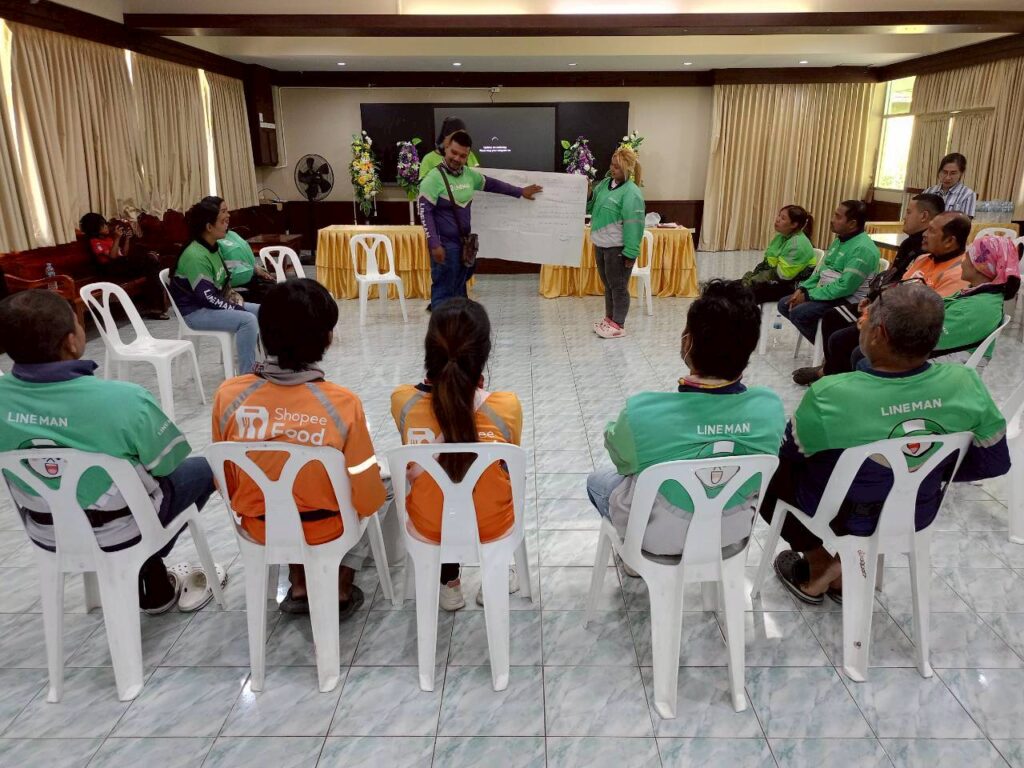
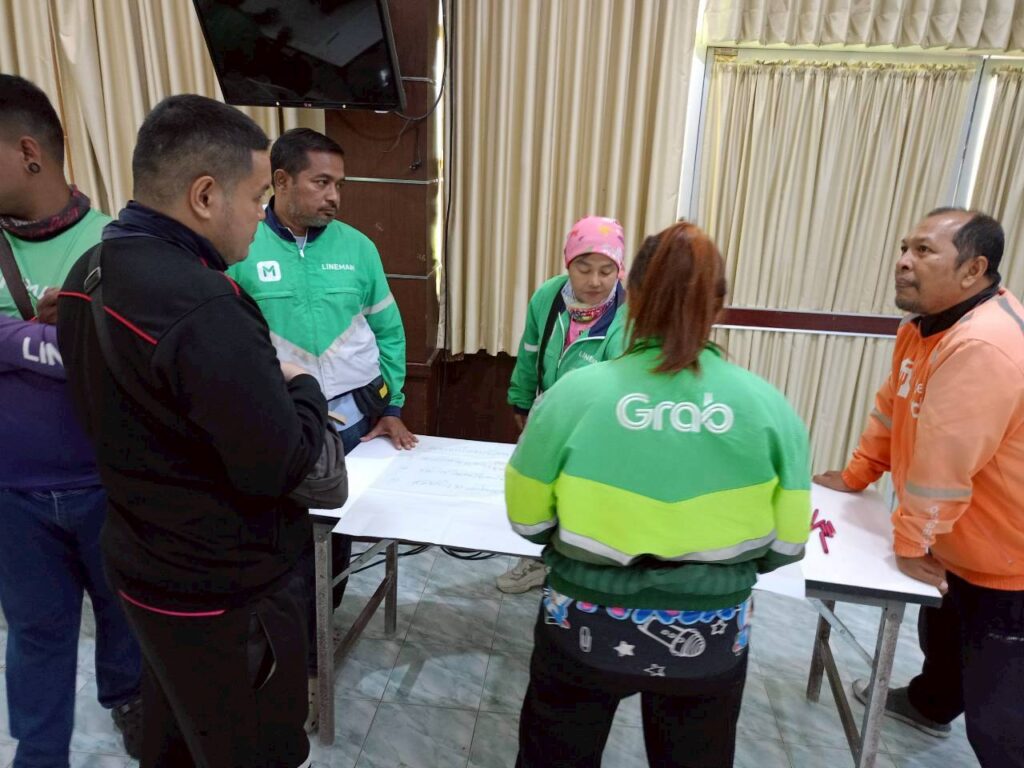
18–19 เมษายน 2569 สถาบันแรงงานและเศรษฐกิจที่เป็นธรรม (JELI) ร่วมกับสหพันธ์คนทำงานแพลตฟอร์มประเทศไทย PWOT และสมาคมไรเดอร์ภาคใต้ จัดกิจกรรมกลุ่มศึกษาพบปะไรเดอร์ในจังหวัดตรัง โดยมีผู้เข้าร่วมรวมกว่า 30 คน กิจกรรมทั้งสองวันเริ่มจากการทำความรู้จักและสร้างบรรยากาศการเรียนรู้ร่วมกัน ก่อนเข้าสู่การแลกเปลี่ยนประสบการณ์การทำงานบนแพลตฟอร์ม ทั้งในแง่ของรายได้ โอกาส และความเสี่ยงที่ต้องเผชิญ จากนั้นผู้เข้าร่วมได้แบ่งกลุ่มเพื่อพูดคุยถึงปัญหาในการทำงานและแนวทางการแก้ไข พร้อมนำเสนอและแลกเปลี่ยนร่วมกันในวงใหญ่
อีกหนึ่งประเด็นสำคัญคือการทำความเข้าใจเรื่องสวัสดิการทางสังคม โดยเฉพาะระบบประกันสังคมในมาตราต่างๆ และสิทธิที่แรงงานแพลตฟอร์มควรได้รับ ควบคู่กับการพูดคุยถึงร่างพระราชบัญญัติส่งเสริมและคุ้มครองแรงงานอิสระที่กำลังถูกผลักดัน ซึ่งผู้เข้าร่วมได้ร่วมกันวิเคราะห์ข้อจำกัดของร่างกฎหมายดังกล่าว และแลกเปลี่ยนถึงการเคลื่อนไหวที่ผ่านมา รวมถึงแนวทางในอนาคต ตลอดกิจกรรม ผู้เข้าร่วมมีส่วนร่วมอย่างต่อเนื่อง ทั้งการตั้งคำถาม แลกเปลี่ยน และถกเถียง เพื่อทำความเข้าใจประเด็นสิทธิแรงงานในบริบทของงานแพลตฟอร์ม หลังจบกิจกรรม กลุ่มไรเดอร์ในพื้นที่ยังคงสื่อสารและประสานงานกันต่อ เพื่อขับเคลื่อนประเด็นสิทธิแรงงานในระดับพื้นที่
กิจกรรมครั้งนี้ช่วยสร้างพื้นที่เรียนรู้ร่วมกันโดยยึดโยงจากประสบการณ์การทำงานจริงของไรเดอร์ไปสู่ความเข้าใจเรื่องสิทธิแรงงานตามกฎหมายและมาตรฐานสากล ผู้เข้าร่วมได้สะท้อนปัญหาเชิงโครงสร้าง ทั้งสวัสดิการที่ไม่ครอบคลุมและผลกระทบจากระบบอัลกอริทึมของแพลตฟอร์ม ซึ่งจำกัดอำนาจต่อรองของคนงาน ซึ่งผู้เข้าร่วมเห็นตรงกันว่าตนเองไม่ได้เป็นแรงงานอิสระ แต่ทำงานภายใต้การควบคุมของแพลตฟอร์ม และควรได้รับการคุ้มครองตามกฎหมายแรงงาน รวมถึงการเข้าถึงประกันสังคมมาตรา 33 เช่นเดียวกับแรงงานในระบบทั่วไป
ความตระหนักรู้และข้อเสนอจากผู้เข้าร่วมในครั้งนี้ ถือเป็นอีกก้าวสำคัญในการเสริมความเข้มแข็งของเครือข่ายแรงงานแพลตฟอร์ม และวางฐานสำหรับการขับเคลื่อนเชิงนโยบายในระยะต่อไป
เชื่อมเครือข่ายแรงงานหญิง สร้างพลังร่วม
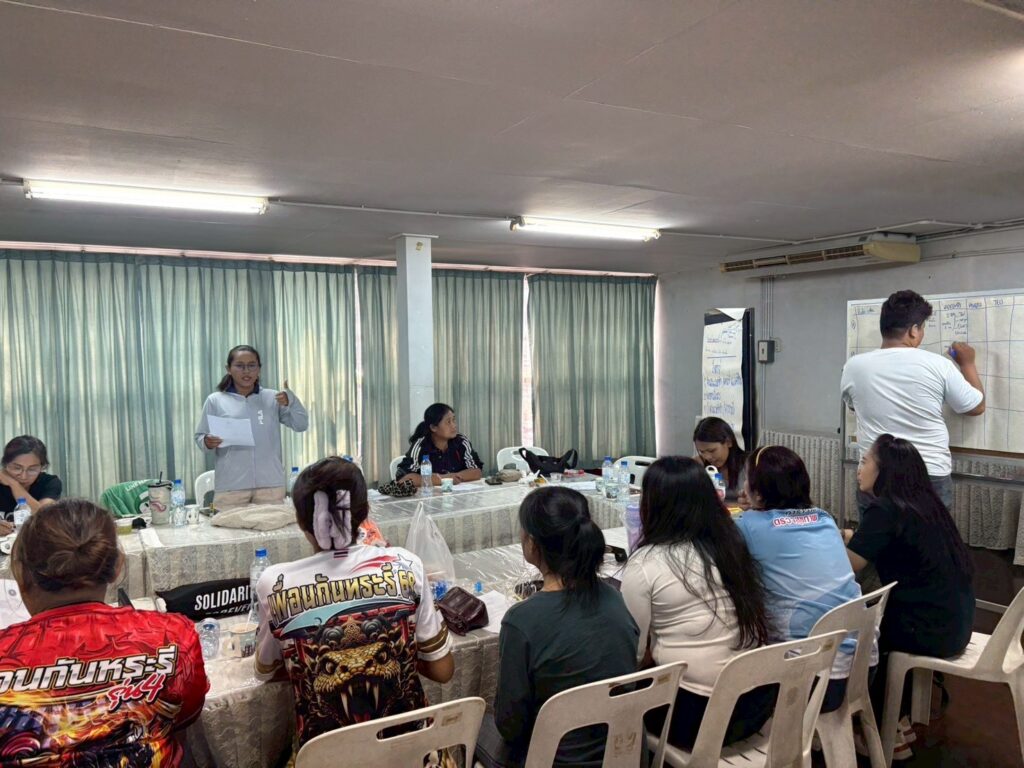
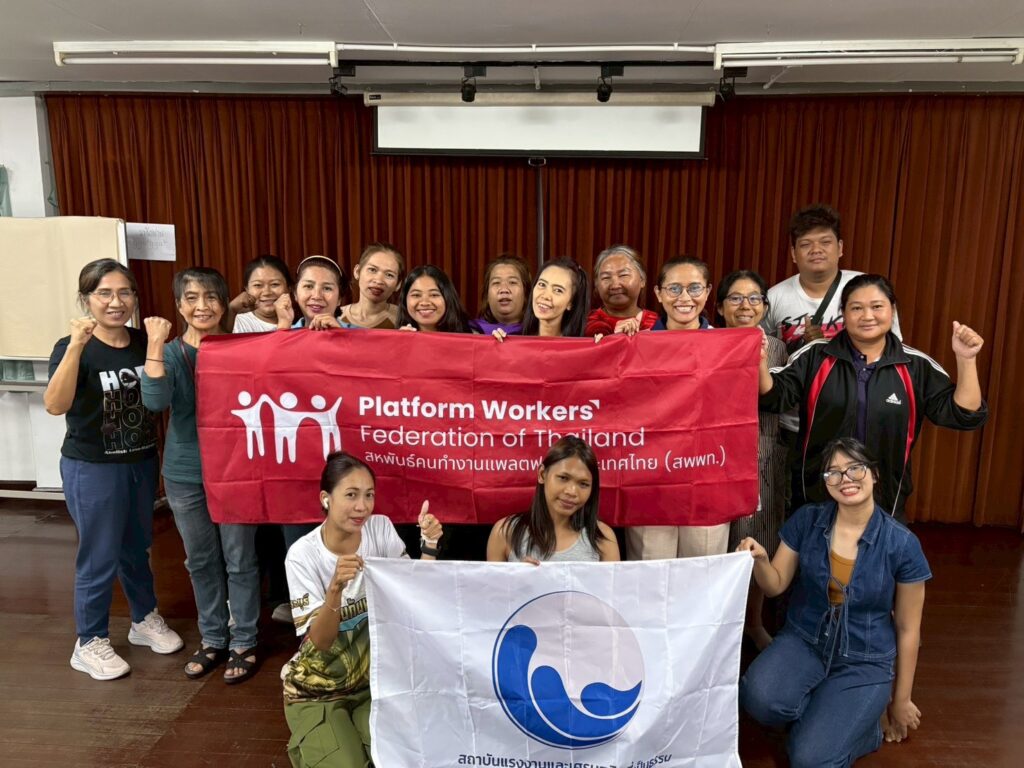
21 เมษายน 2569 สถาบันแรงงานและเศรษฐกิจที่เป็นธรรม (JELI) พบกับแกนนำแรงงานหญิงเพื่อติดตามความคืบหน้าจากการพูดคุยกันเรื่องการจัดตั้งเมื่อ 29 มีนาคม 2569 การพบกันอย่างต่อเนื่องนี้เพื่อเปิดพื้นที่ให้คนงานจากหลายกลุ่มและหลายจังหวัด ทั้งกระบี่ สระบุรี และกรุงเทพฯ รวมถึงเครือข่ายสหภาพแรงงาน ได้กลับมาแลกเปลี่ยนและอัปเดตการทำงานของแต่ละพื้นที่ ซึ่งแต่ละกลุ่มได้ร่วมกันทบทวนโครงสร้างการทำงานของตนเอง ทั้งจุดแข็งและจุดที่ยังต้องพัฒนา พร้อมแบ่งปันประสบการณ์เพื่อเรียนรู้ร่วมกัน ที่สำคัญคือการมองหาแนวทางเชื่อมต่อการทำงานระหว่างกลุ่ม เพื่อขับเคลื่อนประเด็นร่วม ทั้งในรูปแบบการรณรงค์และการทำงานเชิงเครือข่าย รวมถึงทำความเข้าใจบทบาทของสหพันธ์คนทำงานแพลตฟอร์มประเทศไทย (PWOT) ในฐานะพื้นที่กลางที่เชื่อมโยงการทำงานของแต่ละกลุ่ม เพื่อเสริมความแข็งแกร่งของขบวนการ และผลักดันให้เกิดการเป็นตัวแทนที่สามารถขับเคลื่อนประเด็นในระดับประเทศและระดับนานาชาติได้ต่อไป
มอง “งานที่มีคุณค่า” ในเศรษฐกิจแพลตฟอร์มผ่านประสบการณ์ของผู้หญิง
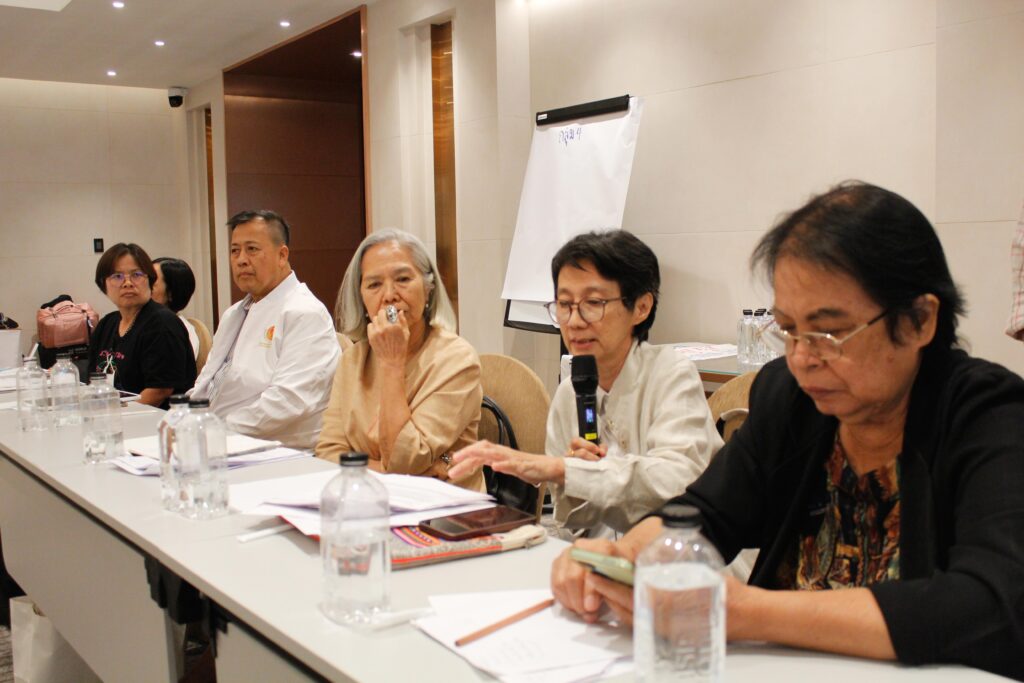
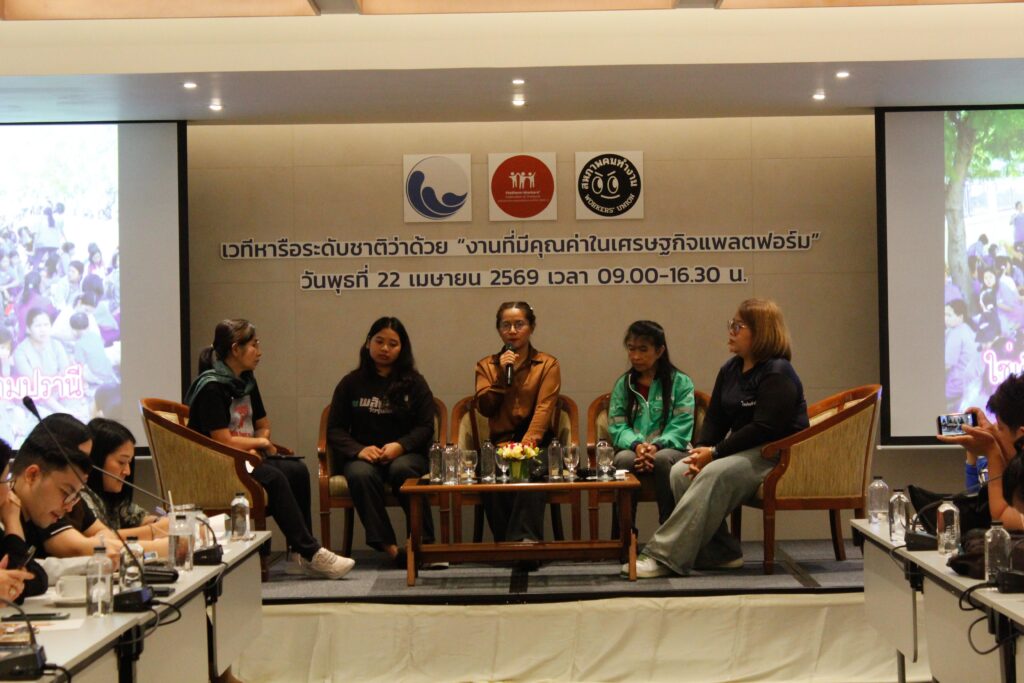
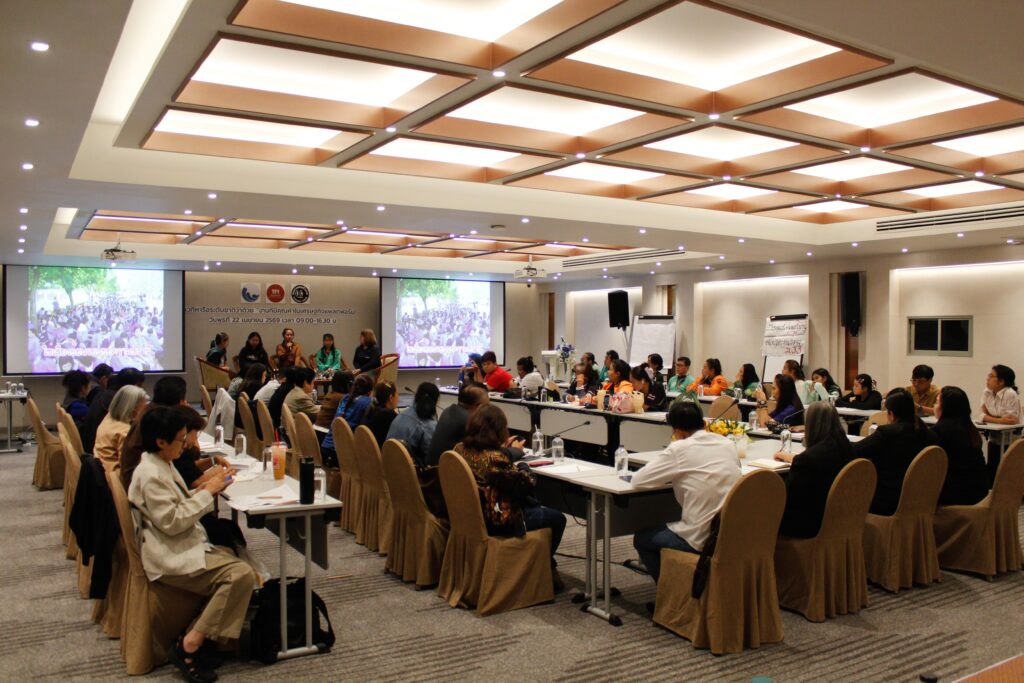
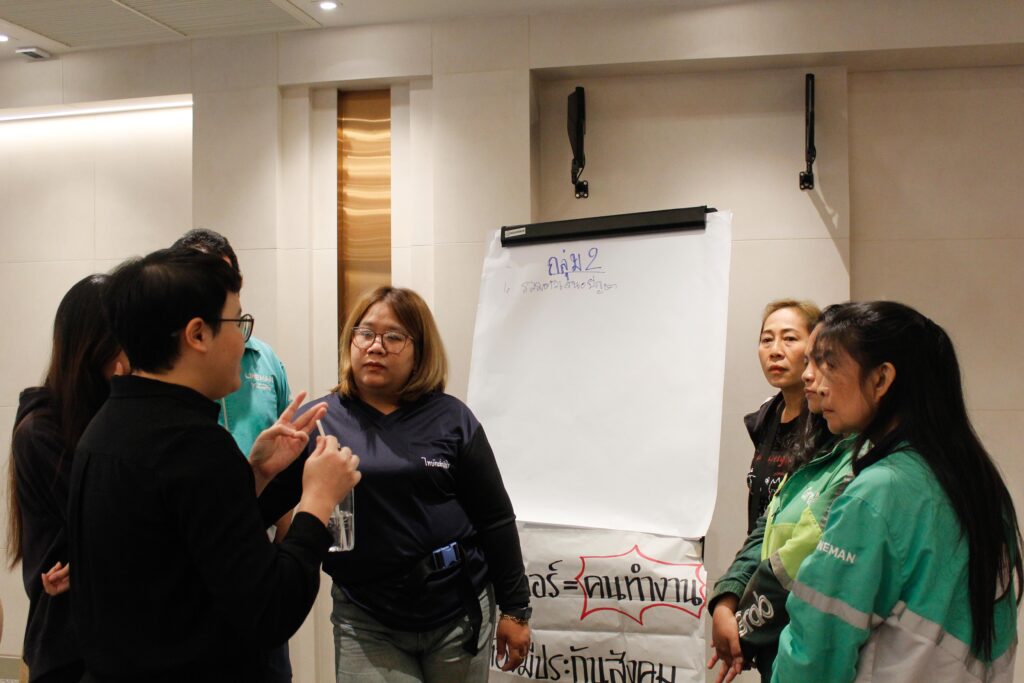
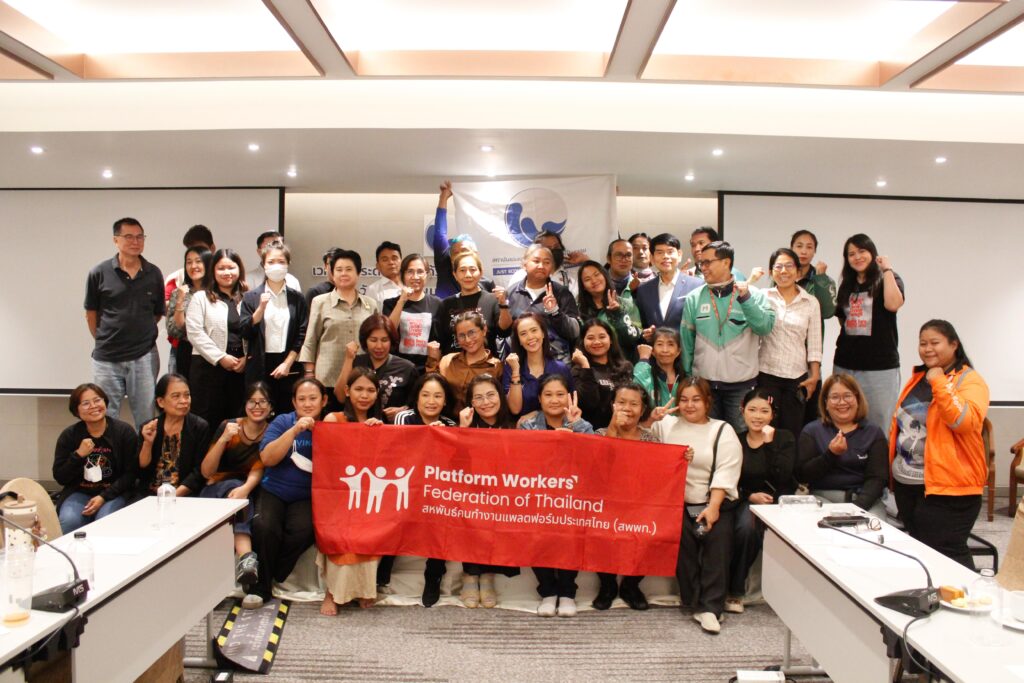
วันที่ 22 เมษายน 2569 สถาบันแรงงานและเศรษฐกิจที่เป็นธรรม (JELI) ร่วมกับสหพันธ์คนทำงานแพลตฟอร์มประเทศไทย PWOT และสหภาพคนทำงาน Workers’ Union จัดเวทีหารือระดับชาติว่าด้วย “งานที่มีคุณค่าในเศรษฐกิจแพลตฟอร์ม” โดยรวบรวมแรงงานแพลตฟอร์มจากหลากหลายอาชีพ ได้แก่ ไรเดอร์ หมอนวด คนทำงานดูแล แม่บ้าน จากหลายจังหวัดและพื้นที่ พร้อมด้วยตัวแทนจากสหภาพแรงงาน กระทรวงแรงงาน นักวิชาการด้านเฟมินิสต์ และผู้ทำงานด้านแรงงานและสิทธิสตรี เพื่อรับฟังเสียงของผู้หญิงที่ต้องทำงานท่ามกลางความเสี่ยง ทั้งอุบัติเหตุบนท้องถนน การถูกคุกคามทางเพศจากลูกค้า รายได้ที่ไม่แน่นอนและไม่เพียงพอ ระบบช่วยเหลือที่ไม่มีประสิทธิภาพ และการใช้อัลกอริทึมที่ขาดความโปร่งใส
หลายครั้งปัญหาที่ผู้หญิงเผชิญมักถูกมองว่าเป็นเรื่องส่วนบุคคล ทั้งที่จริงแล้วมันสะท้อนให้เห็นถึงปัญหาเชิงโครงสร้างของแรงงานแพลตฟอร์ม ไรเดอร์หญิงจากกระบี่ต้องพาลูกวัย 1 ขวบไปทำงานด้วยทุกวัน เพราะไม่สามารถแบกรับค่า daycare ที่สูงถึงวันละ 300 บาท ขณะที่รายได้จากการวิ่งงานตั้งแต่ 8 โมงเช้าถึง 3 ทุ่ม อยู่ที่เพียงประมาณ 500 บาทก่อนหักค่าใช้จ่าย หรือไรเดอร์หญิงจากลาดกระบังที่ถูกลูกค้าพยายามคุกคามทางเพศและทำร้ายร่างกายอย่างรุนแรง เมื่อแจ้งไปยังแพลตฟอร์มกลับได้รับเพียงข้อความอัตโนมัติแสดงความเสียใจ โดยไม่มีความรับผิดชอบหรือการเยียวยาใดๆ และยังต้องดำเนินคดีทั้งหมดด้วยตัวเอง
สิ่งเหล่านี้สะท้อนว่าแรงงานแพลตฟอร์มถูกนิยามให้เป็น “พาร์ทเนอร์” หรือ “แรงงานอิสระ” ทั้งที่ลักษณะการทำงานเสมือนลูกจ้าง ทำให้ถูกกันออกจากสิทธิพื้นฐาน เช่น กองทุนเงินทดแทนกรณีอุบัติเหตุ หรือระบบประกันสังคมที่ครอบคลุมสวัสดิการครอบครัว
ในช่วงที่ผ่านมามีข้อเสนอหลากหลายเพื่อเร่งสร้างการคุ้มครอง เช่น การออกกฎกระทรวงเพื่อคุ้มครองไรเดอร์ในการประกันรายได้ กำหนดมาตรฐานค่ารอบและงานพ่วง ฝั่งกระทรวงแรงงานเองก็ผลักดันร่างกฎหมายใหม่ เช่น พ.ร.บ.ส่งเสริมและคุ้มครองแรงงานอิสระ ที่นิยามแรงงานแพลตฟอร์มเป็น “แรงงานกึ่งอิสระ” ซึ่งจะยิ่งทำให้สถานะการจ้างงานถูกบิดเบือนไปจากสภาพความเป็นจริง
ในระดับนานาชาติ การคุ้มครองแรงงานแพลตฟอร์มกำลังถูกพูดถึงผ่านร่างอนุสัญญา ILO ว่าด้วยงานที่มีคุณค่าในเศรษฐกิจแพลตฟอร์ม ที่แม้จะมีความพยายามกำหนดมาตรฐานสิทธิแต่ยังมีช่องว่างหลายอย่าง โดยเฉพาะเรื่องสถานะการจ้างงาน ค่าตอบแทน และความรับผิดชอบของแพลตฟอร์ม นอกจากนี้คำถามสำคัญสำหรับประเทศไทยคือ เมื่ออนุสัญญาฉบับนี้ผ่านการรับรองแล้ว รัฐบาลไทยจะลงนามให้สัตยาบันและออกแบบระบบความคุ้มครองในประเทศอย่างไรให้ตอบโจทย์ชีวิตจริงของคนทำงานและมาตรฐานสากลหรือไม่
ช่วงท้ายของเวทีเป็นการกำหนดก้าวถัดไป ทั้งการมีส่วนร่วมในเวที ILC เดือนมิถุนายนนี้ การระบุข้อเรียกร้องเร่งด่วน และการวางแผนผลักดันเชิงนโยบาย จากการแลกเปลี่ยนร่วมกันของแรงงาน ภาครัฐ และผู้ทำงานด้านสิทธิ ได้ข้อสรุปร่วมกันว่า
- แรงงานต้องมี “สถานะที่ชัดเจน” ไม่ใช่พาร์ทเนอร์หรือแรงงานกึ่งอิสระ แต่ต้องได้รับการรับรองในฐานะลูกจ้าง เพื่อให้เข้าถึงสิทธิและการคุ้มครองตามกฎหมายอย่างเต็มรูปแบบ ยุติรูปแบบการจ้างงานที่ผลักความเสี่ยงไปให้แรงงาน
- แรงงานต้องมี “รายได้และสวัสดิการที่เป็นธรรม” ทั้งค่ารอบและค่าจ้างที่สอดคล้องกับค่าครองชีพ มีประกันรายได้ขั้นต่ำ มีการชดเชยเมื่อเกิดอุบัติเหตุหรือไม่สามารถทำงานได้ รวมถึงความโปร่งใสของระบบอัลกอริทึม และสิทธิในการมีส่วนร่วมเจรจาต่อรอง
- แรงงานต้องมี “พื้นที่ในการส่งเสียง” รัฐต้องเปิดเผยข้อมูล รับฟัง และมีบทบาทเชิงรุกในการสร้างความเข้าใจทั้งเรื่องอนุสัญญา ILO กระบวนการ ILC รวมถึงเปิดพื้นที่ให้แรงงานเข้ามามีส่วนร่วมในการกำหนดนโยบายที่ส่งผลต่อชีวิตของพวกเขา
เวทีในครั้งนี้ถือเป็นพื้นที่ในการรับฟัง และเปิดโอกาสให้ผู้ที่เกี่ยวข้องมีช่องทางการทำงานร่วมกันเพื่อผลักดันให้แรงงานแพลตฟอร์มได้รับสิทธิและการคุ้มครองที่ควรจะมีในฐานะ “คนทำงาน” เหมือนกับคนอื่นๆ
ชวนอ่าน
- “คนจนไม่มีคำว่าร้อน” เสียงจากแรงงานกลางแจ้ง กับความร้อนที่เลี่ยงไม่ได้ ชวนอ่านบันทึกชีวิตแรงงานกลางแจ้งในกรุงเทพฯ ที่ต้องทำงานท่ามกลางอุณหภูมิที่สูงขึ้นทุกปี แม้รู้ว่าโลกกำลังร้อนขึ้น แต่สิ่งที่ร้อนยิ่งกว่าคือความจำเป็นในการหาเลี้ยงชีพ อ่านที่: ประชาไท
- 22 ปีของการต่อสู้อย่างไม่ยอมแพ้ นำไปสู่การผ่านกฎหมายคุ้มครองแรงงานทำงานบ้านในอินโดนีเซีย ชวนอ่านเรื่องราวของ Jumiyem แรงงานคนหนึ่งที่เปลี่ยนประสบการณ์การทำงานของตนเองให้กลายเป็นพลังในการขับเคลื่อนสิทธิแรงงาน และเป็นเสียงสำคัญของขบวนการในวันนี้ อ่านที่: Asian Labor Review
- 840,000 ชีวิตต่อปี รายงานล่าสุดของ International Labour Organization (ILO) ชี้ว่าความเครียดจากการทำงาน ชั่วโมงทำงานยาวนาน และความไม่มั่นคงในการจ้างงาน กำลังคร่าชีวิตแรงงานกว่า 840,000 คนต่อปีทั่วโลก อ่านที่: ประชาไท
กิจกรรมที่จะมาถึง
📍 ปักหมุดกิจกรรมเนื่องในวันแรงงาน 2026
- “ไม่มีประกันสังคม ไม่มีความมั่นคง” ขบวนวันแรงงานสากลจังหวัดเชียงใหม่ ร่วมอ่านแถลงการณ์ยื่นข้อเรียกร้องต่อรัฐบาล เวทีเสวนาวิชาการ จุดเทียนเรียกร้องยุติสงคราม การแสดง คอนเสิร์ต และฟรีไมค์ รายละเอียดเพิ่มเติม: เครือข่ายแรงงานภาคเหนือและสหภาพแรงงานบาริสต้าเชียงใหม่
- แรงงานลำปางทั้งผองจงรวมตัวกัน! กิจกรรมวัน MAY DAY จังหวัดลำปาง ชวนแรงงานทุกอาชีพมาร่วมพบปะและเดินขบวนเพื่อแสดงพลัง และยื่นข้อเสนอจากแรงงานต่อผู้ว่าราชการจังหวัดลำปาง รายละเอียดเพิ่มเติม: สมาพันธ์แรงงานลำปาง
- ขบวนวันกรรมกรสากล (May Day) ชวนพี่น้องผู้ใช้แรงงานสะท้อนพลัง ความสามัคคี และศักดิ์ศรีของผู้ใช้แรงงานทั่วโลก มาร่วมแสดงพลัง แลกเปลี่ยนความคิดเห็น และสนับสนุนสิทธิอันพึงมีของแรงงานเพื่อสร้างสังคมการทำงานที่เป็นธรรม มั่นคง และยั่งยืน ณ อนุสาวรีย์ประชาธิปไตย รายละเอียดเพิ่มเติม: สมาพันธ์สมานฉันท์แรงงานไทย และสมาพันธ์แรงงานรัฐวิสาหกิจสัมพันธ์
- “เมื่อแรงงานเบอร์รี่ป่าถูกค้ามนุษย์” ชมภาพยนตร์สารคดี “Blood Berries หมากไม้” สะท้อนชีวิตอดีตแรงงานเก็บเบอร์รี่ป่าประเทศฟินแลนด์และสวีเดน ที่หอบเอาความฝันไปต่างประเทศเพื่อหวังจะได้เงินมาจุนเจือครอบครัว แต่กลับถูกค้ามนุษย์และในความเป็นจริงส่วนใหญ่ได้หนี้กลับมาแทน ร่วมสร้างความเป็นธรรมให้กับแรงงานเก็บเบอร์รี่ป่าด้วยการชมภาพยนตร์สารคดี รายละเอียดรอบฉายและสถานที่: The Isaan Record
- “แรง(คน)งาน: หาคนให้เจอในแรงงาน” นิทรรศการเล่าเรื่อง-เปิดพื้นที่สื่อสารเรื่องราวของผู้ใช้แรงงานที่มักถูกมองข้ามในสังคม ประกอบไปด้วยกิจกรรมหลากหลาย ทั้งการเสวนา ภาพยนตร์ เวิร์กช็อป ฯลฯ ตั้งแต่วันที่ 1–8 พฤษภาคม 2569 รายละเอียดเพิ่มเติม: See the Workers Exhibition
“No human masterpiece has been created without great labour.” – André Gide
We’re living in a world full of overlapping crises. Climate change is making work more dangerous, especially for those working outdoors. Imperialist wars and political conflicts continue to disrupt livelihoods and drive up costs, while wages remain far from livable. And again, those most affected are the ones with the least protection.
On 1 May, we remember that the rights workers have today did not come easily, and what was fought for remains unfinished. But through organizing and collective action, despite all the challenges, restrictions, and differences, workers are still finding ways to come together.
And on May Day, we say again: enough of the ruling class rolling back workers’ rights! We call for:
Decent work. A living wage. A life with dignity.
Happy International Workers’ Day ✊
What Happened This Month
Time to Deliver “Rights” to All Platform Workers
7–8 April 2026, the Just Economy and Labor Institute (JELI) participated in the Future of Work Conference 2026 under the theme “Digitalisation without informalisation? Rethinking a fairer platform economy,” organized by Friedrich-Ebert-Stiftung (FES) and the International Trade Union Confederation (ITUC).
JELI co-facilitated the session “Stocktaking: gaps and challenges in the Convention” alongside Mr. Pong-Sul Ahn from the International Labour Organization (ILO) Regional Office for Asia and the Pacific. The conference reviewed key developments, gaps, and emerging challenges in shaping standards for the platform economy.
Participants from across Asia reported a shared concern: governments are increasingly advancing new labour laws without meaningful consultation with labour movements. For instance, the Korean Confederation of Trade Unions (KCTU) announced that a large-scale mobilization would take place on May Day this year to oppose a new labour law that bypassed consultation with unions. A similar situation was reported in Indonesia, where the lack of engagement with labour organizations is expected to lead to major mobilizations demanding labour democracy.
In contrast, some countries have begun introducing regulatory frameworks. Singapore has enacted the Platform Workers Act, allowing platform workers to access compensation funds and social security. Australia has also taken steps to establish protections, including minimum standards and the right to challenge unfair deactivation. However, these measures still maintain an “employee-like” status and fall short of extending full labour protections equivalent to those under standard labour law. Across other countries, discussions reflected ongoing gaps in legal clarity and protection for platform workers. Notably, South Korea presented proposals similar to those in Thailand, advocating for platform workers to be included under the main labour protection law.
A key issue raised is the absence of clear principles to ensure the correct classification of employment status. Without a presumption of employment, the burden of proof remains on workers, creating space for national regulations to maintain informal or ambiguous classifications. This, in turn, limits workers’ ability to effectively access labour rights.
Labour movements across Asia are therefore calling for this principle to be strengthened and placed at the core of the Convention. They also urge governments not to rush into adopting national laws that risk misclassification, but instead to align domestic legislation with the Convention once it is adopted in June.
📌 Explore the Campaign Toolkit: Campaigning for an ILO Convention and Recommendation on Platform Work: https://www.ituc-csi.org/campaign-toolkit-platform-convention
Empowering Trang Riders: A Space for Learning Rights and Collective Organising
18–19 April 2026, the Just Economy and Labor Institute (JELI), together with the Platform Workers Federation of Thailand (PWOT) and the Southern Riders Association, organized a study group and meet-up with riders in Trang province, with over 30 participants.
The two-day activity began with introductions and creating a shared learning space, followed by discussions on participants’ experiences working on digital platforms, including income, opportunities, and the risks they face. Participants then worked in small groups to identify key challenges and propose solutions, before sharing and discussing their ideas in plenary.
A key focus of the activity was building understanding of social protection, particularly different social security schemes and the rights that platform workers should be entitled to. This was discussed alongside the draft Independent Workers Promotion and Protection Bill, currently being advanced, with participants jointly examining its limitations and reflecting on ongoing advocacy efforts and future directions.
Throughout the sessions, participants actively engaged through questions, discussions, and debates, deepening their understanding of labour rights in the context of platform work. Following the activity, rider groups in the area continued to stay connected and coordinate efforts to advance labour rights at the local level.
The activity created a space for collective learning grounded in workers’ lived experiences, linking everyday realities to labour rights under national law and international standards. Participants highlighted structural challenges, including inadequate social protection and the impacts of algorithmic management, which limit workers’ bargaining power. Many shared a common view that they are not independent workers, but are working under platform control, and should therefore be protected under labour law, including access to social security under Section 33, similar to workers in standard employment.
The awareness and proposals emerging from this activity mark an important step in strengthening platform worker networks and laying the groundwork for future policy advocacy.
Connecting Women Workers, Building Collective Power
21 April 2026, the Just Economy and Labor Institute (JELI) met with women labour leaders to follow up on earlier discussions on organising held on 29 March 2026. This continued engagement created a space for workers from different groups and provinces, including Krabi, Saraburi, and Bangkok, as well as union networks, to reconnect, exchange updates, and share progress from their respective areas. Each group reflected on its own organisational structure, identifying strengths and areas for improvement, while learning from one another’s experiences.
A key focus of the meeting was exploring ways to strengthen connections between groups to advance shared issues, both through collective campaigns and broader network-based organising. Participants also discussed the role of the Platform Workers Federation of Thailand (PWOT) as a central platform to link different groups, strengthen the movement, and build collective representation capable of advancing workers’ issues at both national and international levels.
“Decent Work” in the Platform Economy, Through Women’s Experiences
On 22 April 2026, the Just Economy and Labor Institute (JELI), in collaboration with the Platform Workers Federation of Thailand and Workers’ Union, organized a national consultation on “Decent Work in the Platform Economy.”
The event brought together platform workers from diverse sectors, including delivery riders, massage therapists, care workers, and domestic workers, from various provinces, alongside representatives from trade unions, the Ministry of Labour, feminist experts, and labour and women’s rights advocates. The aim was to build collaboration and identify ways forward by listening to women workers’ experiences of working under high-risk conditions: road accidents, sexual harassment, unstable and insufficient income, ineffective support systems, and opaque algorithmic management.
Too often, the challenges women face are dismissed as personal issues. In reality, they reflect structural problems within the platform economy.
A woman rider from Krabi shared how she has to carry her one-year-old child to work every day because she cannot afford daycare, which costs around 300 baht per day. She works from 8 a.m. to 9 p.m., earning only about 500 baht a day before expenses.
Another rider from Lat Krabang recounted being sexually harassed and violently assaulted by a customer while on a delivery. When she reported the incident to the platform, she received only an automated message, with no accountability or support. She has had to pursue legal action entirely on her own.
These experiences show how platform workers are labelled as “partners” or “independent workers,” despite working under conditions consistent with those of employees. As a result, they are excluded from fundamental labour protections, such as compensation for workplace injuries and access to comprehensive social security benefits.
Various proposals have been put forward to address these gaps, including ministerial regulations to ensure income protection and fair pay standards. Meanwhile, the Ministry of Labour has been promoting new legislation, such as the Draft Independent Worker Promotion and Protection Bill, which classifies platform workers as “semi-independent workers.” This risks further distorting their employment status and undermining their rights.
At the international level, platform work is increasingly being addressed through the proposed ILO Convention on Decent Work in the Platform Economy. While the draft aims to establish labour standards, significant gaps remain, particularly regarding employment status, remuneration, and platform accountability.
For Thailand, the key question is whether the government will ratify the Convention and develop legal protections that genuinely reflect workers’ lived realities and align with international standards.
The final session of the consultation focused on identifying next steps, including participation in the upcoming International Labour Conference (ILC) in June, prioritizing urgent demands, and planning policy advocacy strategies.
Through collective discussions among workers, government representatives, and rights advocates, three core demands emerged:
- Clear employment status: Platform workers must be recognized as employees, not “partners” or “semi-independent workers,”so they can access full legal protections.
- Fair income and social protection: Workers must receive pay that reflects living costs, guaranteed minimum income, compensation for accidents or loss of income, transparency in algorithmic systems, and the right to collective bargaining.
- Meaningful participation and voice: The government must ensure transparency, actively listen, and play a proactive role in protecting workers. This includes raising public awareness about the ILO Convention and the ILC process, and creating spaces for workers to participate in shaping policies that affect their lives.
This consultation was a starting point for collective action, bringing together workers, the government, and allied actors to push for concrete changes so that platform workers can access the rights and protections they deserve, as workers.
In Case You Missed It
- “The poor don’t feel the heat,” Voices from outdoor workers facing unavoidable extreme temperatures. Explore a story from Bangkok’s outdoor workers, who continue working under rising heat year after year. Even as they are aware of climate change, what burns more than the sun is the need to earn a living. Read more at: Prachatai
- 22 years of unwavering struggle have led to the passage of Indonesia’s Domestic Workers Protection Law. Read the story of Jumiyem, a domestic worker who transformed her lived experience into a force for change, becoming a powerful voice for workers’ rights. Read more at: Asian Labour Review
- 840,000 lives each year. A new report by the International Labour Organization (ILO) reveals that work-related stress, long working hours, and job insecurity are contributing to over 840,000 deaths annually worldwide. Read more at: Prachatai
Upcoming Events
📍 May Day 2026: Events Across Thailand
- “No Social Security, No Security in Life“”“ – Chiang Mai May Day March
Join the International Workers’ Day march in Chiang Mai, featuring a public statement to the government, academic discussions, a candlelight vigil calling for peace, performances, concerts, and an open mic. More details: Northern Labour Network & Chiang Mai Barista Workers Union - Lampang Workers Unite!
Workers from all sectors are invited to gather, march, and present demands to the Governor of Lampang, showing collective strength and solidarity. More details: Lampang Labor Confederation - International Workers’ Day March – Bangkok
Join fellow workers at the Democracy Monument to express solidarity, exchange ideas, and advocate for workers’ rights toward a fair, secure, and sustainable future of work. More details: Thai Labour Solidarity Confederation & State Enterprises Workers’ Relations Confederation - “Blood Berries” Documentary Screening
A powerful documentary exposing the exploitation of Thai berry pickers in Finland and Sweden, highlighting forced labour and debt. Join the screening to support justice for migrant workers. Screening details: The Isaan Record - “Labour(ers): Finding People in Work” Exhibition
An exhibition that brings forward the often unseen stories of workers through talks, films, and workshops, taking place from 1–8 May 2026 More details: See the Workers Exhibition
Thank you for reading along with us. We’ll keep sharing what’s ahead in the next edition!